
AI in eCommerce Shipping
Explore how AI is transforming eCommerce shipping — smart courier selection, demand forecasting, NDR prediction, and automated logistics optimization.
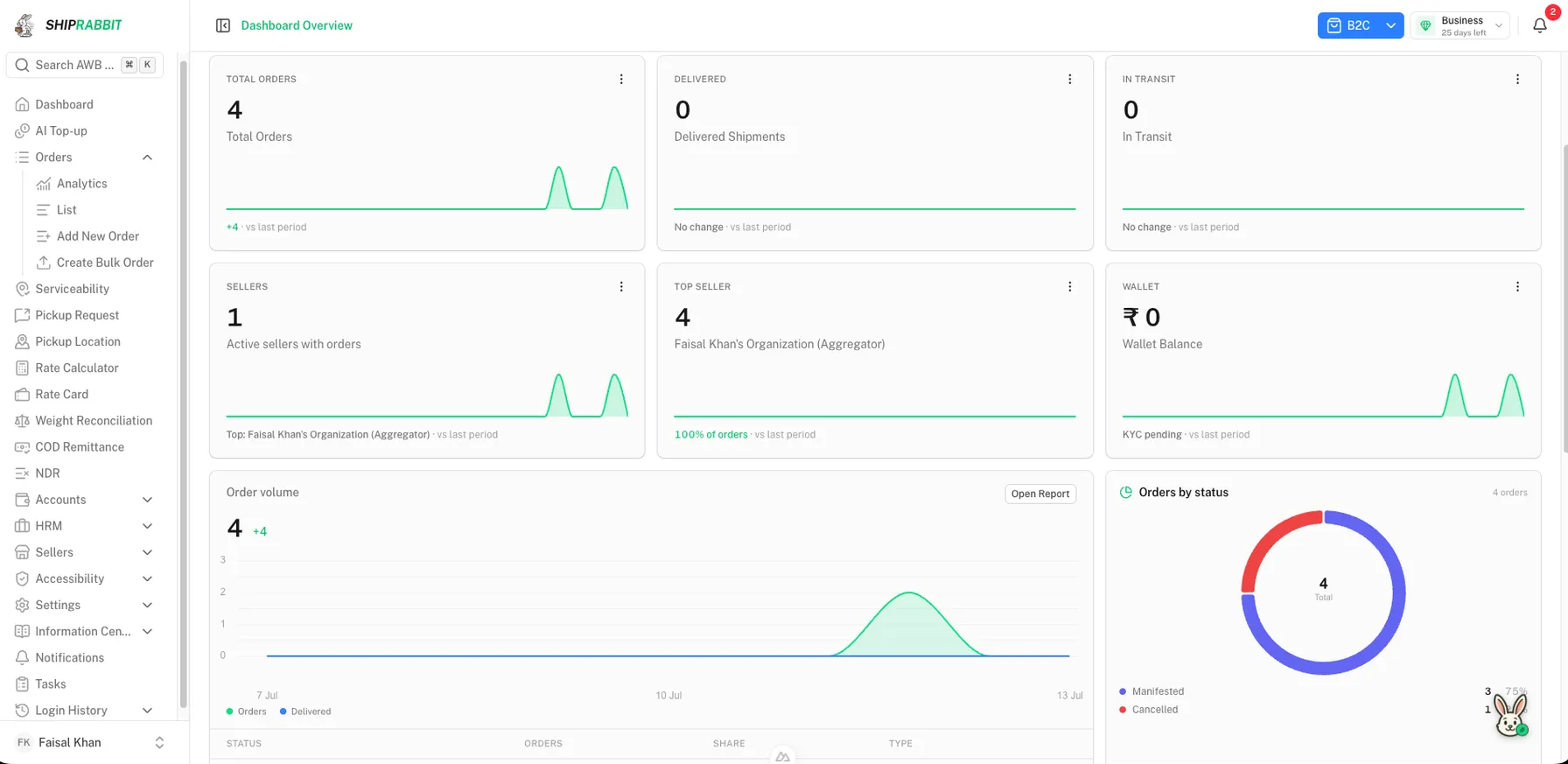
Where AI Fits in Shipping Operations
Artificial intelligence in eCommerce shipping refers to software systems that use data-driven models — machine learning, optimization algorithms, or rule engines with adaptive scoring — to automate decisions that humans previously made manually or through static rules. Common applications include courier selection per order, rate optimization across carriers, NDR prioritization, delivery date prediction, and anomaly detection in shipping spend or RTO patterns.
AI does not replace courier companies or delivery personnel. It operates in the decision layer between your order data and carrier booking systems — choosing which partner to use, when to escalate an NDR, or which orders need address verification before dispatch.
This article surveys AI applications broadly. For specific deep dives, read AI-powered courier selection and how AI reduces shipping costs.
AI Applications Merchants Use Today
- Intelligent courier selection based on lane performance, cost, and delivery urgency
- Dynamic rate optimization comparing multi-carrier quotes per shipment
- NDR prioritization scoring orders by recovery likelihood and value
- Predicted delivery dates surfaced at checkout from historical transit data
- Address quality scoring to flag high-risk orders before fulfillment
- Anomaly detection on shipping cost spikes or RTO rate changes by zone
- Automated buyer outreach timing for delivery notifications and NDR follow-up
AI Courier Selection Explained Briefly
The highest-impact AI application for most shippers is per-order courier selection. Instead of a fixed default carrier, the system scores eligible couriers for each order using features like origin-destination zone, weight slab, payment mode, historical delivery success on the lane, current rate, and promised delivery timeline. The highest-scoring carrier wins the booking.
Simple implementations use weighted scoring rules derived from historical data. More advanced implementations train models on delivery outcomes — delivered, RTO, NDR count, days to deliver — to predict which carrier maximizes success probability at acceptable cost for each order profile.
AI-powered courier selection explained covers this application in detail, including how it differs from cheapest-carrier rules.
What AI Requires to Work Well
AI shipping tools need clean historical data: order attributes, courier assignments, delivery outcomes, and cost data linked by AWB. Sparse or inconsistent data produces unreliable recommendations. Merchants shipping fewer than a few hundred orders monthly may not have enough lane-level data for ML models — rule-based routing with periodic manual review may outperform premature AI deployment.
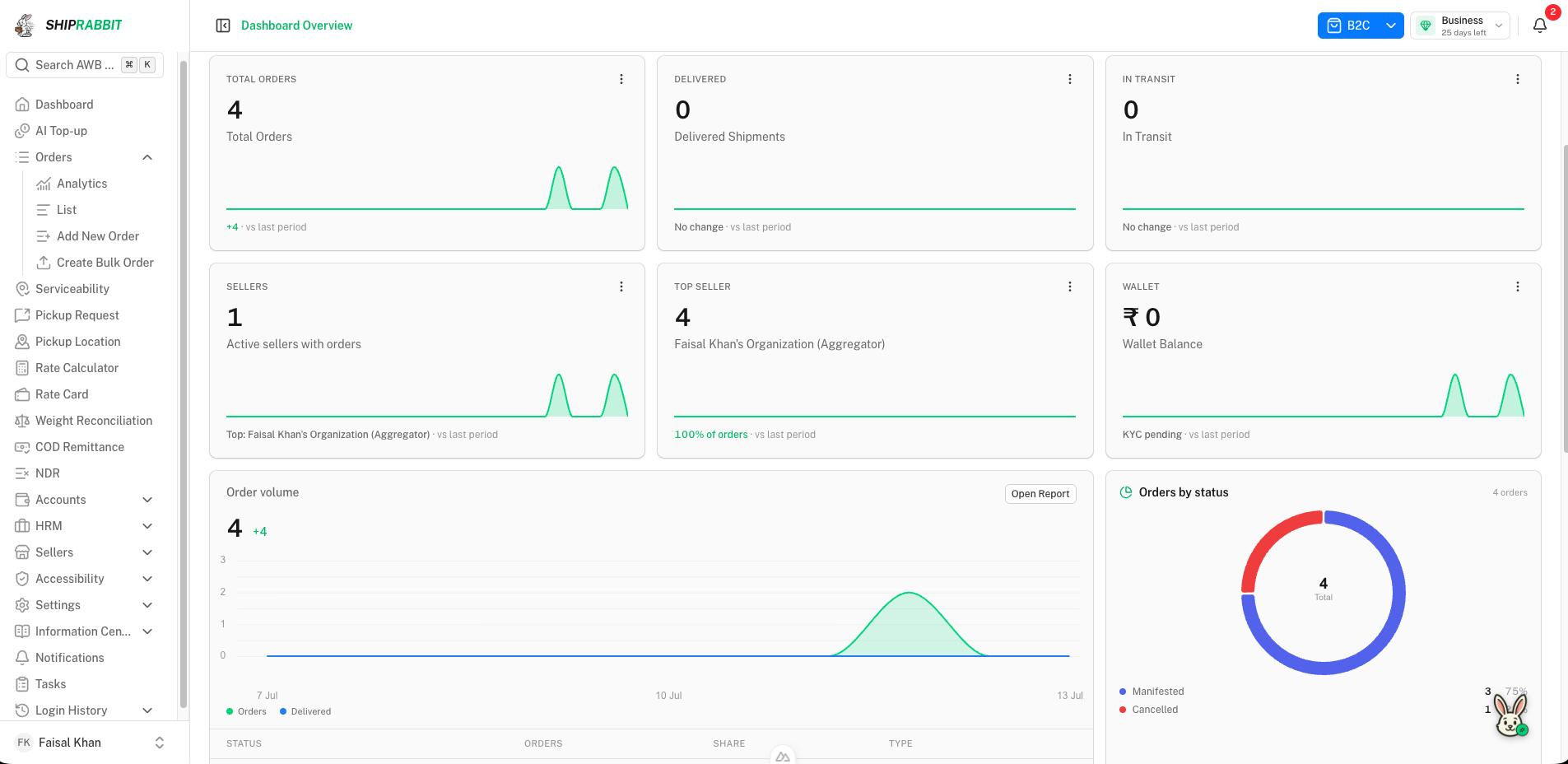
Integration depth matters. AI recommendations are only useful if they connect to booking systems automatically. A dashboard suggesting Carrier B while your workflow defaults to Carrier A adds no value. Platforms like ShipRabbit embed AI-assisted selection directly into multi-courier booking workflows.
Human oversight remains important. Operations teams should review AI override patterns, investigate when recommendations consistently underperform on specific lanes, and adjust business constraints — never ship via Carrier X on Sundays — that models should respect.
AI vs rules: practical distinction
Rule-based routing is transparent: if zone equals North and COD exceeds 2000, use Carrier A. AI routing learns patterns rules miss — subtle correlations between product category, buyer pincode cluster, and carrier performance that humans do not encode. Many production systems combine both: rules handle hard constraints, AI optimizes within allowed options.
AI for Cost Reduction and Exception Management
Cost-focused AI compares rate quotes across carriers while weighting RTO probability — a slightly higher freight charge on a carrier with lower RTO on the lane may reduce total landed cost. How AI can reduce shipping costs explores this trade-off.
On the exception side, AI prioritizes NDR queues by predicted recovery probability and order value, ensuring staff and automated outreach focus on shipments most likely to convert to successful delivery. Lower-priority NDRs still receive outreach but after high-value cases are actioned.
Anomaly detection alerts operations when RTO rate on a lane spikes unexpectedly — often signaling a carrier service issue or address data problem in a new marketing campaign's order mix before margin damage accumulates.
| AI use case | Input data | Output action |
|---|---|---|
| Courier selection | Order + lane history | Carrier assignment |
| Rate optimization | Multi-carrier quotes + RTO history | Lowest landed cost choice |
| NDR prioritization | NDR reason + order value | Outreach queue order |
| Delivery prediction | Transit history by lane | Checkout ETA display |
| Address risk scoring | Address fields + historical RTO | Hold for verification |
Evaluating AI Shipping Features in Platforms
When vendors claim AI capabilities, ask what decisions the AI makes, what data it requires, how recommendations are validated, and whether you can override or constrain outputs. Request examples on your actual pincode mix rather than generic demos on metro lanes only.
Distinguish marketing AI from operational AI. A static "recommended courier" label based on cheapest rate is not machine learning — it is a rate sort. Genuine AI shipping features improve measurably over time as outcome data accumulates and models retrain or adapt.
ShipRabbit's courier aggregator software includes AI-assisted courier selection as part of its multi-courier platform — designed for logistics operators and aggregators who need intelligent routing at scale across seller networks, not only for individual merchant dashboards.
Getting Started with AI in Your Shipping Stack
Begin with data hygiene: ensure order weight, pincode, payment mode, and delivery outcome are captured consistently. Implement multi-courier shipping so AI has multiple options to choose from — AI on a single carrier is just order classification.
Pilot AI selection on a subset of zones where you have strong historical data before national rollout. Compare delivery success rate and cost per delivered order against your baseline rules over four to six weeks.
Explore shipping automation, multi-courier shipping, and the ShipRabbit platform to understand how AI fits into a complete automated shipping operation.
Limitations and Realistic Expectations
AI shipping tools cannot fix fundamentally bad address data, unreliable inventory sync, or carrier hub outages. They optimize decisions within the constraints of your data quality and carrier network availability. Expect incremental improvement on routing and exception prioritization, not elimination of all RTO or shipping cost overnight.
Cold-start periods affect new lanes or newly integrated carriers where historical outcome data is sparse. During cold start, hybrid systems fall back to rule-based routing until sufficient delivery outcomes accumulate for reliable scoring.
Regulatory and contractual constraints remain human-defined. AI should not override marketplace-mandated carriers, COD caps on certain categories, or shipper agreements requiring volume commitments to specific partners.
Transparency builds operations trust. Teams that understand why AI selected a carrier — cost score, success probability, speed weight — adopt automation faster than black-box systems that assign shipments mysteriously and erode confidence during exceptions.
Future Directions in AI Shipping
Demand forecasting linked to shipping capacity planning helps merchants pre-position inventory before regional demand spikes — reducing expedited shipping premiums during unexpected surges. Checkout delivery date promises powered by transit time models reduce refusal rates from unrealistic ETAs.
Conversational AI for NDR outreach — chatbots collecting address corrections via WhatsApp — continues improving buyer response rates compared to one-way SMS templates. Integration with vernacular language support matters for tier-2 and tier-3 buyer reach.
ShipRabbit continues investing in AI-assisted courier selection and automation within its white-label aggregator platform, targeting logistics operators who need intelligent routing at scale across diverse seller order profiles rather than one-size-fits-all merchant defaults.
Privacy and Data Considerations
AI shipping models process buyer addresses, phone numbers, order values, and delivery outcomes. Ensure data handling complies with applicable privacy regulations and your privacy policy commitments. Minimize PII exposure in model training datasets where possible through aggregation and anonymization.
Buyer communication automation for NDR must respect opt-out preferences and messaging frequency limits. Over-messaging buyers during NDR recovery damages brand perception even when logistics intent is legitimate.
When evaluating AI shipping vendors, review data retention policies, subprocessors, and whether delivery outcome data trains shared models across customers versus isolated tenant models.
Key Takeaways
- AI analyzes historical delivery data to predict the best courier per pincode
- Machine learning models forecast shipping demand for capacity planning
- NDR prediction identifies high-risk shipments before delivery attempts fail
- Automated rule engines replace manual courier assignment at scale
- AI-driven cost optimization balances shipping price against delivery success probability
Frequently Asked Questions
How is AI used in eCommerce shipping today?
Primary applications include intelligent courier selection, RTO risk scoring, NDR prioritization, rate optimization, and demand forecasting.
Do small sellers benefit from AI shipping tools?
Yes. AI levels the playing field by giving small sellers data-driven courier selection that previously required large analytics teams.
Is AI courier selection accurate?
Models improve with data volume. Platforms processing millions of shipments achieve measurably better outcomes than static rule-based assignment.
Will AI replace shipping operations teams?
No. AI automates routine decisions and flagging. Ops teams focus on exceptions, seller relationships, and strategic carrier negotiations.
ShipRabbit
Learn how ShipRabbit helps businesses automate shipping
Discover how a unified courier aggregation platform simplifies multi-carrier shipping for eCommerce teams.
Related Articles
AI-Powered Courier Selection Explained
How AI-powered courier selection works — data inputs, scoring models, pincode performance analysis, and automated routing that cuts costs and RTO.
Read article →How AI Can Reduce Shipping Costs
Learn how AI reduces eCommerce shipping costs through dynamic courier selection, zone-aware rate optimization, RTO prediction, and automated rules.
Read article →Shipping Automation for eCommerce Businesses
How shipping automation helps eCommerce businesses scale — auto label generation, tracking sync, NDR workflows, courier rules, and API integrations.
Read article →How to Improve eCommerce Delivery Success Rate
Actionable strategies to improve your eCommerce delivery success rate — courier selection, NDR automation, address validation, and performance analytics.
Read article →Stay ahead in eCommerce logistics
Get practical shipping guides, courier insights, and automation tips delivered to your inbox.