
How Multi-Courier Shipping Works
Learn how multi-courier shipping works — order routing rules, rate comparison, serviceability checks, and unified tracking across carrier partners.
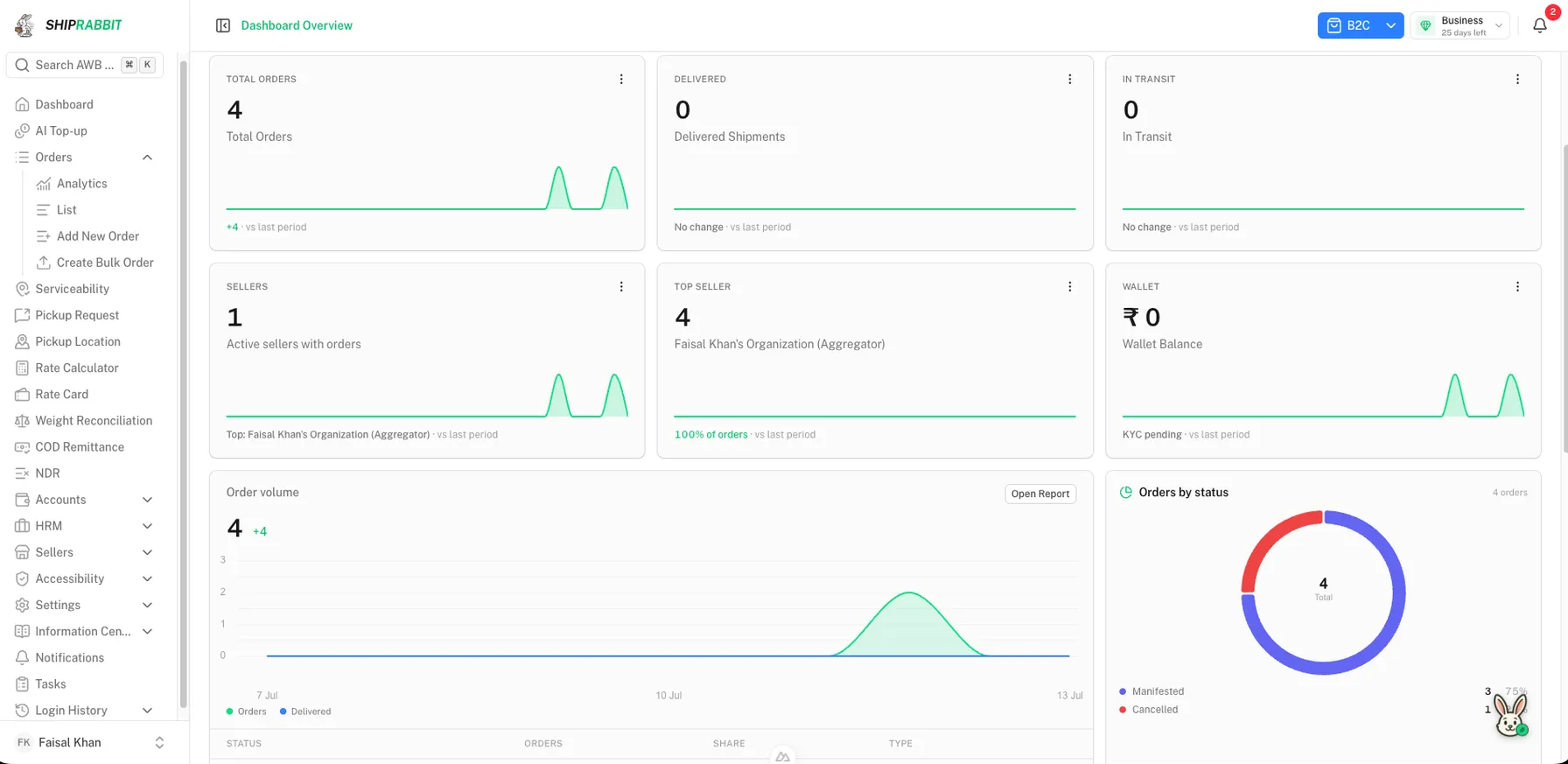
The Core Concept
Multi-courier shipping means routing each order to one of several courier partners rather than sending every shipment through a single carrier. Instead of maintaining one Delhivery or Blue Dart account and accepting their coverage gaps and rate structures as fixed constraints, you choose the best partner per shipment based on serviceability, cost, speed, and historical performance on that lane.
The approach recognizes that no single courier dominates every pincode in India. Metro prepaid lanes, tier-3 COD destinations, heavy shipments, and express orders each have different optimal carriers. Multi-courier shipping operationalizes that reality through software rather than ad hoc manual decisions.
For platform-level context, read multi-courier shipping software explained and what courier aggregator software is.
How an Order Flows Through Multi-Courier System
When an order enters your system — via OMS, eCommerce platform sync, or API — the multi-courier engine evaluates it against available carriers. First, serviceability checks filter couriers that cannot deliver to the destination pincode with the required payment mode. Second, rate lookup retrieves shipping charges from remaining eligible partners. Third, routing rules or selection logic pick the winning courier. Fourth, the platform books the shipment via that carrier's API and returns AWB and label data.
Tracking events flow back through the same platform layer, normalized to common status codes regardless of which carrier handles the shipment. NDR events, COD remittance status, and RTO updates follow the same unified path.
This abstraction is what courier aggregator software provides at scale — one workflow for operations teams regardless of underlying carrier count.
- Order ingested with origin, destination, weight, payment mode
- Serviceability filtered across all integrated couriers
- Rates fetched for eligible carriers
- Routing rule or AI selection chooses courier
- Shipment booked and label generated via carrier API
- Tracking and exceptions unified in one dashboard
Routing Rules vs Intelligent Selection
Basic multi-courier setups use static rules: cheapest courier per zone, specific carrier for COD above a value threshold, express SKU mapping to air partners. Rules are transparent and predictable but require manual updates when rate cards or performance profiles change.
Advanced setups weight multiple factors — cost, promised delivery date, historical RTO rate on the lane, current carrier capacity signals — through scoring algorithms or AI models. AI-powered courier selection explains how intelligent selection differs from static cheapest-carrier defaults.
Most operations start with rules and add intelligence as data volume grows. A seller shipping 30 orders daily may not need ML routing; a brand shipping 3,000 daily across 20,000 pincodes benefits significantly from automated optimization.
Fallback routing
When the primary courier rejects a booking — API error, sudden serviceability change, weight limit exceeded — fallback logic tries the next eligible carrier automatically. Without fallback, orders stall in error queues while staff manually rebook. Configure fallback chains per zone to minimize fulfillment delays during carrier outages.
Multi-Courier vs Single-Courier Operations
Single-carrier operations are simpler: one portal, one rate card, one tracking format. They work when volume is low and the carrier covers your pincode mix reliably. Complexity appears as volume and geographic spread grow — RTO spikes on uncovered lanes, rate competitiveness erodes, and carrier downtime stops all fulfillment.
Multi-courier operations add platform cost and routing discipline but provide resilience and optimization. The break-even point depends on order volume, zone diversity, and COD percentage — not a universal threshold.
Aggregator vs direct integration helps technical teams understand integration implications of multi-carrier architecture.
| Dimension | Single courier | Multi-courier |
|---|---|---|
| Pincode coverage | Limited to one network | Combined coverage across partners |
| Cost optimization | Fixed rate card | Per-order best rate selection |
| Resilience | Carrier outage stops shipping | Fallback to alternate partners |
| Operational complexity | Low | Requires platform or manual comparison |
| Performance tuning | Limited levers | Per-lane courier assignment |
Implementation Options
Manual multi-courier: staff compare rates in multiple portals and book separately. Viable only at very low volume. Spreadsheet-driven: export orders, lookup rates, import AWBs. Error-prone and slow.
Aggregator platform: integrate once with ShipRabbit's courier aggregator software or similar, configure routing rules, and manage all carriers from one dashboard and API. Best for most scaling sellers and logistics operators.
Custom build: develop your own routing engine and carrier integrations. Highest control, highest engineering cost. Build vs buy analyzes when custom development makes sense — typically for large enterprises or aggregators with unique business models.
Getting the Most from Multi-Courier Shipping
Maintain accurate product weights and dimensions in your catalog — routing and rate accuracy depend on them. Review RTO and delivery success by courier monthly and update rules accordingly.
Combine multi-courier routing with NDR automation and shipping automation for end-to-end operational efficiency.
Explore the ShipRabbit platform for multi-courier booking, AI-assisted selection, white-label seller portals, and REST APIs — whether you ship as a merchant or operate an aggregation business.
Credential and Contract Management Across Carriers
Multi-courier shipping requires active accounts and API credentials with each partner. Track contract renewal dates, rate card effective periods, and COD limit changes per carrier. An expired commercial agreement may silently block bookings while serviceability APIs still return positive results until booking submission fails.
Wallet balances and credit limits differ by carrier. Some require prepaid wallet top-ups before booking; others operate on postpaid billing cycles. Centralize balance monitoring so dispatch is not halted mid-batch when one carrier's wallet empties during a sale event.
Aggregator platforms consolidate billing and credentials behind one seller wallet — simplifying multi-carrier economics for merchants and essential for aggregators managing hundreds of seller accounts. How courier aggregator software works explains backend credential management that sellers never see directly.
Reporting Across Multiple Carriers
Unified reporting is a primary multi-courier benefit. Without aggregation, finance downloads separate statements from each carrier portal and manually combines shipping spend, COD remittance, and RTO charges. Aggregated dashboards show total cost per delivered order, RTO rate by carrier, and zone-level performance in one view.
Standardized AWB and order reference mapping across carriers enables cross-carrier analytics. When each portal uses different column names and date formats, spreadsheet consolidation introduces errors that hide true lane economics.
Export APIs and scheduled report delivery from aggregator platforms feed BI tools for leadership dashboards. ShipRabbit provides reporting suited to both direct merchants and aggregators tracking seller network performance across shared carrier infrastructure.
Onboarding New Courier Partners
Adding a carrier to your multi-courier mix requires API credential setup, rate card configuration, serviceability testing on representative pincodes, label format validation with warehouse printers, and parallel tracking webhook mapping before routing production volume.
Pilot new carriers on low-risk prepaid lanes before shifting COD or high-value orders. Compare delivery success and cost against incumbent partners over four to six weeks with matched order profiles.
When using an aggregator platform, carrier onboarding often happens at the platform level — you enable new partners in configuration rather than building integrations yourself. Courier API integration complexity is absorbed by the platform vendor, accelerating time to add carrier diversity.
Failure Handling in Multi-Courier Routing
When primary carrier booking fails, fallback routing attempts the next eligible partner automatically. Configure fallback chains per zone before peak season rather than improvising during API outages.
Surface booking failures prominently in dispatch dashboards — silent failures where orders appear shipped but lack valid AWBs cause marketplace SLA breaches and buyer complaints. Automated retry with alert escalation handles transient errors; permanent failures need human review queues.
Key Takeaways
- Orders enter the system via API, CSV upload, or marketplace connector
- Serviceability checks filter couriers that can deliver to the destination pincode
- Routing rules or AI select the optimal courier based on cost, speed, and performance
- Labels generate via the chosen courier API and print at the warehouse
- Tracking from all carriers normalizes into one status feed for buyers and ops teams
Frequently Asked Questions
Can I set rules for which courier handles which order?
Yes. Rule engines assign couriers by pincode, weight, payment mode, order value, or product category — automatically or with manual override.
What happens if the selected courier rejects the shipment?
The platform falls back to the next eligible courier based on your rules, ensuring the order still ships without manual intervention.
How does multi-courier shipping handle returns?
Reverse pickup APIs from connected couriers manage return shipments with the same unified workflow as forward deliveries.
Do buyers see which courier is delivering their order?
Branded tracking pages show carrier name, AWB number, and live status regardless of which partner handles the specific shipment.
ShipRabbit
Learn how ShipRabbit helps businesses automate shipping
Discover how a unified courier aggregation platform simplifies multi-carrier shipping for eCommerce teams.
Related Articles
Multi-Courier Shipping Software Explained
Learn what multi-courier shipping software is, how it routes orders across carriers, and why eCommerce businesses rely on it for scalable fulfillment.
Read article →How Courier Aggregator Software Works
Understand how courier aggregator software routes orders to carriers, compares rates, generates labels, and syncs tracking through a single unified platform.
Read article →How to Choose the Right Courier for an Order
Learn how to choose the right courier for each order using pincode serviceability, weight slabs, COD support, speed, and historical performance data.
Read article →Shipping Aggregator Software: The Complete Guide
The complete guide to shipping aggregator software — definitions, features, use cases, and how it helps eCommerce and logistics businesses ship smarter.
Read article →Stay ahead in eCommerce logistics
Get practical shipping guides, courier insights, and automation tips delivered to your inbox.