
Shipping Automation for eCommerce Businesses
How shipping automation helps eCommerce businesses scale — auto label generation, tracking sync, NDR workflows, courier rules, and API integrations.
What Shipping Automation Means
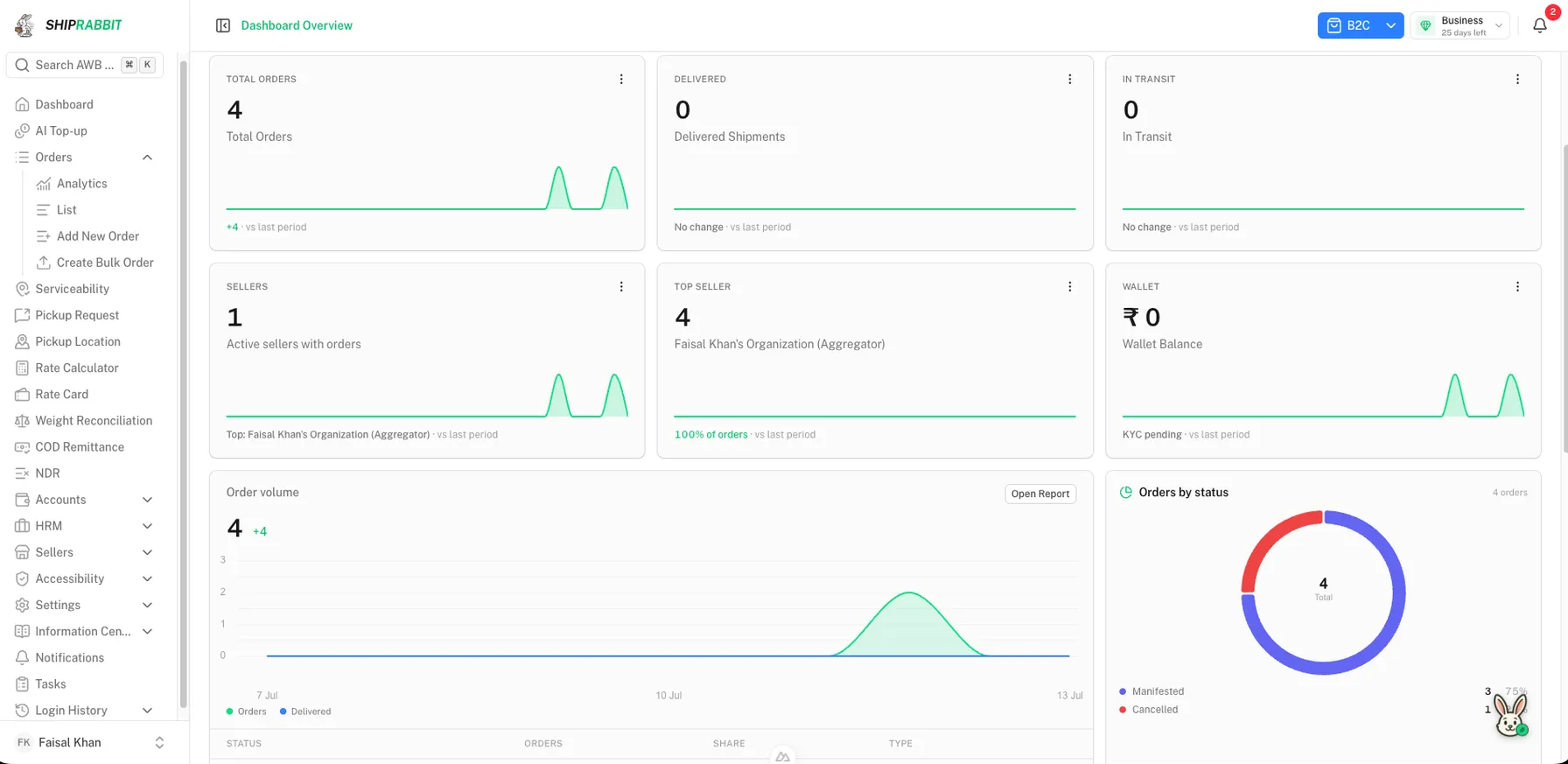
Shipping automation is the use of software integrations and workflow rules to execute logistics tasks without manual intervention — order import, serviceability check, courier selection, label generation, tracking sync, buyer notifications, NDR outreach, and COD remittance reconciliation. Manual shipping workflows require staff to copy order data into courier portals, download labels individually, and update tracking in each sales channel separately.
Automation does not eliminate human judgment entirely. It removes repetitive, error-prone steps and surfaces exceptions — address failures, booking errors, high-priority NDRs — for targeted human action rather than routine processing.
For merchants scaling beyond 30 to 50 daily shipments, automation typically pays for itself in reduced labor cost, fewer booking errors, and faster dispatch cycles. Multi-courier shipping and AI in shipping extend automation with intelligent decision-making.
Core Workflows to Automate First
- Order import from eCommerce platforms, marketplaces, or OMS via API or channel connector
- Serviceability validation before order confirmation or before dispatch
- Courier selection via rules or AI based on zone, weight, and payment mode
- Bulk shipment booking and label generation for warehouse dispatch batches
- Tracking number sync back to Shopify, WooCommerce, Amazon, or custom storefronts
- Automated buyer notifications at dispatch and out-for-delivery milestones
- NDR ingestion, buyer outreach, and carrier action submission
- COD remittance status tracking and finance reconciliation reports
Order-to-Label Automation
The highest-impact starting point is automated order-to-label flow. Orders arriving from sales channels trigger shipment creation in your shipping platform via API. The platform selects a courier, books the AWB, generates the label, and queues it for warehouse printing — without staff opening a courier portal.
Bulk processing handles peak volume: select 200 ready-to-ship orders, generate all labels in one batch, print manifest, and hand to pickup. Error handling surfaces the 3 failed bookings for review while the 197 proceed normally.
Integration options include direct courier API connections per carrier or a single aggregator API through platforms like ShipRabbit that manage multi-carrier booking behind one integration.
Channel sync
Automated tracking sync prevents "where is my order?" support tickets. When AWB is created, push tracking URL and carrier name to the sales channel so marketplace SLAs and buyer notification emails trigger automatically. Bidirectional sync also imports cancellation requests so you do not ship cancelled orders.
Exception Automation: NDR and RTO Prevention
Dispatch automation saves labor; exception automation saves revenue. When NDR events arrive from carriers, automated workflows message buyers, capture responses, and submit reattempt or address-update actions to couriers within hours — not after staff manually checks portals the next morning.
NDR management workflows detail exception handling. Automation here directly supports RTO reduction and delivery success rate improvement.
Configure escalation rules: if automated outreach receives no buyer response within 24 hours, escalate to phone support for high-value orders before carrier RTO timers expire.
Intelligent Automation with AI
Rule-based automation executes fixed logic reliably. AI-enhanced automation adapts decisions — courier selection, NDR prioritization, delivery date estimates — based on outcome data. AI courier selection is the most common AI automation layer for growing brands.
Start with deterministic automation on order import, label generation, and tracking sync. Add AI selection once multi-carrier data volume supports it. Attempting AI before basic automation is stable produces confusing failures when root cause is bad address data, not selection logic.
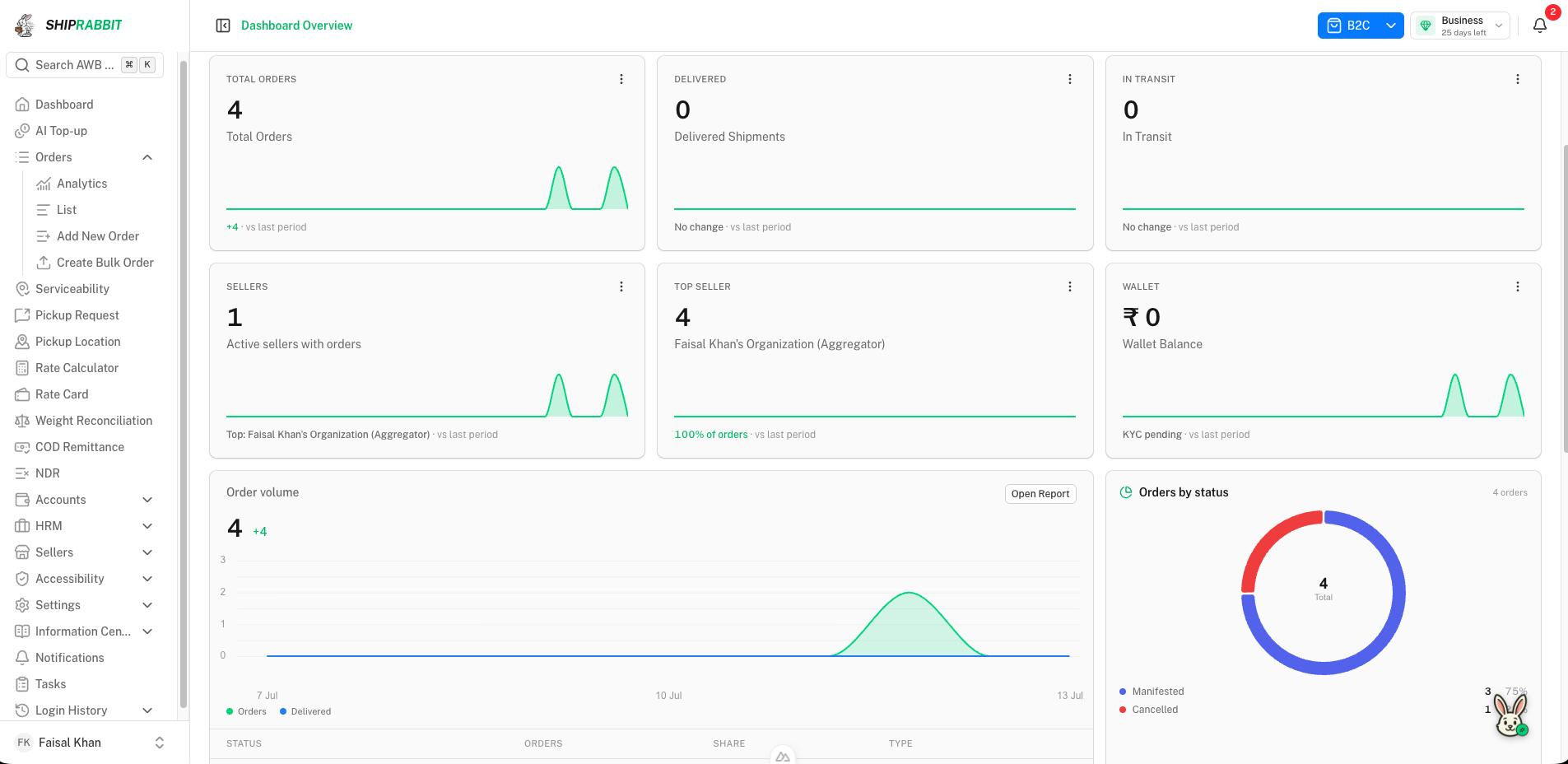
ShipRabbit combines workflow automation with AI-assisted courier selection on its courier aggregator platform — particularly valuable for aggregators automating shipping across large seller networks with white-label seller portals.
| Workflow | Automation type | Primary benefit |
|---|---|---|
| Order import | Rule-based connector | Eliminate manual entry |
| Label generation | Rule-based batch | Faster dispatch |
| Courier selection | Rules or AI | Cost and success optimization |
| Tracking sync | Rule-based webhook | Fewer support tickets |
| NDR outreach | Rule-based + templates | RTO reduction |
| NDR prioritization | AI scoring | Focus staff on recoverable orders |
Choosing an Automation Platform
Evaluate whether the platform supports your sales channels, required couriers, COD workflows, and API access for custom integrations. Test bulk booking performance at your peak daily volume, not average volume.
White-label aggregators building seller-facing products need seller portals, wallet billing, and configurable rate cards — not just merchant automation. White-label courier aggregator software covers platform requirements for logistics businesses.
Build vs buy helps technical leaders decide whether to develop custom automation or adopt an existing platform.
Implementation Roadmap
Phase one: connect order source and automate label generation with a single courier. Phase two: enable multi-courier booking and rate comparison. Phase three: automate tracking sync and buyer notifications. Phase four: NDR automation and COD remittance tracking. Phase five: AI-assisted selection and advanced analytics.
Skipping phases creates fragile automation — NDR automation without reliable booking produces exceptions nobody trusts. Validate each phase for two weeks before advancing.
Explore the ShipRabbit courier aggregator platform for end-to-end shipping automation designed for both merchants and logistics operators building aggregation businesses.
Common Automation Failure Modes
Automation fails when master data is dirty. Wrong product weights, stale pincode tables, and duplicate SKUs in the catalog propagate through automated booking at scale faster than through manual booking where humans catch obvious errors.
Over-automation without exception visibility hides problems until customers complain. Always maintain exception dashboards for failed bookings, webhook gaps, and NDR aging — automation handles the happy path; humans handle edge cases surfaced clearly.
Channel sync conflicts occur when orders cancel in Shopify after labels generate locally. Implement cancellation webhooks that void AWBs where carriers support cancellation APIs, or flag orphaned labels before dispatch to prevent shipping cancelled orders.
Testing automation at average daily volume misses peak behavior. Load-test bulk booking at 3x normal peak before festive season; rate limits and queue backlogs appear only under stress.
Team Structure for Automated Shipping Operations
Automation shifts team skills from data entry to exception management and system monitoring. Hire and train for investigation capability — tracing why a batch of 50 orders failed booking — rather than throughput of manual portal entry.
Define on-call rotation for fulfillment systems during sale events. Automated pipelines still need humans when carrier APIs degrade or webhook infrastructure fails.
Aggregators add seller success and onboarding roles explaining automated workflows to merchants joining the platform. Seller adoption of automation features — bulk labels, NDR self-service — reduces support load on your operations center.
Starting a courier aggregation business covers operational team design for logistics startups launching on automated white-label platforms like ShipRabbit.
Integration Architecture for Automated Shipping
Automation architecture typically connects sales channels to a shipping platform via webhooks or polling, shipping platform to couriers via courier APIs, and shipping platform back to channels for tracking sync. Event-driven design handles spikes better than batch cron jobs that fall behind during peak hours.
Idempotent webhook handlers prevent duplicate shipment creation when sales channels retry order notifications. Queue-based processing with dead-letter queues isolates poison messages without blocking entire order pipelines.
For custom storefronts, REST APIs from aggregator platforms like ShipRabbit replace multiple direct carrier integrations — one automation path regardless of how many couriers serve your orders behind the platform layer.
Measuring Automation ROI
Compare dispatch labor hours per 100 orders before and after automation rollout. Track booking error rate — duplicate AWBs, wrong payment mode, incorrect weight — which should decline as manual entry disappears.
Measure tracking sync lag between label generation and marketplace tracking upload. Automation should compress this to minutes, improving buyer experience and marketplace SLA compliance simultaneously.
Review exception queue volume: total exceptions may rise initially as automation surfaces hidden problems previously lost in manual noise, then decline as root causes are fixed systematically.
Key Takeaways
- Orders flow automatically from store to shipping platform via API or channel connectors
- Courier assignment rules eliminate manual carrier selection for every shipment
- Bulk label generation and printing batch-process hundreds of orders in minutes
- Tracking numbers sync back to marketplaces and trigger buyer notifications automatically
- NDR and COD workflows run without ops team intervention for standard cases
Frequently Asked Questions
What shipping tasks can be automated?
Order import, courier selection, label generation, tracking sync, buyer notifications, NDR follow-up, and COD remittance tracking.
At what order volume does shipping automation pay off?
Most sellers benefit at 30+ daily orders. Below that, manual processes may suffice, but automation still saves time on tracking and NDR.
Which eCommerce platforms support shipping automation?
Shopify, WooCommerce, Magento, and custom stores integrate via APIs. Marketplace connectors cover Amazon, Flipkart, and Meesho.
Do I need a developer to set up shipping automation?
Pre-built integrations work out of the box for popular platforms. Custom setups via API require initial engineering but run autonomously afterward.
ShipRabbit
See how ShipRabbit manages multiple courier partners from one dashboard
Reduce shipping costs, improve delivery success, and scale operations without switching between courier portals.
Related Articles
What Is a Shipping API?
Learn what a shipping API is, how it connects your store or OMS to courier partners, and the core endpoints for booking, tracking, and rate calculation.
Read article →How Courier APIs Work
A technical overview of how courier APIs work — authentication, endpoints, webhooks, rate requests, label generation, and integration best practices.
Read article →AI in eCommerce Shipping
Explore how AI is transforming eCommerce shipping — smart courier selection, demand forecasting, NDR prediction, and automated logistics optimization.
Read article →
Courier Aggregator Software for Online Sellers
How online sellers use courier aggregator software to compare rates, print bulk labels, automate tracking, and ship through multiple couriers efficiently.
Read article →Stay ahead in eCommerce logistics
Get practical shipping guides, courier insights, and automation tips delivered to your inbox.