
AI-Powered Courier Selection Explained
How AI-powered courier selection works — data inputs, scoring models, pincode performance analysis, and automated routing that cuts costs and RTO.
What AI-Powered Courier Selection Does
AI-powered courier selection automatically assigns each order to the courier partner most likely to deliver it successfully at optimal cost — using data from historical shipments rather than fixed defaults or manual staff decisions. The system evaluates eligible carriers per order based on serviceability, then scores or ranks them using models trained or calibrated on your delivery outcome data.
Unlike static rules that say "use Carrier A for Zone North," AI selection adapts as carrier performance shifts, rate cards update, and your order mix changes. It can detect that Carrier B recently improved tier-3 performance in Maharashtra while Carrier A degraded — and adjust assignments without someone manually updating a spreadsheet.
For broader AI context, read AI in eCommerce shipping. For implementation mechanics, see how multi-courier shipping works.
How Selection Models Evaluate an Order
When an order enters the selection pipeline, the system extracts features: origin pincode, destination pincode, mapped zone, dead weight, volumetric weight, payment mode, order value, product category, and any priority flags. Serviceability filtering removes carriers that cannot handle the lane or payment type.
For each remaining carrier, the model evaluates predicted outcomes: expected freight cost, estimated transit days, probability of first-attempt delivery, probability of RTO, and COD remittance cycle if applicable. Weights reflect your business priorities — cost-focused merchants weight freight heavily; premium brands weight delivery speed and success probability.
The winning carrier is booked automatically through the aggregator API unless business rules require manual approval for exceptions — high-value orders, specific buyer blocks, or contractual carrier commitments.
- Extract order features: zone, weight, payment mode, value, category
- Filter ineligible carriers via serviceability checks
- Score remaining carriers on cost, speed, and predicted success
- Apply business constraints and hard rules before final selection
- Book shipment with selected carrier via API
- Log selection decision for outcome tracking and model improvement
AI Selection vs Rule-Based Routing
Rule-based routing works well when your shipping profile is stable and your team actively maintains rules. It is transparent and auditable — anyone can read "COD orders above 5000 to East zone use Carrier C" and understand why a shipment was assigned.
AI selection adds value when rule maintenance cannot keep pace with complexity: thousands of pincodes, multiple carriers with shifting performance, mixed COD and prepaid catalogs, and seasonal volume swings. It discovers non-obvious patterns — specific product categories with higher RTO on certain carriers, or pincode clusters where a mid-priced carrier outperforms both cheapest and fastest options.
Production systems often hybridize: hard rules enforce non-negotiable constraints; AI optimizes within the allowed set. Manual courier selection framework helps you define constraints before enabling AI.
| Aspect | Rule-based | AI-powered |
|---|---|---|
| Transparency | Fully explicit | Requires explanation tooling |
| Maintenance | Manual rule updates | Adapts with new data |
| Data requirements | Low | Moderate to high volume |
| Complexity handling | Limited rule count | Many interacting factors |
| Best starting point | Low volume, simple mix | High volume, diverse lanes |
Measuring Selection Quality
Evaluate AI selection on delivered-order outcomes, not booking cost alone. Metrics include cost per delivered order (excluding RTO freight), first-attempt delivery rate, overall delivery success rate, average transit time, and NDR-to-RTO conversion rate compared to your pre-AI baseline.
Run controlled comparisons: route 50% of eligible orders through AI selection and 50% through existing rules for a defined period, then compare outcomes on matched zone and weight distributions. Avoid comparing cherry-picked lanes where AI was known to excel.
Review carrier assignment distribution monthly. AI that routes 95% of volume to one carrier may indicate insufficient carrier diversity or a model overfitting to one partner's historical data.
Feedback loops
Selection quality improves when delivery outcomes feed back into the model. Each delivered, RTO, and NDR event linked to the carrier that was selected provides training signal. Platforms that close this loop automatically outperform static scoring that never updates after initial configuration.
ShipRabbit AI-Assisted Selection
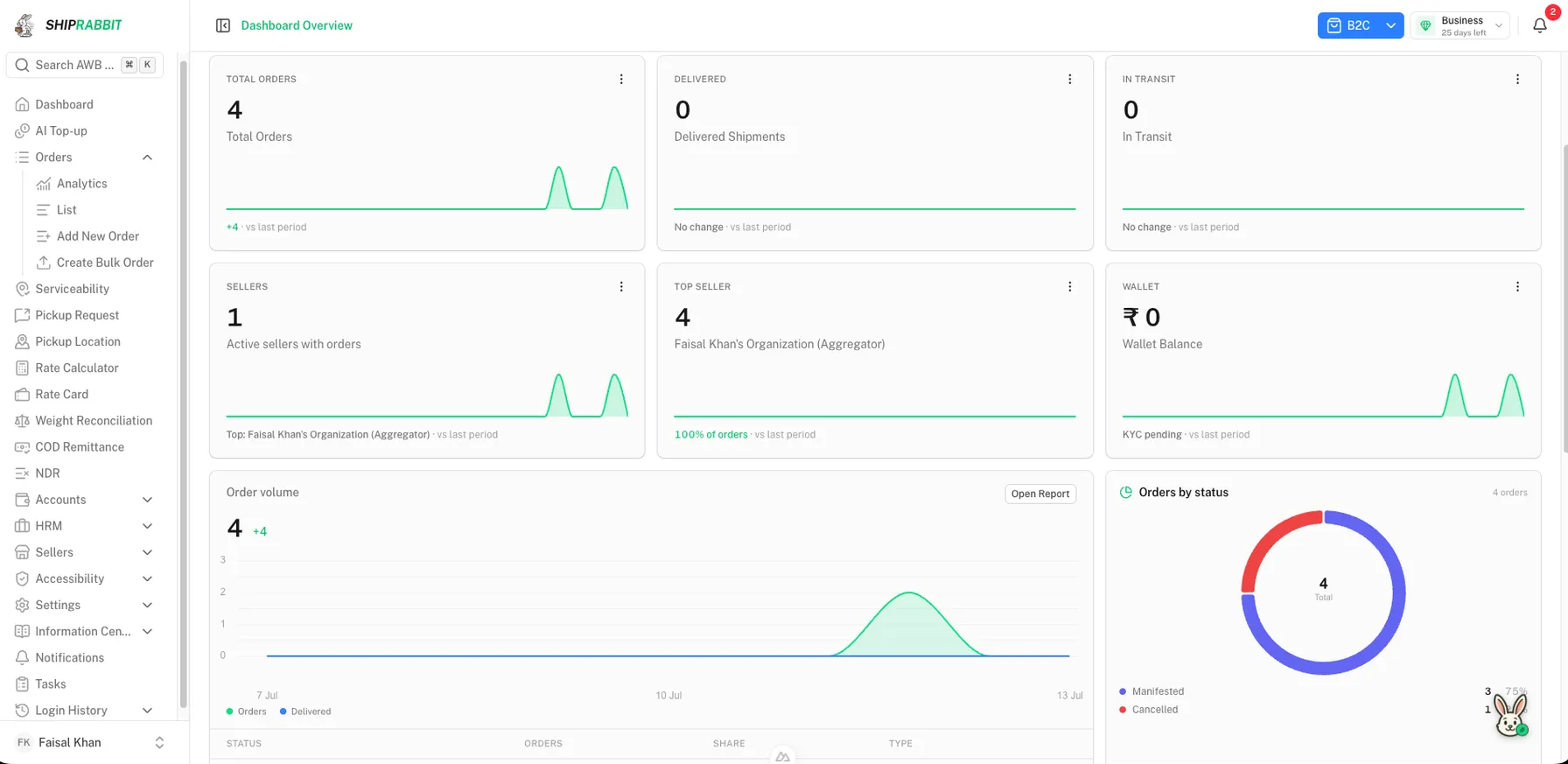
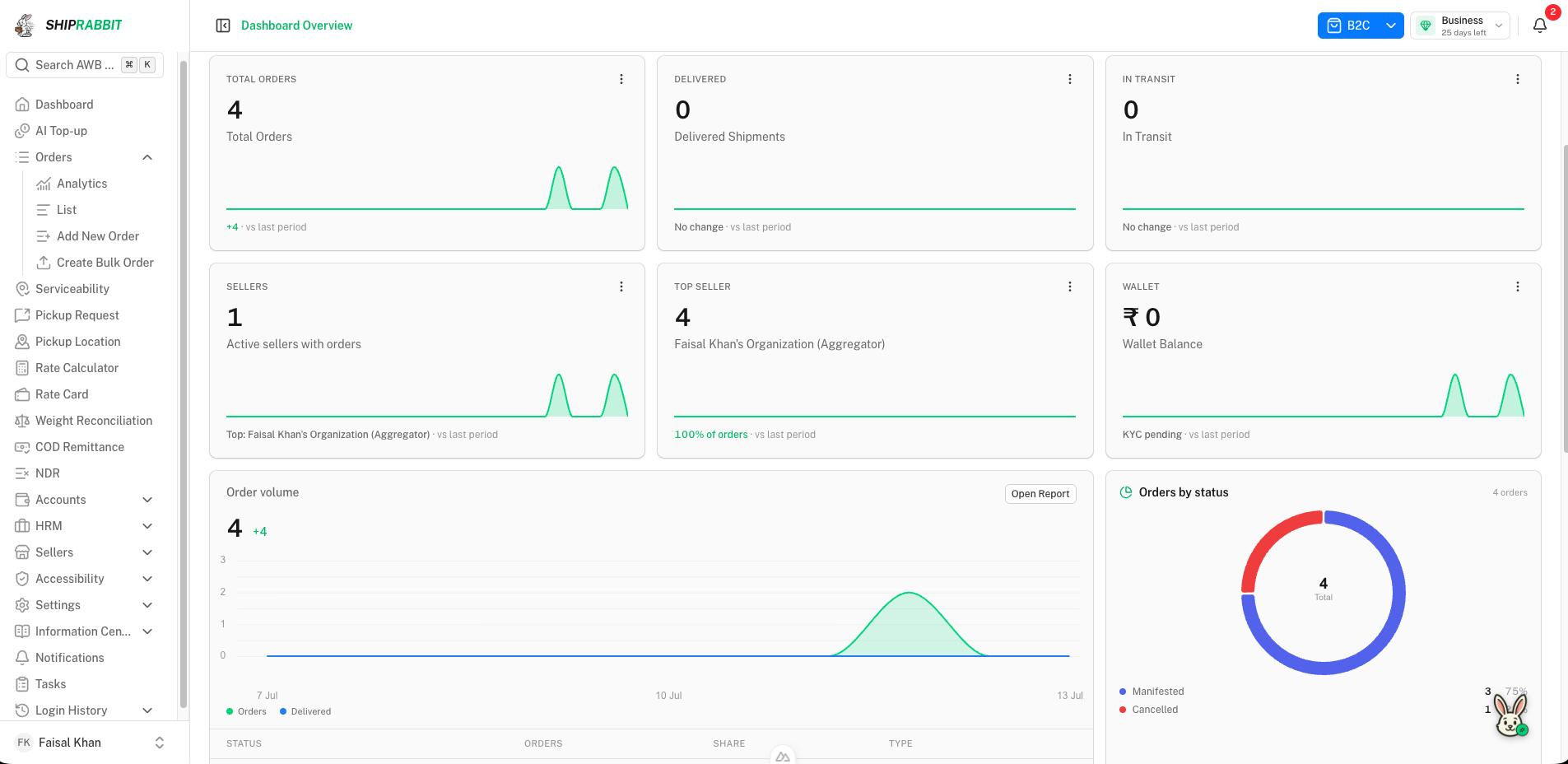
ShipRabbit includes AI-assisted courier selection within its courier aggregator platform. The feature integrates with multi-courier booking, NDR workflows, and seller-facing portals — so logistics aggregators can offer intelligent routing to their merchant networks under a white-label brand rather than exposing sellers to raw carrier complexity.
For aggregators and 3PL operators, AI selection is a differentiation lever: sellers see better delivery outcomes without understanding routing logic. For direct merchants on the platform, it reduces the operational burden of manual courier selection at scale.
Combine AI selection with cost optimization strategies and RTO reduction for compounding margin improvement.
Implementation Considerations
Before enabling AI selection, ensure multi-courier integration is live with at least two viable carriers on your primary lanes — selection requires options. Validate that product weights and pincodes in order data are accurate; garbage inputs produce garbage assignments regardless of model sophistication.
Configure override and audit logging so operations teams can investigate unexpected assignments and refine constraints. Set review periods during the first month rather than enabling nationally on day one.
Learn more about platform capabilities at the ShipRabbit courier aggregator hub and shipping automation for eCommerce.
Rollout Strategy for AI Selection
Phase rollout geographically rather than enabling AI nationally on day one. Start with zones where you have six or more months of delivery outcome data across at least two carriers. Compare AI assignments against your existing rules for four weeks before expanding.
Define rollback criteria upfront: if cost per delivered order rises or delivery success rate drops beyond agreed thresholds versus baseline, revert to rules while investigating model inputs or constraint configuration. Rollback should be a configuration toggle, not an engineering emergency.
Involve warehouse staff in rollout. They see label print failures and carrier pickup issues first. Feedback loops from dispatch teams catch selection problems that dashboards miss — wrong carrier for weight slab, label format incompatible with scanner, pickup not scheduled.
Manual selection framework constraints you define during rollout become permanent guardrails that keep AI decisions aligned with business policy.
Explaining AI Decisions to Stakeholders
Finance teams want to understand freight savings; operations wants reliability; sellers on aggregator networks want transparency when shipments assign to unfamiliar carriers. Provide selection explanation fields in dashboards: chosen carrier, runner-up, primary factor (cost, speed, success score).
Seller education reduces support tickets when AI routes differently than sellers expect. Help documentation explaining that selection optimizes delivered-order outcomes — not just cheapest label — sets appropriate expectations for white-label platform users.
ShipRabbit exposes AI-assisted selection within configurable business rules so aggregators balance automation with seller trust — a design choice reflecting that aggregation businesses succeed when sellers understand and accept routing decisions affecting their buyers.
Data Requirements for Effective AI Selection
Minimum viable data for AI courier selection includes at least several thousand historical shipments with recorded courier assignment and delivery outcome across your primary zones. Sparse data on a pincode cluster forces fallback to rules until volume grows.
Feature quality beats feature quantity. Accurate weight, correct pincode, and reliable delivery outcome labels outperform exotic features with dirty data. Invest in catalog weight maintenance and delivery status reconciliation before advanced model features.
Continuous data pipeline from booking through delivery closure ensures models train on complete outcomes rather than partial data where RTO shipments lack final status updates for weeks after initiation.
When Not to Use AI Selection
Skip AI selection for low-volume lanes where historical data is insufficient — rules based on carrier scorecards outperform unreliable models. Skip during carrier network disruption periods when recent data misrepresents normal performance.
High-stakes contractual shipments with mandated carriers should bypass AI entirely via hard rules. AI optimizes routine order flow; exceptions remain human-governed by policy.
Key Takeaways
- AI models ingest pincode-level delivery success, transit time, and cost data per carrier
- Each order receives a courier score based on destination, weight, payment mode, and history
- Models retrain continuously as new delivery outcomes feed back into the system
- Sellers set constraints — preferred carriers, max cost, delivery speed — while AI optimizes within bounds
- ShipRabbit includes AI-assisted courier selection as a core platform capability
Frequently Asked Questions
What data does AI courier selection use?
Pincode serviceability, historical delivery success rates, average transit times, shipping costs, RTO history, weight slabs, and payment mode.
Can I trust AI to select couriers automatically?
AI selection outperforms static rules when sufficient historical data exists. Most platforms let you review and override AI decisions during rollout.
How quickly does AI courier selection show results?
Most sellers see measurable improvements in delivery success and shipping cost within 2-4 weeks as the model learns their specific order patterns.
Does AI selection work for new pincodes with no history?
Models fall back to carrier zone-level averages and serviceability data until pincode-specific history accumulates.
ShipRabbit
See how ShipRabbit manages multiple courier partners from one dashboard
Reduce shipping costs, improve delivery success, and scale operations without switching between courier portals.
Related Articles
AI in eCommerce Shipping
Explore how AI is transforming eCommerce shipping — smart courier selection, demand forecasting, NDR prediction, and automated logistics optimization.
Read article →How AI Can Reduce Shipping Costs
Learn how AI reduces eCommerce shipping costs through dynamic courier selection, zone-aware rate optimization, RTO prediction, and automated rules.
Read article →How to Choose the Right Courier for an Order
Learn how to choose the right courier for each order using pincode serviceability, weight slabs, COD support, speed, and historical performance data.
Read article →How to Improve eCommerce Delivery Success Rate
Actionable strategies to improve your eCommerce delivery success rate — courier selection, NDR automation, address validation, and performance analytics.
Read article →Stay ahead in eCommerce logistics
Get practical shipping guides, courier insights, and automation tips delivered to your inbox.