
What Is COD Remittance?
Understand what COD remittance is, how cash-on-delivery collections flow from courier to seller, and typical timelines and reconciliation processes.
The Short Answer
COD remittance is the settlement process by which courier companies collect cash from buyers at delivery and transfer that money to the seller after deducting shipping charges and COD handling fees. When a customer pays cash on delivery, the courier acts as a collection agent; remittance is when that collected cash reaches your business bank account or platform wallet.
The remittance cycle includes collection at doorstep, cash handling and reconciliation at courier hubs, deduction of freight and COD commission, and transfer to the shipper on a defined schedule — daily, weekly, or per carrier contract terms. Until remittance completes, delivered COD orders represent accounts receivable tied up in the courier's settlement pipeline.
Understanding COD remittance is essential for cash flow planning in Indian eCommerce where COD remains a dominant payment mode for many categories and customer segments.
How the COD Money Flow Works
When you book a COD shipment, the AWB includes the collectible amount — the cash the delivery agent should collect from the buyer. Upon successful delivery, the agent collects that amount and records it in the carrier's system. The shipment status moves to delivered with a COD collected flag.
Collected cash moves through the courier's internal reconciliation process. The carrier deducts forward shipping charges, COD service fees (typically a percentage of order value plus a fixed per-shipment component), and any adjustments for weight discrepancies or RTO-related charges on other shipments in your account.
The net amount is remitted to your registered bank account or held in a platform wallet if you ship through an aggregator. Remittance reports itemize each AWB, gross COD collected, deductions, and net payout.
- Buyer pays cash to delivery agent at doorstep
- Courier records COD collection against AWB
- Carrier reconciles collections with shipping charges owed
- Net amount scheduled for remittance per settlement cycle
- Funds transfer to seller bank account or aggregator wallet
- Remittance report issued for finance reconciliation
Remittance Cycles and Cash Flow Impact
Remittance timing varies by courier and contract. Some carriers remit on T+2 or T+3 business days after delivery; others operate weekly settlement batches. Aggregator platforms may offer faster wallet credits with separate withdrawal schedules to bank accounts.
Sellers shipping high COD volume must model cash flow around remittance lag. Delivered orders do not immediately mean available cash — inventory and shipping costs were already incurred, while collected revenue sits in settlement pipeline. Faster remittance cycles improve working capital even when freight rates are identical.
Track days-sales-outstanding on COD separately from prepaid orders. Finance teams need visibility into pending remittance amounts, not just delivered order reports from the OMS.
Deductions and adjustments
Remittance statements include deductions beyond base freight: COD percentage fees, fuel surcharges applied retroactively, weight correction charges, and cross-adjustments for RTO freight on other AWBs in the same settlement batch. Reconcile each line item against your booking records. Unexplained deductions often trace to volumetric re-weighing or rate card tier mismatches.
COD Remittance Tracking in Operations
Without remittance tracking, finance teams manually download reports from multiple courier portals and match AWBs to bank credits — error-prone and slow at volume. Aggregator platforms consolidate remittance status across carriers: collected, pending settlement, remitted, and disputed.
Discrepancies occur when delivery status shows COD collected but remittance omits the AWB, or when collected amount differs from expected order value. Flag these for courier dispute resolution promptly; settlement windows often have claim deadlines.
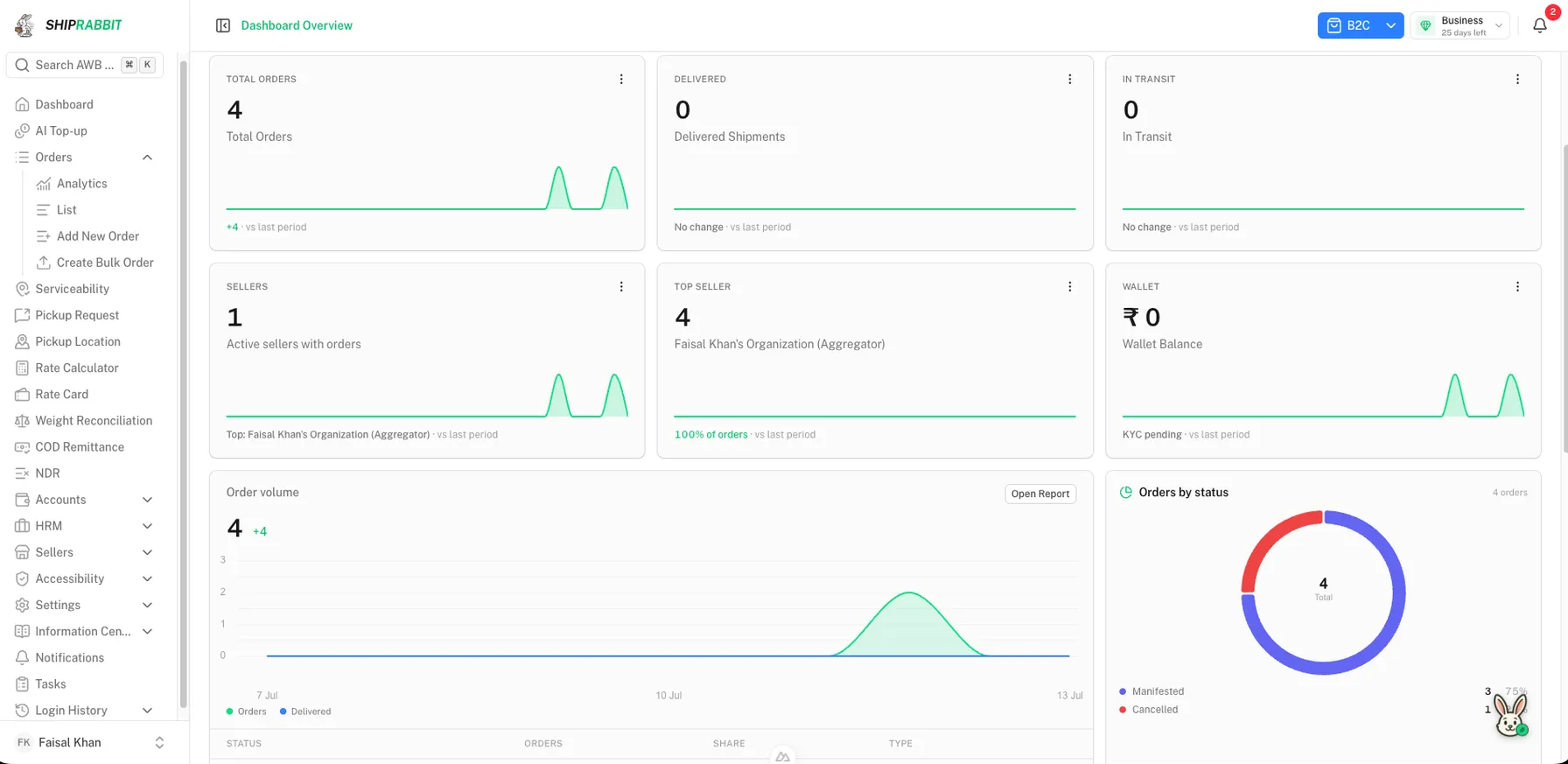
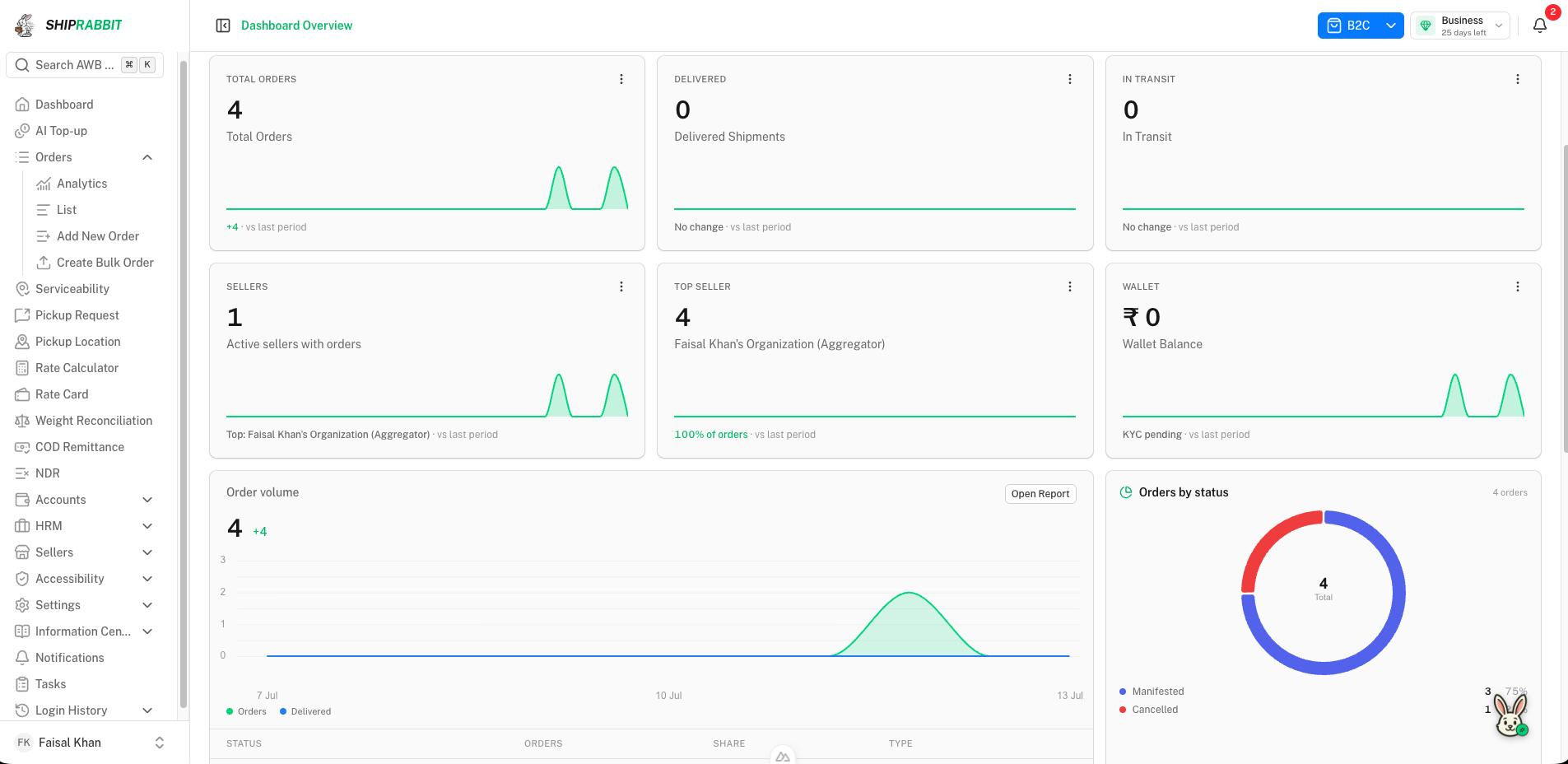
ShipRabbit's courier aggregator software includes COD remittance tracking and seller wallet visibility — particularly valuable for aggregators managing remittance across large seller networks where transparency builds trust.
| Status | Meaning | Finance action |
|---|---|---|
| Delivered — COD pending | Cash collected, not yet settled | Accrue receivable |
| In remittance batch | Scheduled for upcoming payout | Expect bank credit on cycle date |
| Remitted | Funds transferred | Reconcile against bank statement |
| Disputed / hold | Carrier flagged discrepancy | Investigate with courier support |
| RTO — no collection | Cash never collected | Write off expected COD revenue |
COD Remittance vs Related Concepts
COD remittance is not the same as payment gateway settlement for prepaid orders. Prepaid flows through Razorpay, PayU, or similar before shipment; COD remittance happens after physical cash collection at delivery.
It differs from NDR management — NDR handles failed deliveries before collection; remittance handles money after successful collection. A delivered COD order may still have NDR history from a prior failed attempt before eventual successful delivery.
Wallet systems on aggregator platforms add a layer: remittance may credit an internal wallet first, with sellers withdrawing to bank accounts on demand. Understand withdrawal fees and minimum thresholds when modeling cash flow.
Best Practices for COD Remittance Management
Reconcile remittance reports against your OMS delivered-COD list daily or weekly depending on volume. Automate matching on AWB number and flag unmatched records immediately.
Negotiate remittance cycles when volume warrants. Aggregators serving seller networks often compete on settlement speed as much as freight rates.
Combine remittance visibility with RTO reduction — every RTO avoids collection entirely, making prevention more valuable than chasing late remittance on successfully delivered orders.
Explore ShipRabbit's platform for consolidated COD remittance tracking across courier partners and seller wallet management for aggregation businesses.
Reconciliation Process for Finance Teams
Monthly courier invoices rarely match internal expectations line-for-line without reconciliation. Finance should match three data sources: your OMS list of delivered COD orders, carrier remittance reports showing AWB-level deductions, and bank credits actually received. Discrepancies fall into categories: timing differences, weight correction charges, RTO cross-adjustments, and genuine errors requiring courier dispute.
Build a reconciliation workflow with clear ownership: operations validates delivery status disputes, finance validates amount discrepancies, account managers escalate unresolved AWBs with courier partners before claim windows close.
Aggregators managing seller wallets add complexity: remittance from carriers hits your master account, then credits distribute to seller wallets net of platform fees. Ledger accuracy at each step builds seller trust. White-label aggregator platforms like ShipRabbit include wallet and remittance modules designed for this multi-party flow.
COD Remittance Risks and Controls
Delayed remittance strains working capital especially for small sellers operating on thin margins. Monitor aging of delivered-but-unremitted COD orders and escalate with courier account teams when batches exceed contracted timelines.
Delivery disputes surface during remittance reconciliation when collected amount differs from expected order value. Clear dispute processes with carriers protect sellers though resolution timelines vary.
Partial remittance holds occur when carriers net outstanding freight debts against COD collections. Understand your account balance position across prepaid shipping charges and COD credits to predict net remittance amounts.
Prepaid-only policies on high-fraud segments eliminate remittance risk entirely at the cost of conversion on COD-dependent buyer segments. Many merchants use hybrid policies rather than eliminating COD nationally.
Seller Wallet and Remittance in Aggregator Models
When logistics aggregators collect COD on behalf of sellers, remittance flows through platform wallets before seller withdrawal. Sellers see pending, available, and withdrawn balances separately. Clear wallet UX prevents support tickets from merchants expecting instant bank credit on delivery day.
Platform fee deduction timing — at remittance credit or at withdrawal — affects seller cash flow perception. Document fee structure transparently in seller onboarding materials and remittance reports.
ShipRabbit's white-label platform includes seller wallet and COD remittance modules designed for aggregation business models where the platform operator sits between carriers and merchant networks, managing settlement as a core trust function rather than an afterthought.
Key Takeaways
- COD remittance is the transfer of collected cash from courier to seller after delivery
- Typical remittance cycles range from T+3 to T+8 business days depending on courier
- Aggregator platforms provide unified remittance tracking across all courier partners
- Reconciliation matches delivered COD orders against actual remittance deposits
- Delayed remittance impacts cash flow — track expected vs received amounts daily
Frequently Asked Questions
How long does COD remittance take?
Most couriers remit within 3-8 business days after delivery confirmation. Timelines vary by carrier and aggregator platform policies.
Where can I track COD remittance status?
Courier aggregator dashboards show per-shipment COD status, expected remittance dates, and settled amounts across all partners.
What happens if remittance is short or missing?
Raise a dispute with the courier or aggregator support team. Maintain delivery proof and AWB records for reconciliation.
Does the aggregator hold COD money in a wallet?
Some platforms credit seller wallets upon delivery confirmation; others transfer directly to bank accounts on scheduled remittance cycles.
ShipRabbit
Learn how ShipRabbit helps businesses automate shipping
Discover how a unified courier aggregation platform simplifies multi-carrier shipping for eCommerce teams.
Related Articles
How to Reduce RTO in eCommerce
Proven strategies to reduce RTO in eCommerce — address verification, COD confirmation, NDR follow-ups, and pincode-level courier optimization.
Read article →What Is NDR Management?
Learn what NDR management is, how non-delivery reports work, why they lead to RTO, and how a logistics team follows up on a failed delivery.
Read article →
Courier Aggregator Software for Online Sellers
How online sellers use courier aggregator software to compare rates, print bulk labels, automate tracking, and ship through multiple couriers efficiently.
Read article →Benefits of Courier Aggregator Software
Explore the top benefits of courier aggregator software for eCommerce — lower shipping costs, faster fulfillment, unified tracking, and better delivery outcomes.
Read article →Stay ahead in eCommerce logistics
Get practical shipping guides, courier insights, and automation tips delivered to your inbox.