
White Label Courier Aggregator Software
Launch your own branded logistics platform with white label courier aggregator software — seller portals, wallet billing, tracking pages, and multi-courier APIs.
What White-Label Courier Aggregation Means
White-label courier aggregator software lets logistics companies launch branded shipping platforms under their own name, domain, and pricing — without building courier API integrations, seller portals, and billing systems from scratch.
Downstream sellers see your brand on login pages, tracking links, and invoices. The underlying multi-carrier infrastructure is provided by the platform vendor, configurable to your rate cards and business rules.
This differs from merchant aggregator accounts where you ship only your own orders. White-label is for operators building a logistics SaaS or aggregation business.
Understand the base category in what courier aggregator software is and shipping aggregator guide.
Who Needs White-Label vs Standard Dashboards
Standard dashboards suit eCommerce merchants fulfilling their own orders. White-label suits logistics startups, regional couriers expanding into aggregation, 3PLs offering shipping-as-a-service, and entrepreneurs launching seller-facing shipping products.
How to start a courier aggregation business walks through the operator journey. Online seller tools target a different buyer persona.
| Capability | Merchant dashboard | White-label platform |
|---|---|---|
| Branded seller portal | No | Yes — custom domain |
| Downstream seller wallets | Single account | Per-seller billing |
| Configurable rate cards | Limited | Operator-defined margins |
| Seller onboarding | N/A | Self-serve or admin-created |
| Your brand on tracking | Optional | Core feature |
ShipRabbit: Built for Logistics Operators
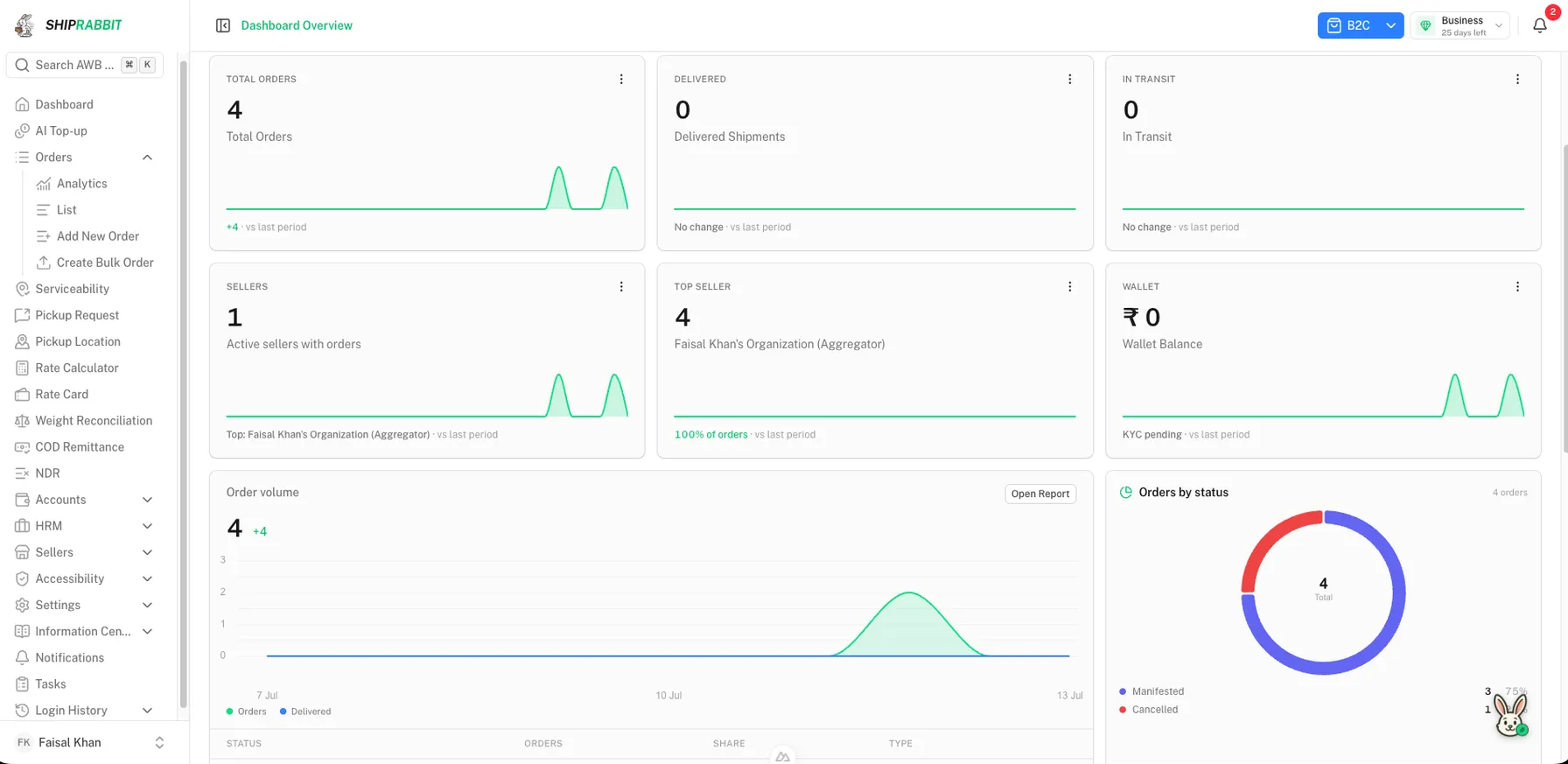
ShipRabbit is a white-label courier aggregator platform — not merely a merchant shipping dashboard. Operators launch branded environments with multi-courier booking, AI-assisted courier selection, an NDR desk for recorded re-attempt and RTO requests, COD remittance tracking, seller portals, and REST APIs.
ShipRabbit handles carrier adapter maintenance so your team focuses on seller acquisition, support, and commercial strategy rather than Delhivery-or-DTDC API breakages.
Compare building internally in build vs buy courier aggregator software before committing engineering resources.
Core White-Label Platform Components
Evaluate any white-label vendor against this component list.
- Admin console for operator staff — seller management, rate cards, courier config
- Seller portal — booking, labels, tracking, wallet, reports
- Branded tracking pages with your domain and logo
- Wallet and billing — top-ups, deductions, remittance visibility
- Multi-courier API layer with normalized endpoints
- NDR and exception tools sellers expect from modern platforms
- Reporting — shipment volume, revenue, courier performance
Commercial Model and Monetization
Operators typically earn through per-shipment margin above courier cost, seller subscriptions, wallet float, or value-added services like priority NDR handling. Your white-label platform must support flexible rate card configuration to implement your pricing strategy.
Platform pricing affects your unit economics — model seller acquisition cost against margin per AWB.
Rate card flexibility
Operators need zone-wise, weight-slab, and COD-specific rate tables assignable per seller tier. Rigid pricing templates limit competitive positioning in local markets.
Technical and Branding Customization
Confirm custom domain support, SSL, email sender configuration, and logo placement across seller and tracking experiences. API access lets you build mobile apps or embed shipping in partner products.
Shipping APIs and courier API mechanics help technical teams evaluate extensibility.
Onboarding Sellers at Scale
Self-serve registration, KYC workflows, and wallet top-up via payment gateway reduce operational load. Admin tools for bulk seller import and tier assignment support enterprise client migrations.
Seller success depends on intuitive portals — demo the downstream experience, not only the operator admin during evaluation.
Evaluating White-Label Vendors
Ask about carrier partner breadth, uptime SLAs, roadmap for seller features, and contract exit terms. Reference-check other operators on the platform if possible.
Explore ShipRabbit's white-label platform, multi-courier architecture, and business launch guide as next steps.
Compliance and Seller Trust Infrastructure
Operators handling seller wallets and buyer data need clear privacy policies, secure payment flows for top-ups, and audit trails on rate changes and manual adjustments. Sellers compare operators on transparency as much as shipping rates.
Invest in status pages or proactive outage communication — your brand is on the login page when the platform or a carrier partner degrades.
Operator Business Model Deep Dive
White-label operators typically earn per-shipment margin, monthly seller fees, or both. Some offer freemium seller accounts monetized purely on shipping markup. Choose a model matching your market — price-sensitive sellers resist high subscriptions; high-volume sellers accept subscriptions for lower per-AWB rates.
Unit economics must work at expected seller activity rates — model inactive seller percentage and support cost per active account.
Business launch guide expands commercial planning.
Platform vs Operator Responsibilities
Platform vendor maintains courier adapters, core uptime, and base feature development. Operator owns seller acquisition, tier-one support, commercial rate strategy, and local market relationships. Clarify support escalation paths in vendor contracts before launch.
Operators branding the platform as their own carry reputational risk when deliveries fail — invest in carrier performance monitoring and transparent seller communication about outages.
Customization Depth to Negotiate
Beyond logo and domain, negotiate: custom email templates, seller onboarding fields, payment gateway choice for wallet top-ups, webhook endpoints for operator BI tools, and API rate limits for downstream seller integrations.
ShipRabbit targets operators needing this depth without multi-year internal builds — compare roadmap items during sales process.
Scaling From 10 to 1000 Sellers
Early stage: high-touch onboarding and manual rate card setup. Scale stage: self-serve registration, automated KYC, tiered default rate cards, and in-app support. Enterprise stage: dedicated account managers for large sellers and custom API integrations.
White-label software must grow across these stages — confirm vendor capacity before committing your brand to their infrastructure.
Competitive Differentiation for Operators
Operators competing on rate alone struggle against funded aggregators. Differentiate on seller support responsiveness, superior NDR recovery in specific categories, regional language support, or integrations with local OMS tools incumbents ignore.
White-label technology from ShipRabbit enables differentiation on service and commercial strategy while carrier connectivity remains commoditized infrastructure.
Track seller NPS and shipment success rate alongside gross margin — retention drives LTV more than signup discounts.
Security and Trust for Downstream Sellers
Sellers trusting your platform with order data and wallet funds expect SSL on all pages, transparent fee deductions, and clear remittance schedules. Security incidents or billing opacity destroy operator brands faster than courier delivery failures.
Publish SLA summaries, data handling policies, and support contact prominently in seller portals — white-label means your brand carries platform trust obligations.
Operator Go-Live Readiness
Before marketing your branded platform, complete end-to-end tests: seller signup, wallet top-up, booking, label print, tracking page display, NDR simulation, and remittance reporting. Operators launch reputations, not demos — first seller experiences set word-of-mouth trajectory.
Align commercial rate cards, support staffing, and courier coverage promises before acquisition spend. Business launch guide and ShipRabbit white-label platform support structured operator rollout.
Key Takeaways
White-label courier aggregator software lets logistics operators launch branded multi-courier platforms with seller portals, wallet billing, and configurable rate cards.
ShipRabbit targets operators — not merchants shipping only their own orders — providing carrier adapter maintenance and seller-facing infrastructure out of the box.
Operators differentiate on service, segment focus, and commercial strategy; technology provides the scalable multi-carrier foundation beneath the brand.
Demo the downstream seller portal experience during evaluation — sellers interact with that interface daily, not the operator admin console.
Negotiate roadmap visibility for seller-facing features you plan to market — gaps between sales promises and platform capability damage operator credibility quickly.
Key Takeaways
- White label platforms include seller portals, admin dashboards, and branded tracking
- You operate under your domain and brand while the vendor maintains courier APIs
- Wallet billing and configurable rate cards enable your own pricing strategy
- Launch in weeks instead of the 12-18 months required to build courier integrations
- ShipRabbit is purpose-built for logistics companies launching aggregation businesses
Frequently Asked Questions
What is white label courier aggregator software?
A ready-made multi-courier platform you rebrand and resell to sellers under your company name, domain, and pricing structure.
Do I need technical staff to run a white label platform?
Basic operations require minimal engineering. The vendor handles carrier API maintenance; you focus on sales and seller support.
Can I set my own shipping rates on a white label platform?
Yes. Most white label solutions let you configure rate cards, margins, and seller-specific pricing rules.
How is white label different from using an aggregator as a seller?
As a seller you ship your own orders. With white label you provide the shipping platform to other sellers and earn per-shipment or subscription revenue.
ShipRabbit
Automate your shipping with ShipRabbit
Multi-courier booking, AI-powered selection, NDR management, and COD remittance — all from one dashboard.
Related Articles
Start a Courier Aggregator Business in India — Read This Before You Invest
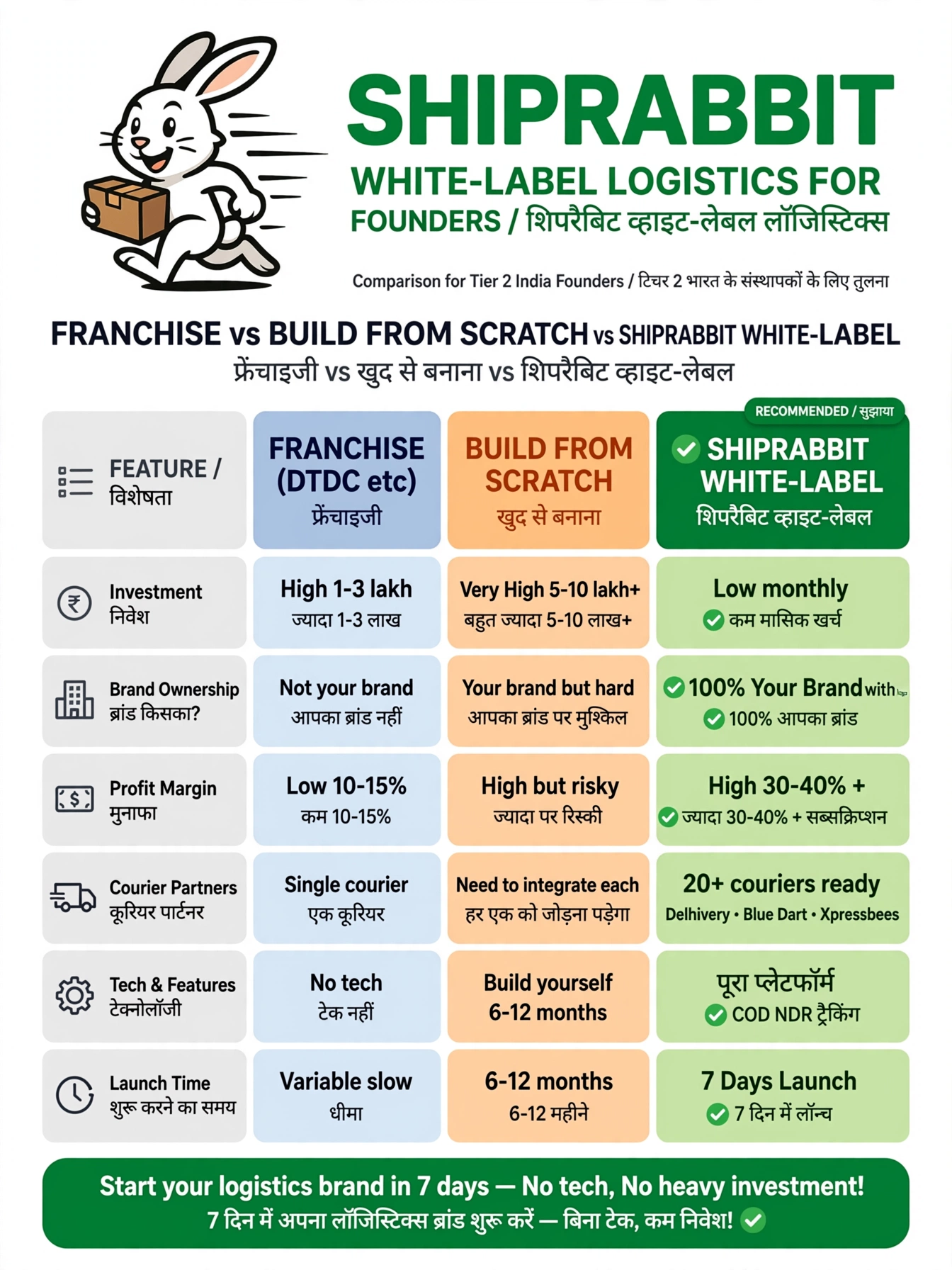
Thinking of starting a courier aggregator business in India? Avoid the two costly mistakes most founders make — franchise lock-in and building tech from scratch — and see why white-label is the smarter path.
Read article →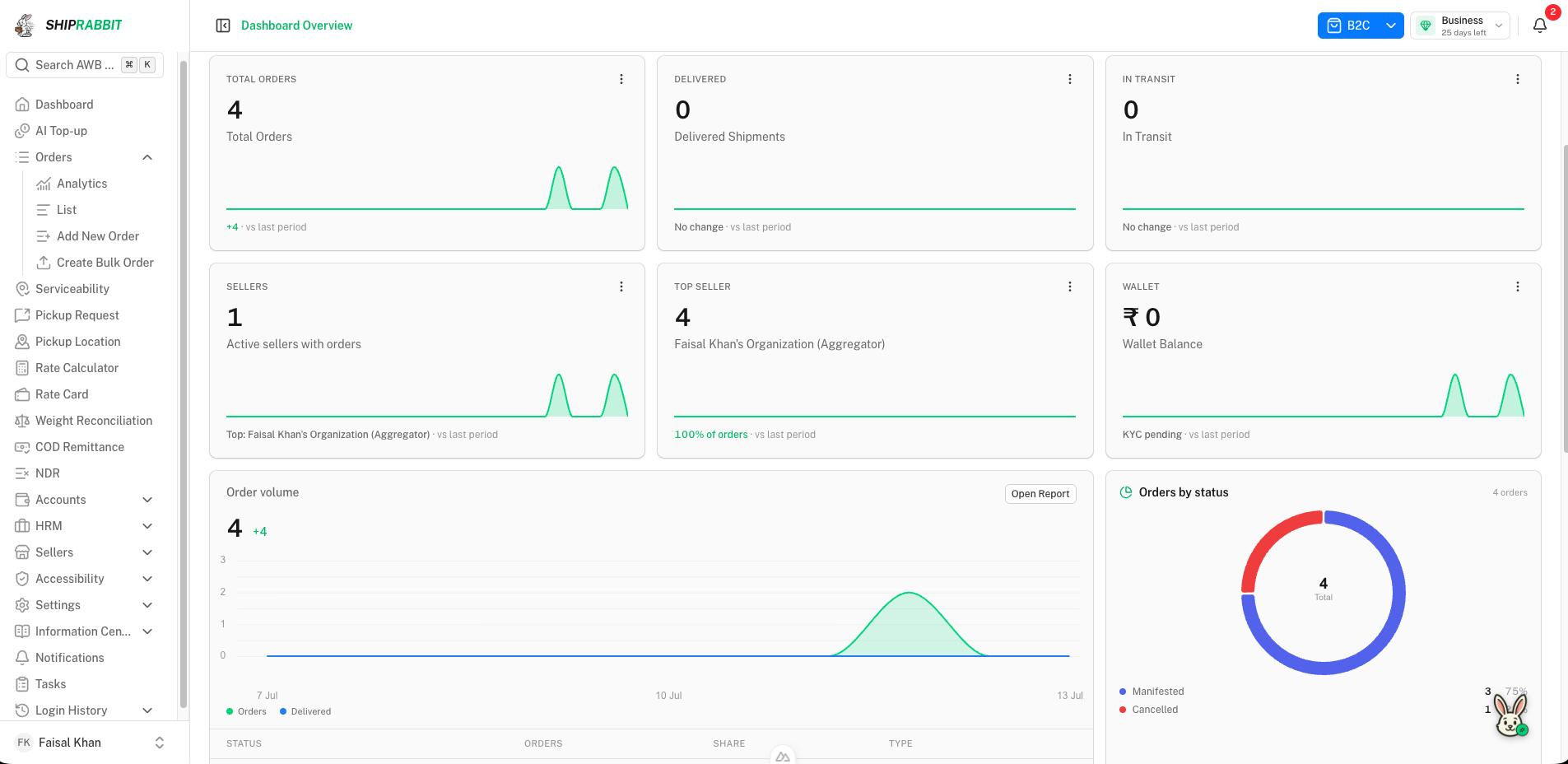
How to Start a Courier Aggregation Business
A step-by-step guide to starting a courier aggregation business — market research, courier partnerships, platform selection, pricing, and seller onboarding.
Read article →Build vs Buy Courier Aggregator Software
Compare building your own courier aggregator software versus buying a white-label platform — development cost, time to market, and total ownership.
Read article →
Courier Aggregator Software Pricing Explained
Understand courier aggregator software pricing models — per-shipment fees, subscriptions, wallet systems, and how to calculate total cost of ownership.
Read article →Stay ahead in eCommerce logistics
Get practical shipping guides, courier insights, and automation tips delivered to your inbox.