
How to Reduce eCommerce Shipping Costs
Practical tactics to reduce eCommerce shipping costs — courier selection, zone optimization, packaging, COD conversion, and multi-carrier rate comparison.
Why Shipping Costs Creep Up Over Time
Shipping is often the second-largest variable cost for eCommerce businesses after product COGS. As order volume grows, small inefficiencies compound: defaulting to one expensive courier for every pincode, paying for dead weight when volumetric rules apply, absorbing RTO freight on orders that should never have shipped, and missing rate card renegotiation windows when volume tiers change.
Reducing shipping costs is not about finding a single cheapest carrier globally. Indian logistics pricing is zone-specific, weight-slab-specific, and payment-mode-specific. A courier that is cheapest for prepaid metro orders may be expensive for COD shipments to tier-3 pincodes. Cost optimization requires per-order routing discipline, not a one-time rate comparison.
This guide covers practical levers merchants control. For automated rate and courier selection, see how AI can reduce shipping costs and how to choose the right courier for an order.
Use Multi-Courier Rate Comparison Per Order
Single-carrier dependency hides cost opportunities on every lane where another partner is cheaper or faster. Before booking, compare rates across available couriers for that specific origin-destination pair, weight slab, and payment mode. Even a modest per-shipment saving multiplied across thousands of monthly orders materially improves margins.
Multi-courier shipping software and aggregator platforms automate this comparison. How multi-courier shipping works explains the routing mechanics. Platforms like ShipRabbit let you define rules — cheapest courier per zone, fastest for express SKUs, COD specialists for high-value orders — so cost optimization happens consistently rather than when someone remembers to check.
Avoid comparing only headline per-kg rates. Include COD charges, fuel surcharges, RTO fees, and minimum billing weights in your total cost model. A lower base rate with higher COD commission may cost more on COD-heavy catalogs.
| Cost factor | What to verify | Common oversight |
|---|---|---|
| Zone rate | Origin and destination pincode mapping | Using outdated zone tables |
| Weight slab | Dead vs volumetric billing | Under-declaring dimensions |
| COD fees | Percentage plus fixed charge | Ignoring COD on high-AOV orders |
| RTO charges | Forward plus return freight | Not factoring RTO into courier choice |
| Minimum weight | Billing increments (e.g. 0.5 kg steps) | Rounding errors on light items |
Reduce RTO and Failed Delivery Costs
Every RTO shipment costs forward freight plus return freight, inventory tie-up, and often repackaging or liquidation. Reducing RTO is one of the highest-impact shipping cost levers because it eliminates double shipping on orders that never convert to revenue.
Address verification at checkout, clear product descriptions to reduce buyer's remorse, and proactive NDR follow-up when delivery fails all lower RTO incidence. How to reduce RTO in eCommerce covers buyer-side and operations-side tactics in depth.
Track RTO rate by courier, product category, and pincode cluster. If one carrier shows disproportionate RTO on the same lanes where others succeed, routing away from that partner on those pincodes saves money without changing your product or pricing.
Optimize Packaging and Weight Declaration
Right-size packaging reduces volumetric weight charges. Bulky boxes on lightweight items trigger dimensional billing that exceeds actual product weight. Standardize a small set of box sizes matched to your SKU mix and train packing staff to use the smallest appropriate container.
Accurate weight declaration at booking prevents billing adjustments at carrier hubs. Integrate scales or validated product weight data from your catalog into shipment creation so API bookings reflect reality. Discrepancies flagged during hub re-weighing often bill at higher slabs retroactively.
Consolidate multi-item orders into single shipments when possible instead of splitting into separate AWBs. Each additional shipment incurs base charges and handling overhead.
Negotiate rate cards as volume grows
When monthly shipment volume crosses carrier tier thresholds, request revised rate cards rather than continuing on default published rates. Aggregators with volume leverage may pass through better commercial terms. Document your shipment mix — zones, weight distribution, COD percentage — when negotiating so proposals reflect actual profile rather than generic estimates.
Improve First-Attempt Delivery Success
Failed first delivery attempts trigger repeat last-mile runs, NDR handling costs, and buyer frustration. Collect accurate phone numbers, landmark details, and delivery preferences at checkout. Send SMS or WhatsApp notifications with tracking links so buyers know when to expect the courier.
Improving delivery success rate details operational practices that reduce reattempts. Higher first-attempt success means you pay once for delivery instead of subsidizing multiple tries.
Route express or high-value orders to couriers with strong performance on your priority pincodes rather than defaulting to the cheapest option on lanes where that carrier historically fails deliveries.
Automate Workflows to Cut Hidden Labor Costs
Manual booking in courier portals consumes staff time that scales linearly with order volume. Automation — bulk label generation, API-driven booking, automated tracking sync — reduces cost per shipment even when per-AWB freight rates stay flat. Shipping automation for eCommerce businesses outlines which workflows to automate first.
NDR automation prevents revenue loss from passive RTO conversion. COD remittance tracking reduces finance reconciliation hours. These operational savings belong in any shipping cost analysis alongside freight rates.
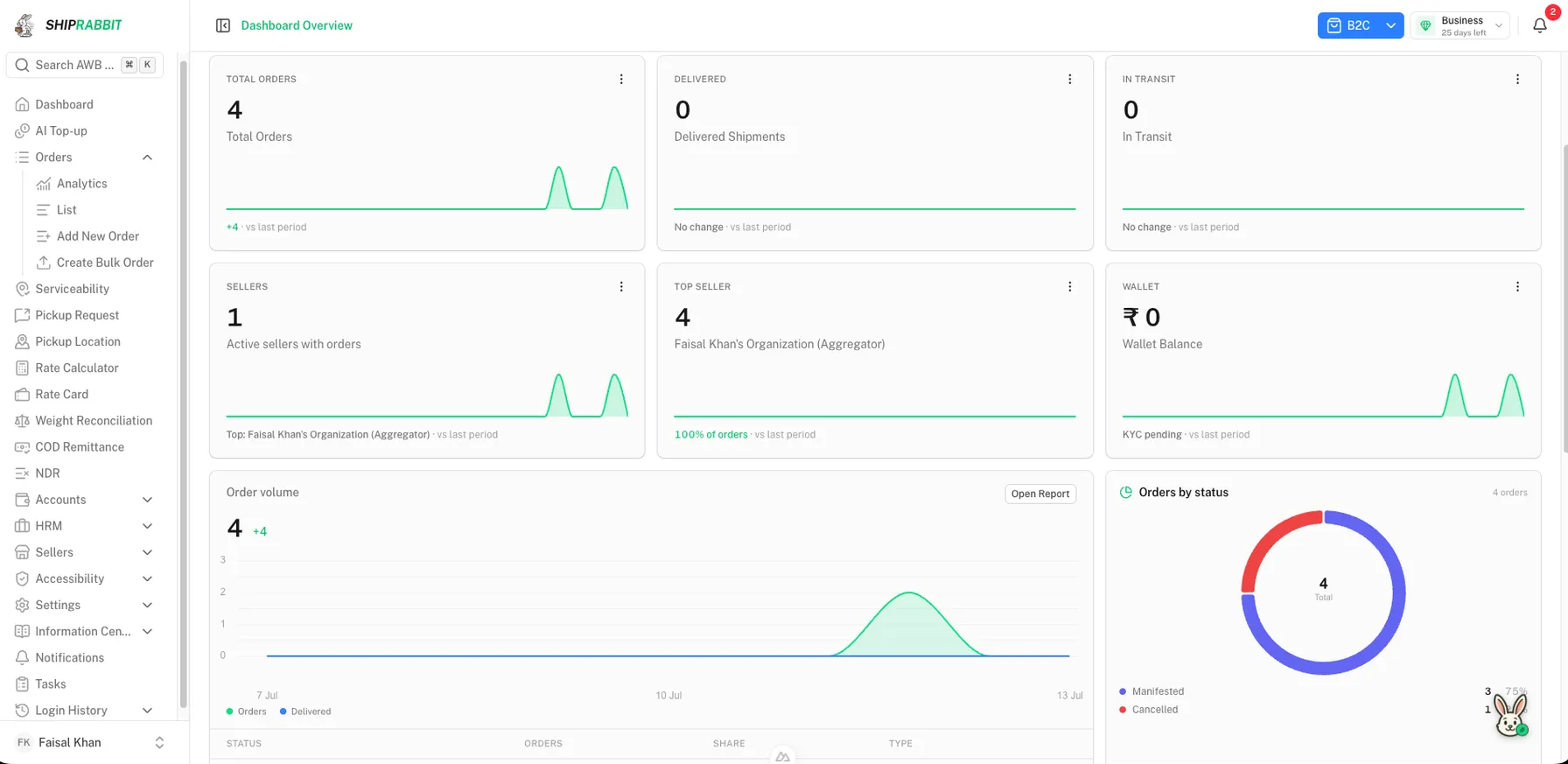
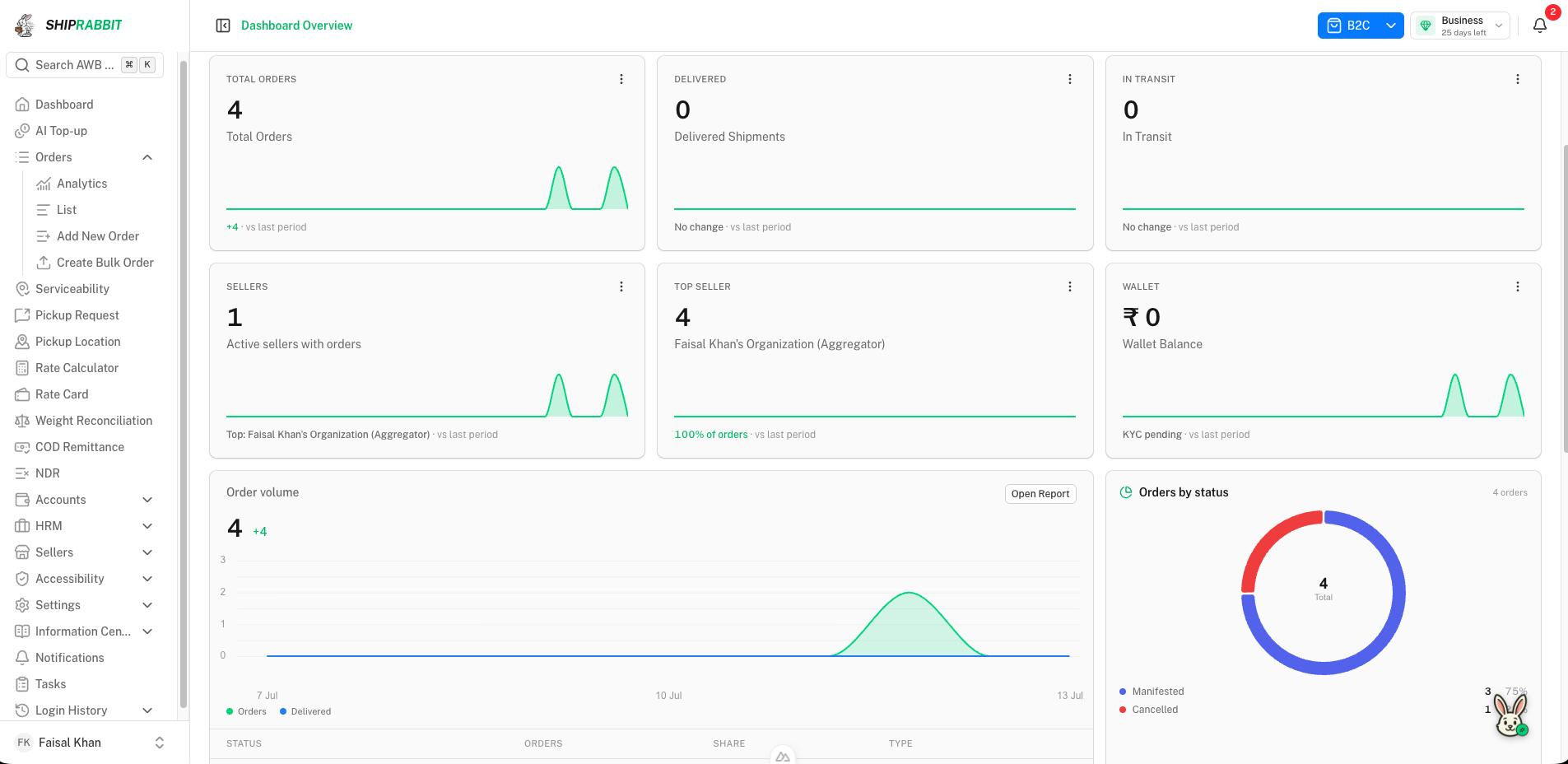
ShipRabbit's courier aggregator software combines multi-courier rate comparison, AI-assisted courier selection, NDR workflows, and COD visibility — helping merchants and aggregators reduce both freight spend and operational overhead from one platform.
Measure and Iterate
Build a weekly shipping economics review: cost per order, cost per delivered order (excluding RTO), RTO rate, and average weight per shipment. Segment by courier and zone to identify routing changes with the highest ROI.
Test routing rule changes on a subset of orders before full rollout. Compare delivery success and total landed cost over two to four weeks rather than judging on freight rate alone.
For a broader platform evaluation that supports cost optimization at scale, explore the courier aggregator software hub and benefits of courier aggregator software.
Checkout and Catalog Levers That Lower Shipping Cost
Shipping cost optimization extends beyond courier selection into how you sell. Free shipping thresholds encourage buyers to add items until forward freight is absorbed by higher basket value — but set thresholds above your average order value so the margin uplift covers incremental shipping. Flat-rate shipping simplifies buyer experience but can overcharge light orders and undercharge heavy ones unless tiers reflect your actual weight distribution.
Product bundling reduces shipments per customer session. Two items in one box costs one base freight charge; two separate orders doubles it. Catalog design that encourages multi-item purchase — complete-the-look suggestions, volume discounts — directly reduces cost per revenue rupee on shipping.
Regional fulfillment — storing inventory closer to demand clusters — lowers zone charges even before courier comparison runs. Shipping from a warehouse closer to demand clusters typically costs less on nearby pincodes regardless of courier choice. D2C shipping considerations often include multi-warehouse routing that aggregator platforms support through origin-aware rate lookup.
Review return policy economics too. Generous free returns increase reverse logistics volume. Clear sizing guides and product accuracy reduce return-driven shipping cost without restricting legitimate buyer protection.
Prepaid Incentives and Payment Mix Strategy
Shifting COD orders to prepaid reduces COD handling fees and RTO exposure simultaneously. Small checkout discounts, loyalty points, or free shipping on prepaid orders change buyer behavior without eliminating COD entirely for segments that depend on it.
Analyze shipping cost per delivered order separately for prepaid and COD cohorts. Leadership decisions about COD availability by category should reference this split rather than blended averages that hide COD-driven cost inflation.
Wallet and UPI adoption in India makes prepaid incentives more effective than in earlier COD-dominated years. Test incentive magnitude against conversion impact — the goal is net margin improvement, not maximum prepaid share at any discount depth.
Key Takeaways
- Compare courier rates per order rather than defaulting to one carrier for all shipments
- Optimize packaging dimensions — volumetric weight charges inflate costs on bulky items
- Convert COD orders to prepaid where possible to eliminate COD surcharges and RTO risk
- Zone-wise courier assignment beats using a single national rate card
- Reduce RTO rates to avoid double shipping costs on returned orders
Frequently Asked Questions
What is the fastest way to cut shipping costs?
Enable multi-carrier rate comparison so each order ships via the cheapest qualified courier for that pincode and weight slab.
Does reducing packaging size really lower shipping costs?
Yes. Couriers charge on volumetric weight. Smaller boxes can drop shipments into lower weight slabs and reduce per-order charges significantly.
How much do COD orders cost extra?
COD surcharges vary by courier but typically add 1-3% of order value plus higher RTO risk that doubles shipping cost on returns.
Can shipping aggregators negotiate better rates for me?
Aggregators leverage collective volume across sellers for carrier discounts. At high volumes, direct negotiation may yield additional savings.
ShipRabbit
See how ShipRabbit manages multiple courier partners from one dashboard
Reduce shipping costs, improve delivery success, and scale operations without switching between courier portals.
Related Articles
How AI Can Reduce Shipping Costs
Learn how AI reduces eCommerce shipping costs through dynamic courier selection, zone-aware rate optimization, RTO prediction, and automated rules.
Read article →How to Choose the Right Courier for an Order
Learn how to choose the right courier for each order using pincode serviceability, weight slabs, COD support, speed, and historical performance data.
Read article →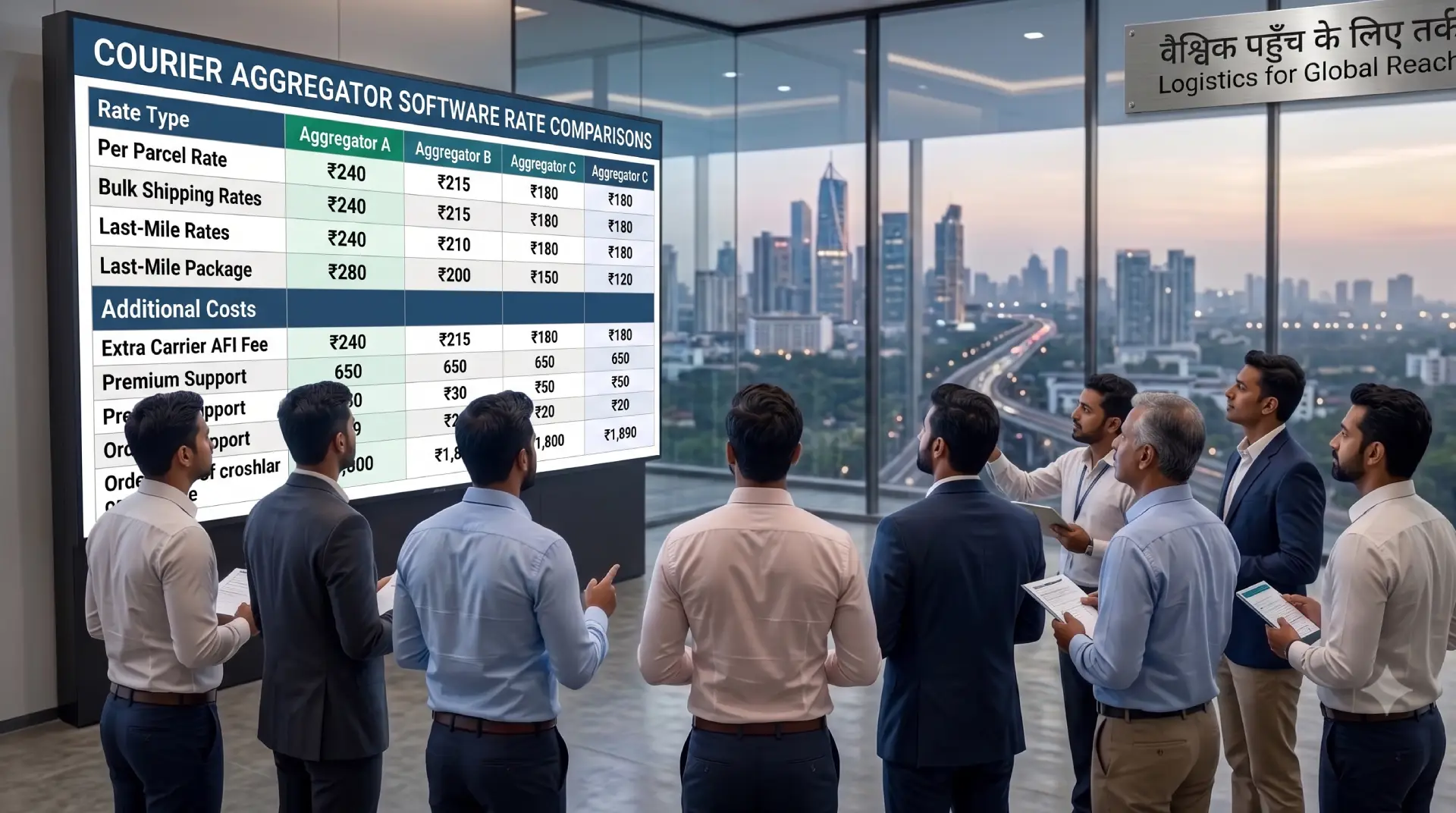
Courier Aggregator Software Pricing Explained
Understand courier aggregator software pricing models — per-shipment fees, subscriptions, wallet systems, and how to calculate total cost of ownership.
Read article →Benefits of Courier Aggregator Software
Explore the top benefits of courier aggregator software for eCommerce — lower shipping costs, faster fulfillment, unified tracking, and better delivery outcomes.
Read article →Stay ahead in eCommerce logistics
Get practical shipping guides, courier insights, and automation tips delivered to your inbox.