
What Is a Courier API?
Understand what a courier API is and how it enables automated shipment creation, label generation, tracking webhooks, and serviceability checks.
The Short Answer
A courier API is a programmatic interface that lets your software create shipments, fetch rates, check pincode serviceability, print labels, and receive tracking updates from a courier company — without manual portal logins. Instead of copying order details into a carrier dashboard, your order management system sends structured requests over HTTPS and receives structured responses.
Courier APIs sit at the boundary between your business applications and a carrier's logistics network. They translate your order data — pickup address, delivery pincode, weight, dimensions, payment mode, and product value — into the format each courier expects, then return booking confirmations, AWB numbers, label URLs, and status events you can store and display to customers.
If you are comparing terminology, shipping APIs cover broader logistics workflows while courier APIs typically focus on last-mile carrier operations. In practice, vendors and developers use both terms when integrating with partners like Delhivery, Blue Dart, DTDC, or XpressBees.
What a Courier API Lets You Do
- Check whether a destination pincode is serviceable for prepaid, COD, or reverse pickup
- Fetch rate estimates by zone, weight slab, and payment type before booking
- Create forward shipments and generate AWB numbers programmatically
- Download shipping labels and manifest data for warehouse printing
- Schedule or cancel pickups through API calls instead of phone requests
- Receive tracking webhooks or poll status endpoints for delivery milestones
- Initiate return shipments and manage reverse logistics flows
- Submit NDR actions when buyers are unreachable or addresses need correction
Common API Endpoints and Data Flows
Most courier APIs follow a predictable lifecycle even when payload formats differ. Authentication happens first — typically API keys, OAuth tokens, or signed requests — followed by a serviceability check on the buyer pincode. If the lane is covered, you request a rate quote or apply a pre-negotiated rate card, then create the shipment with consignee details, package weight, and COD amount if applicable.
The create-shipment response usually includes an AWB number and a label URL or base64 label payload. Your warehouse system stores the AWB, prints the label, and hands the package to the courier pickup network. From that point, tracking events flow back through webhooks pushed to your endpoint or through polling jobs that query the carrier every few hours.
For a deeper walkthrough of request sequences, error handling, and webhook normalization, read how courier APIs work — that article focuses on implementation mechanics rather than definitions.
Synchronous vs asynchronous operations
Some carrier APIs return a confirmed AWB immediately. Others accept the booking request and finalize the AWB asynchronously, requiring your integration to poll a status endpoint or wait for a callback. Planning for both patterns prevents orders from stalling in your OMS when a carrier's backend queues requests during peak volume.
Webhooks vs polling
Webhooks deliver tracking updates in near real time when the carrier supports them and your infrastructure can receive inbound HTTPS traffic reliably. Polling is simpler to implement behind firewalls but introduces delay and unnecessary load if you poll too frequently. Production integrations often combine both: webhooks as primary with polling as a reconciliation fallback.
Courier API vs Aggregator API
Integrating directly with each courier's API gives you a one-to-one connection to that carrier's capabilities, rate structures, and service rules. You maintain separate credentials, payload mappings, and webhook handlers per partner. Engineering effort scales linearly with every new carrier you add.
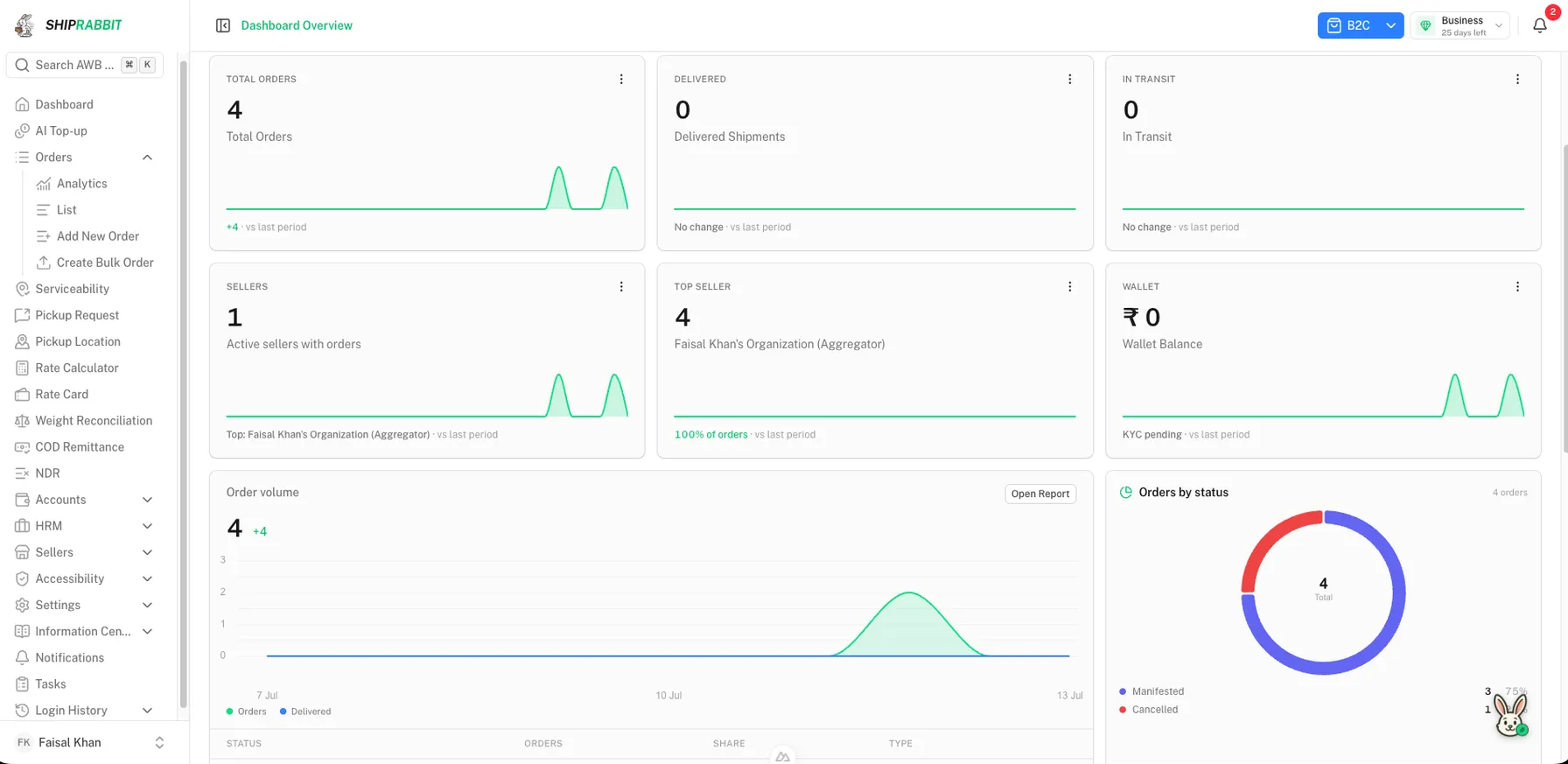
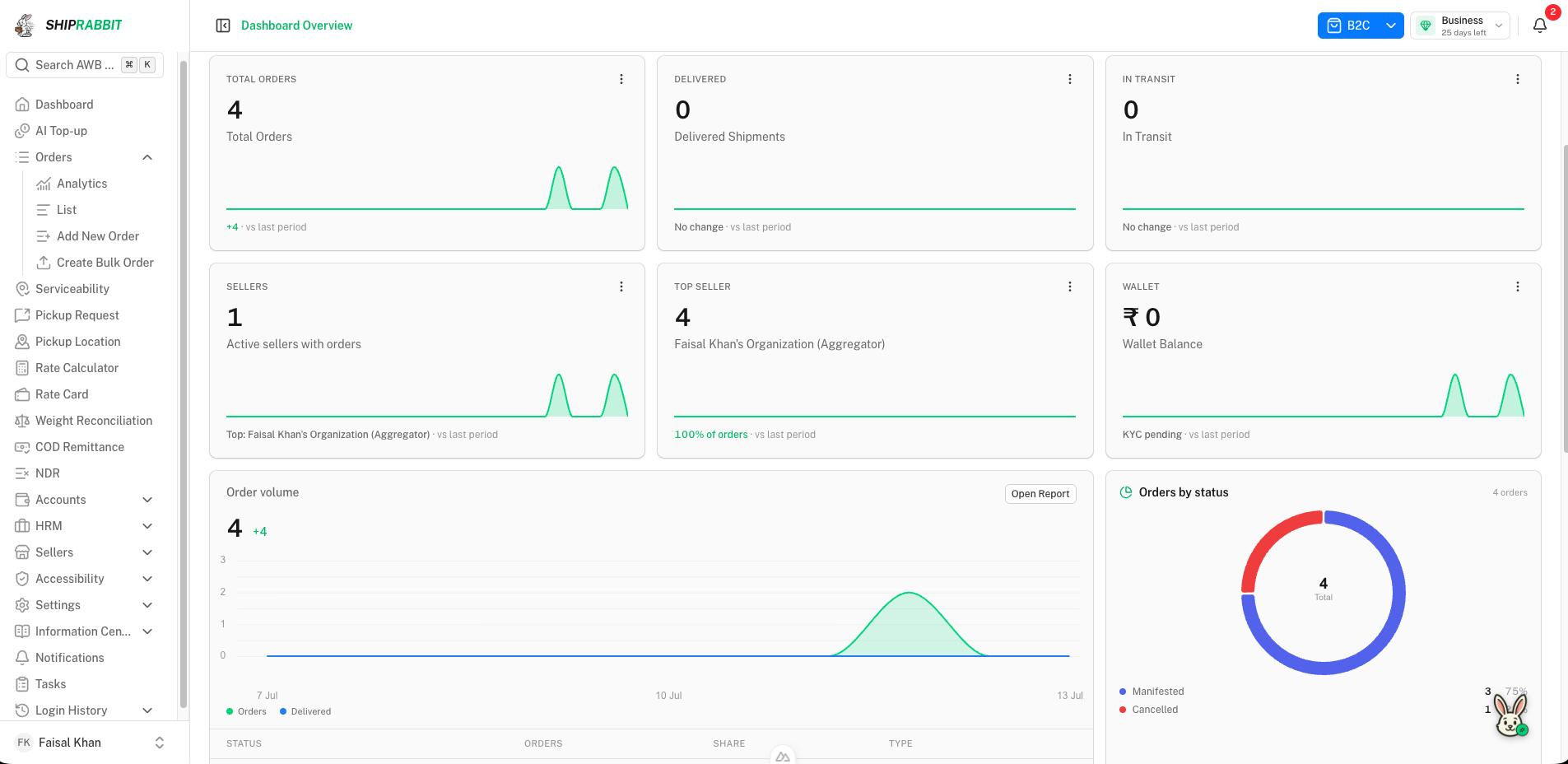
An aggregator API — exposed by platforms like ShipRabbit's courier aggregator software — wraps multiple courier APIs behind a single unified contract. You integrate once: one authentication model, one shipment schema, one tracking status map. The aggregator translates your requests to each carrier's native format and normalizes responses back to a common structure.
Courier aggregator software vs direct courier integration compares trade-offs in detail. Direct APIs suit enterprises with dedicated logistics engineering; aggregator APIs suit most sellers and operators who need multi-carrier coverage without maintaining five separate integrations.
| Aspect | Direct courier API | Aggregator API |
|---|---|---|
| Integrations required | One per carrier | One for all carriers |
| Payload formats | Carrier-specific | Normalized by platform |
| Rate cards | Per-carrier contracts | Platform or your negotiated rates |
| Tracking events | Different schemas per partner | Standardized status codes |
| Maintenance | Your team tracks carrier API changes | Platform vendor handles carrier updates |
Who Needs Courier API Access
eCommerce brands shipping more than a handful of orders daily benefit from API integration because manual booking does not scale. Orders flowing from Shopify, WooCommerce, Magento, or custom storefronts should reach the courier automatically with correct weight and payment mode — manual copy-paste introduces delays and data entry errors that cause failed deliveries.
Marketplace sellers managing high order volume across channels need APIs or channel connectors that batch-create shipments and sync tracking back to each platform. Operations teams cannot keep up with hundreds of daily labels through courier portals.
Logistics aggregators and 3PL operators building seller-facing platforms need courier APIs at two levels: carrier APIs for fulfillment and their own REST APIs for downstream clients. White-label platforms like ShipRabbit provide the latter out of the box while managing carrier connectivity internally, so you launch a branded shipping product without building every courier integration yourself.
What to Evaluate Before Integrating
Start with documentation quality: are endpoints, field definitions, error codes, and webhook payloads documented clearly? Request sandbox credentials and test serviceability, booking, cancellation, and tracking on real pincodes you ship to regularly — not just metro samples.
Check idempotency and retry behavior. Network timeouts during shipment creation are common; you need to know whether resubmitting the same request creates duplicate AWBs or safely returns the original booking. Clarify rate limits so bulk booking during sale events does not throttle your entire pipeline.
Understand SLA and support channels. Carrier API outages directly block your fulfillment. Know who to contact, whether status pages exist, and how quickly breaking changes are communicated. For multi-carrier needs, multi-courier shipping software explains how aggregation reduces this evaluation burden to a single platform assessment.
Key Data Fields in Courier API Requests
Shipment creation payloads typically require shipper name, pickup address with pincode, registered phone, and GST details if applicable. Consignee fields include recipient name, full delivery address, pincode, mobile number, and optional email. Package fields cover dead weight in kilograms, length-width-height in centimeters for volumetric calculation, product description, declared value for insurance, and HSN or category codes some carriers mandate.
COD shipments add collectible amount — the exact cash the delivery agent must collect — and sometimes COD handling instruction flags. Reference fields map the courier AWB back to your internal order ID, invoice number, or marketplace order reference for reconciliation. Incorrect COD amounts cause delivery refusal; mismatched reference IDs make COD remittance reconciliation painful.
Return and reverse pickup APIs mirror forward shipment fields but swap shipper and consignee roles. Exchange workflows may require linked forward and reverse AWB references. Testing each payment mode — prepaid, COD, reverse — on representative pincodes during integration catches field validation rules that documentation omits.
Label and document formats
Carriers return labels as PDF for standard printers, ZPL or EPL for thermal printers, or PNG for lightweight integrations. Confirm format compatibility with your warehouse hardware before go-live. Manifest APIs aggregate multiple AWBs for hub handover; some carriers require manifest submission before pickup collection counts as valid.
Getting Started
If you are early in your research, pair this article with what a shipping API is for broader logistics API context, then move to how courier APIs work when you are ready to plan integration architecture.
Merchants who prefer not to build custom integrations can use ShipRabbit's platform for multi-courier booking, unified tracking, and REST APIs — whether you ship as a seller or operate a white-label aggregation business for your own seller network.
Key Takeaways
- Courier APIs expose carrier operations — booking, labels, tracking — as HTTP endpoints
- Each courier company maintains its own API with unique auth and payload formats
- Serviceability APIs verify whether a pincode accepts prepaid or COD before booking
- Webhook callbacks push delivery status changes to your application automatically
- Aggregator platforms normalize disparate courier APIs into one consistent interface
Frequently Asked Questions
Which courier companies offer APIs in India?
Major partners like Delhivery, Blue Dart, DTDC, XpressBees, and Ekart provide API access, typically to registered business accounts.
How do I get access to a courier API?
Apply through the courier business or technology portal. Approval usually requires a commercial shipping account and KYC completion.
Can small sellers use courier APIs directly?
Technically yes, but integration effort is high. Most small and mid-size sellers use aggregator APIs instead of direct carrier connections.
What is the difference between REST and webhook in courier APIs?
REST endpoints let you request data and create shipments. Webhooks push event notifications — like "out for delivery" — to your server proactively.
ShipRabbit
Learn how ShipRabbit helps businesses automate shipping
Discover how a unified courier aggregation platform simplifies multi-carrier shipping for eCommerce teams.
Related Articles
What Is a Shipping API?
Learn what a shipping API is, how it connects your store or OMS to courier partners, and the core endpoints for booking, tracking, and rate calculation.
Read article →How Courier APIs Work
A technical overview of how courier APIs work — authentication, endpoints, webhooks, rate requests, label generation, and integration best practices.
Read article →Courier Aggregator Software vs Direct Courier Integration
Compare courier aggregator software against direct courier integration — cost, speed to launch, maintenance, control, and which approach fits your business.
Read article →Shipping Automation for eCommerce Businesses
How shipping automation helps eCommerce businesses scale — auto label generation, tracking sync, NDR workflows, courier rules, and API integrations.
Read article →Stay ahead in eCommerce logistics
Get practical shipping guides, courier insights, and automation tips delivered to your inbox.