
Courier Aggregator Software vs Direct Courier Integration
Compare courier aggregator software against direct courier integration — cost, speed to launch, maintenance, control, and which approach fits your business.
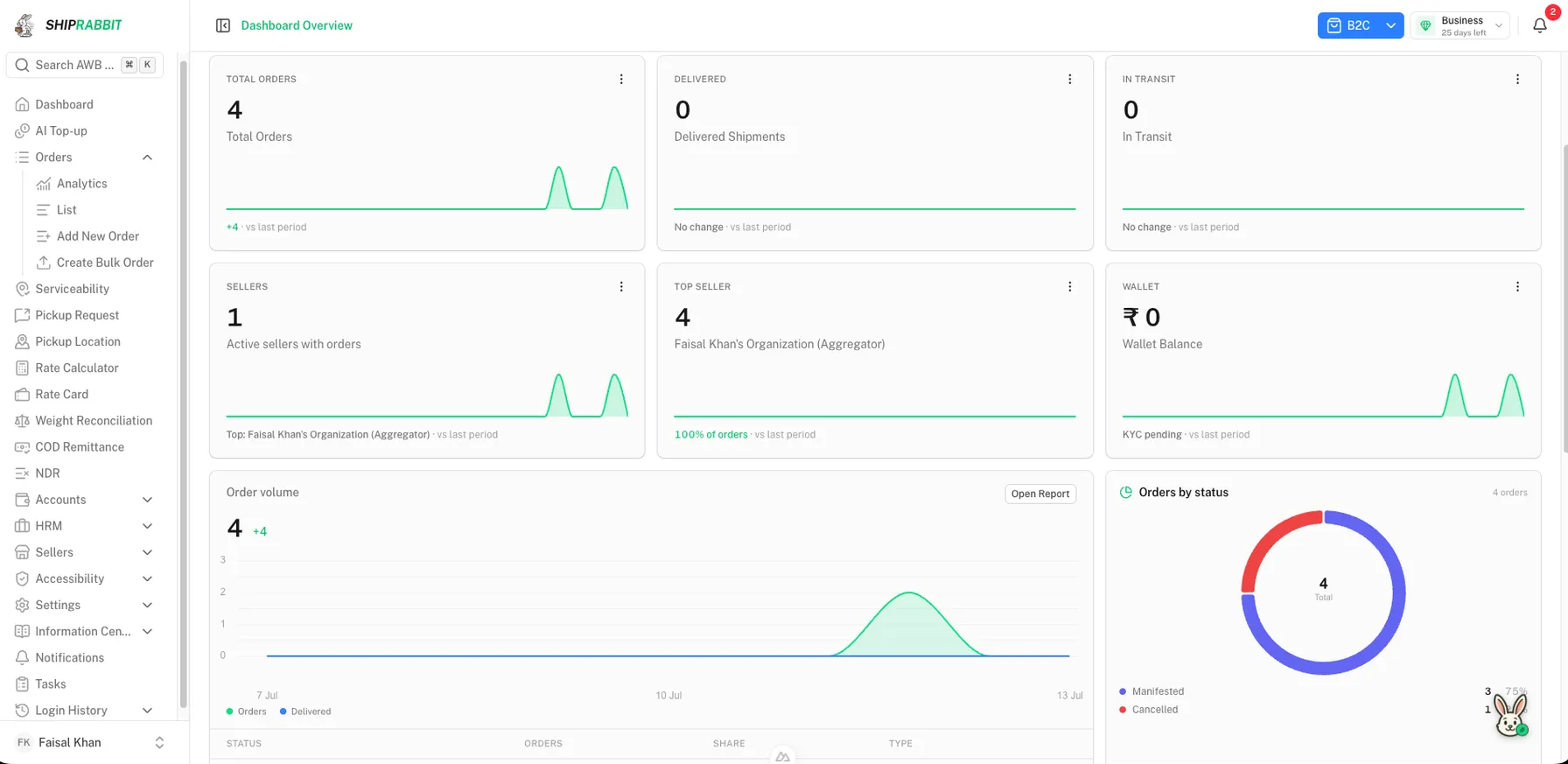
Two Paths to Multi-Carrier Shipping
Businesses scaling eCommerce logistics eventually need multiple courier partners. Two approaches dominate: courier aggregator software that abstracts carrier APIs behind one platform, and direct courier integration where your engineering team connects to each carrier API individually.
Neither is universally superior. The right choice depends on shipment volume, engineering capacity, need for customization, and whether you operate as a merchant or a logistics platform provider.
Understand aggregation basics in how courier aggregator software works before comparing approaches.
How Direct Courier Integration Works
Direct integration means your systems authenticate with each courier API — Delhivery, Blue Dart, DTDC, XpressBees, etc. — and implement booking, label, tracking, cancellation, and webhook handling per carrier specification.
You own the adapter code, credential management, status mapping, and ongoing maintenance when carriers version APIs or change business rules. Large enterprises with dedicated logistics engineering teams sometimes choose this for maximum control.
What a courier API is and how courier APIs work describe the technical surface you would implement repeatedly.
How Aggregator Software Differs
An aggregator maintains carrier adapters centrally. You integrate once with the aggregator API or use its dashboard. Carrier-specific quirks — label formats, status codes, COD rules — are handled platform-side.
You depend on the aggregator partner relationships, uptime, and rate structures. In exchange, time to launch drops from months per carrier to days or weeks total, and maintenance shifts to the vendor.
Shipping APIs from aggregators expose normalized endpoints regardless of underlying carrier.
Side-by-Side Comparison
Use this table as a starting framework. Adjust weights based on your team and business model.
| Factor | Aggregator software | Direct integration |
|---|---|---|
| Time to first shipment | Days to weeks | Weeks to months per carrier |
| Engineering headcount | Minimal — API or dashboard only | Dedicated integration team |
| Ongoing maintenance | Vendor responsibility | Your team per API change |
| Rate negotiation | Platform rates or bring-your-own | Direct with each carrier |
| Customization depth | Platform constraints | Full control per carrier |
| Carrier addition | Enable via platform | New development project |
| Best fit | Sellers, D2C, most 3PLs | Large enterprises, unique workflows |
When Direct Integration Makes Sense
Consider direct integration if you ship very high volumes with leverage to negotiate direct enterprise contracts, need carrier-specific features the aggregator does not expose, or have compliance requirements mandating direct data flows.
Building your own aggregation layer internally — effectively becoming the aggregator — may suit well-funded logistics SaaS companies. Build vs buy analysis quantifies that decision.
Even large shippers often start with an aggregator for speed, then selectively direct-integrate high-volume carriers while keeping long-tail partners on the platform.
Hidden costs of building in-house
Engineering salary, API breakages during peak season, webhook infrastructure, and label rendering for each carrier accumulate quickly. Budget for permanent maintenance, not one-time integration projects.
When Aggregator Software Makes Sense
Most eCommerce sellers, D2C brands, and growing 3PLs benefit from aggregation. Volume below enterprise scale rarely justifies multi-carrier engineering. Operations teams want shipping solved so they focus on catalog and customer experience.
Logistics entrepreneurs launching seller networks should use white-label aggregator platforms like ShipRabbit rather than building carrier adapters from scratch. White-label options provide seller portals and billing out of the box.
Hybrid Approaches
Hybrid models combine direct integration for one or two primary carriers with an aggregator for secondary partners and pincode overflow. Your OMS routes orders based on rules: direct API for Zone A metro lanes, aggregator for everything else.
This balances rate control on high-volume lanes with coverage breadth elsewhere. Requires orchestration logic but avoids maintaining five full integrations.
Multi-courier shipping software explains routing concepts used in hybrid setups.
Making the Decision
List your couriers, monthly volume, engineering availability, and go-live deadline. If deadline is under 60 days and engineering is one part-time developer, aggregation is the pragmatic choice.
If you are evaluating platforms, use our selection checklist. Explore ShipRabbit if you need white-label aggregation infrastructure rather than merchant-only tooling.
Total Cost Framework Beyond Engineering Salaries
Direct integration cost includes initial development, ongoing maintenance when APIs change, infrastructure for webhook ingestion and retry queues, monitoring, on-call coverage during peak season, and opportunity cost of engineers not building product features.
Aggregator cost includes platform fees, potential rate markup, and some loss of customization — but near-zero carrier adapter maintenance internally. Model both over 24 months, not launch month only.
Pricing analysis and build vs buy provide complementary frameworks for financial comparison.
Control and Customization Trade-offs
Direct integration exposes every carrier-specific field and service tier the courier API supports — useful for unusual workflows like custom manifest formats or proprietary hub injection. Aggregators expose a normalized subset; edge-case carrier features may be unavailable until the platform adds support.
Conversely, normalized APIs simplify your application code. You implement create-shipment once instead of five times with different error formats. For standard eCommerce fulfillment, normalized subsets cover the vast majority of orders.
Operators needing seller-facing portals rarely benefit from building direct integrations for every carrier — white-label aggregation on ShipRabbit provides control at the business layer while outsourcing adapter maintenance.
Risk Profile Comparison
Direct integration concentrates risk in your engineering team — carrier API outages require your fixes and fallbacks. Aggregator integration concentrates risk in the vendor — their outage affects all carriers until resolved, but their team handles carrier-side debugging.
Diversify risk in hybrid models: primary volume on direct integration for one carrier, aggregator backup for coverage gaps and secondary partners.
Maintain runbooks for both scenarios regardless of approach — shipping downtime directly impacts revenue and marketplace seller metrics.
Decision Timeline Guidance
Need to ship nationally within 30 days with two developers? Choose aggregation. Have 12 months, dedicated logistics engineering, and existing carrier contracts at enterprise rates? Evaluate direct or hybrid.
Revisit the decision annually as volume and team capacity change — businesses often outgrow initial choices in both directions.
Explore selection criteria and multi-courier architecture as follow-on reading.
Team Skill Requirements Compared
Direct integration needs backend engineers familiar with REST APIs, webhook security, retry logic, and PDF or ZPL label rendering. Aggregator integration needs the same skills but once — maintenance burden drops substantially after initial connect.
Operations teams interact with both approaches primarily through dashboards or internal tools built on APIs. Do not underestimate change management — aggregation still requires training on routing rules and NDR workflows.
Logistics operators choosing white-label on ShipRabbit add commercial and support skills rather than large engineering teams for carrier adapters.
Migration Paths Between Approaches
Businesses starting on aggregators sometimes direct-integrate their highest-volume carrier later while keeping the platform for long-tail partners. Conversely, enterprises with direct integrations may adopt aggregators for new regions or experimental channels without retiring existing adapters immediately.
Neither approach is permanent. Plan integration architecture for modular shipment routing — your OMS should call an abstraction layer whether the backend is direct courier API or aggregator API — so switching cost stays manageable as volume and team capacity evolve.
Summary Decision Matrix
Choose aggregation when speed, limited engineering, and multi-carrier breadth matter most. Choose direct integration when volume, customization, and existing enterprise carrier contracts justify dedicated adapter maintenance. Revisit the decision as your team and shipment profile evolve — the right answer at 100 orders daily may differ at 5,000.
Key Takeaways
- Direct integration offers maximum control but multiplies engineering and maintenance cost
- Aggregators launch multi-carrier shipping in days instead of months per carrier
- Carrier API changes are the aggregator vendor problem, not yours
- Large enterprises with dedicated logistics engineering may justify direct builds
- Hybrid models — aggregator plus direct contracts for top carriers — are common at scale
Frequently Asked Questions
When is direct courier integration the better choice?
When you ship very high volumes with one or two carriers, have a dedicated engineering team, and need fully custom workflows per carrier.
Can I use an aggregator and direct integrations together?
Yes. Many scaled operations use an aggregator for long-tail carriers and direct APIs for their highest-volume partners.
Does direct integration get better shipping rates?
Sometimes. Direct contracts can yield better rates at scale, but aggregator volume discounts and rate shopping often offset the difference for mid-size sellers.
What is the maintenance cost of direct integration?
Each carrier API update, credential rotation, and webhook schema change requires engineering time — typically ongoing, not one-time.
ShipRabbit
See how ShipRabbit manages multiple courier partners from one dashboard
Reduce shipping costs, improve delivery success, and scale operations without switching between courier portals.
Part of our Courier Aggregator Software guide series — explore the complete resource for multi-courier shipping and aggregation.
Related Articles
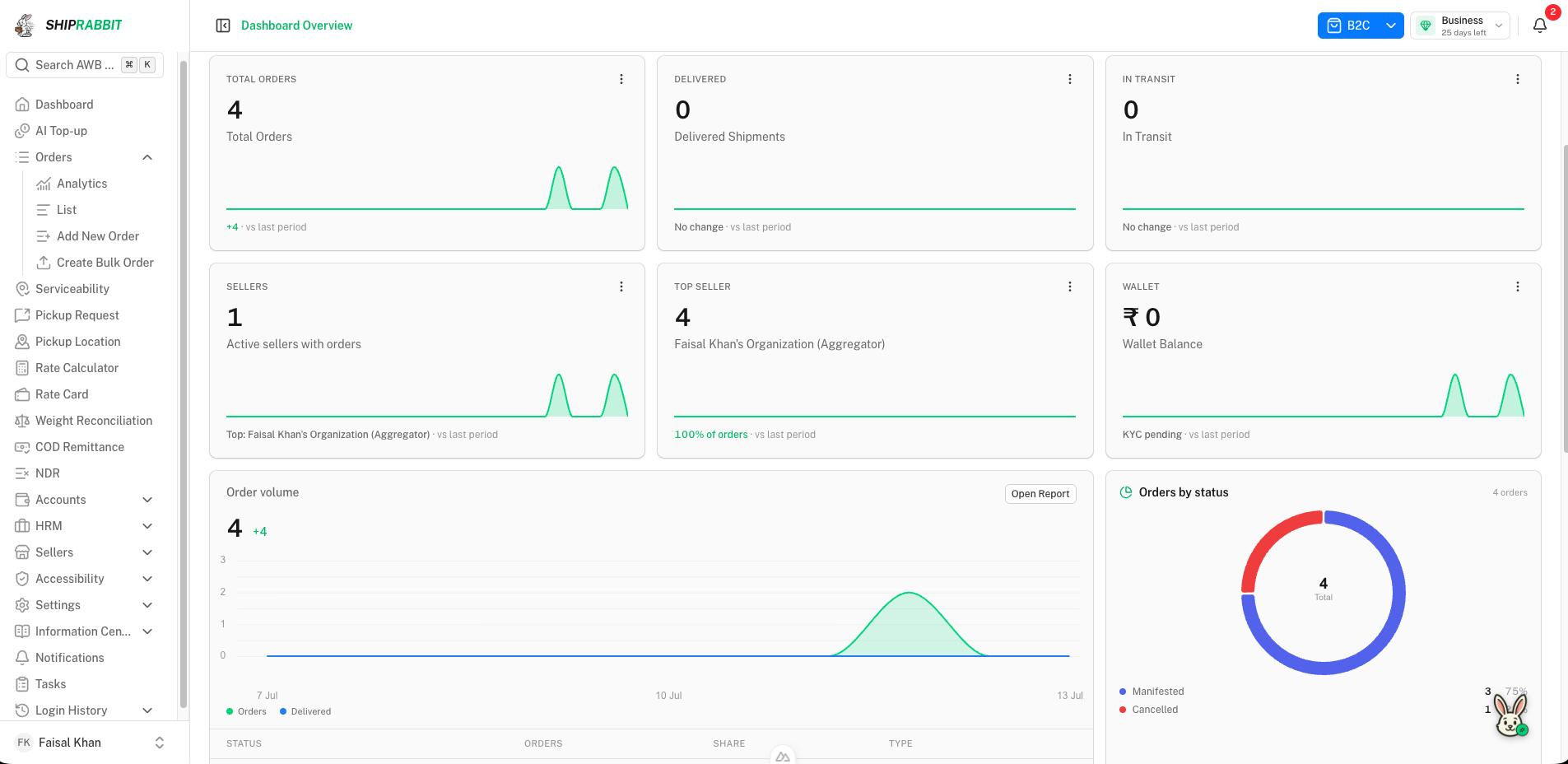
Build vs Buy Courier Aggregator Software
Compare building your own courier aggregator software versus buying a white-label platform — development cost, time to market, and total ownership.
Read article →How Courier APIs Work
A technical overview of how courier APIs work — authentication, endpoints, webhooks, rate requests, label generation, and integration best practices.
Read article →How to Choose Courier Aggregator Software
A structured checklist for choosing courier aggregator software — coverage, integrations, NDR tools, pricing, support, and white-label options.
Read article →Courier Aggregator Software: The Complete Guide for 2025
Everything you need to know about courier aggregator software — features, benefits, use cases, and how to choose the right platform for eCommerce and logistics businesses.
Read article →Stay ahead in eCommerce logistics
Get practical shipping guides, courier insights, and automation tips delivered to your inbox.