
Multi-Courier Shipping Software Explained
Learn what multi-courier shipping software is, how it routes orders across carriers, and why eCommerce businesses rely on it for scalable fulfillment.
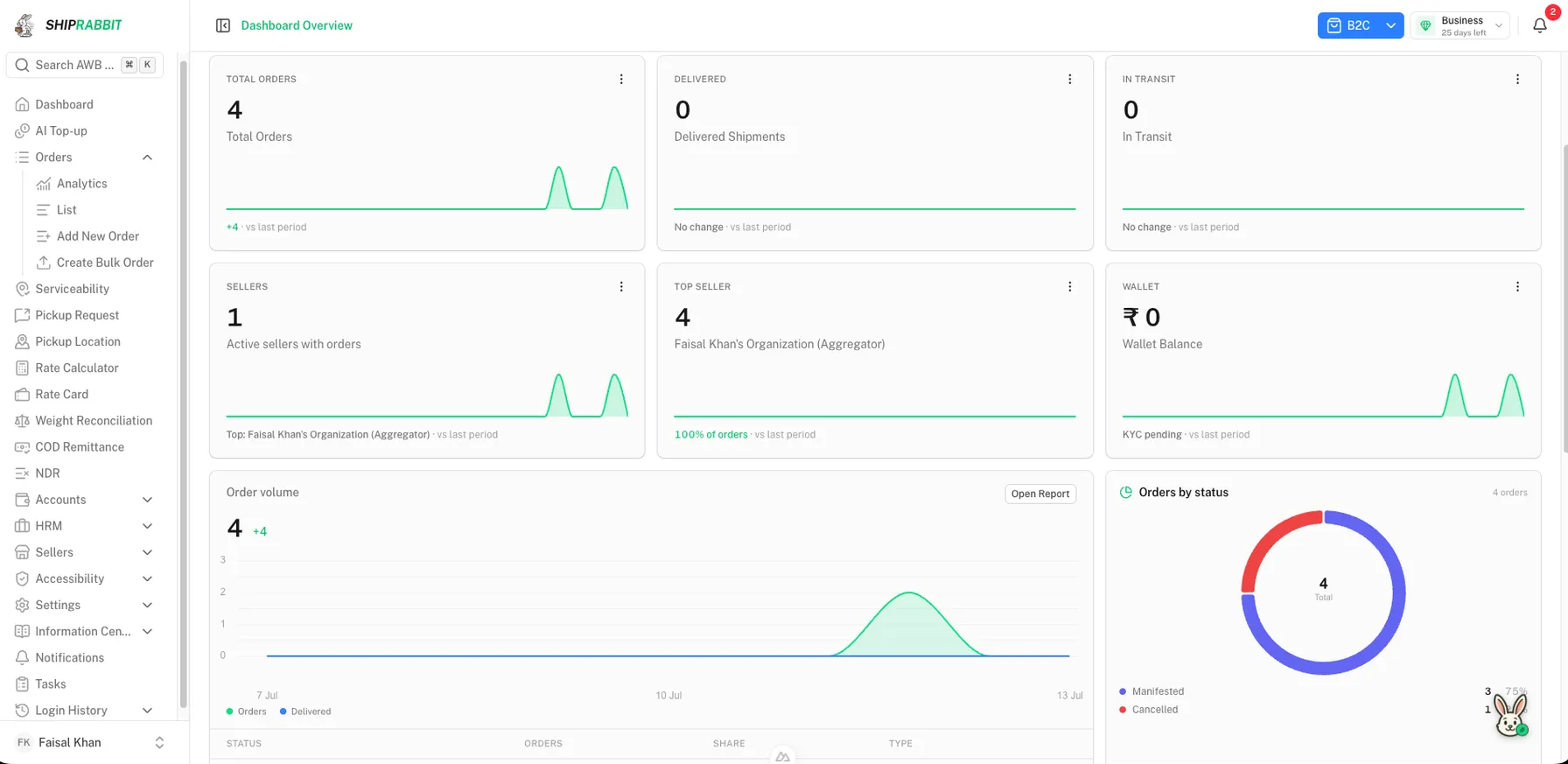
Defining Multi-Courier Shipping Software
Multi-courier shipping software enables businesses to create, manage, and track shipments across several carrier partners from one system. Instead of treating each courier as a separate silo, the software provides unified booking, rate comparison, label generation, and tracking regardless of which partner handles last-mile delivery.
The term overlaps with "courier aggregator software" and "shipping aggregator software." Vendors use labels interchangeably; the technical capability — routing orders across carriers — is what matters.
For foundational definitions, see what courier aggregator software is and the shipping aggregator guide.
Why Single-Courier Setups Break at Scale
A single courier rarely optimizes cost, speed, and reliability for every Indian pincode. Regional strength varies. Rate cards penalize certain zones. Service suspensions happen without warning.
Multi-courier software lets you assign the best eligible carrier per order without changing your checkout or warehouse management flow. Operations scale geographically without negotiating exclusive carrier dependence.
How multi-courier shipping works at the workflow level complements this conceptual overview.
Core Components of Multi-Courier Platforms
Every credible platform combines several layers working together.
- Serviceability engine — pincode and payment-mode eligibility per carrier
- Rate engine — zone and weight-based cost calculation across partners
- Routing rules — manual selection, cheapest/fastest, or AI-assisted scoring
- Label and AWB generation — carrier-specific formats from one workflow
- Tracking normalization — unified statuses from disparate carrier events
- Exception handling — NDR, RTO, and cancellation across partners
Routing Logic: How Orders Get Assigned
Simple setups let operators pick a courier per order after viewing rates. Mature setups define rules: Category X uses Carrier A for COD in South India; prepaid orders under 500g default to cheapest eligible.
AI-assisted platforms analyze historical delivery success by pincode and carrier, weighting reliability against cost. AI-powered courier selection describes data inputs and scoring approaches.
Choosing the right courier per order applies whether routing is manual or automated.
| Routing method | How it works | Best when |
|---|---|---|
| Manual selection | Operator picks from eligible list | Low volume, learning phase |
| Rule-based | If/then rules by zone, weight, COD | Predictable patterns |
| Cheapest eligible | Auto-select lowest rate | Cost-sensitive catalogs |
| Performance-weighted | Score by historical success + cost | High volume, varied pincodes |
Multi-Courier for Merchants vs Aggregator Operators
Merchants use multi-courier software to ship their own orders efficiently. Aggregator operators — logistics companies serving many sellers — use white-label multi-courier platforms to resell shipping under their brand.
ShipRabbit is built for the operator model: seller onboarding, wallet billing, configurable rate cards, and branded tracking. White-label courier aggregator software explains operator requirements versus merchant dashboards.
Integration and Channel Considerations
Multi-courier value multiplies when integrated with order sources. API connections push orders from Shopify, custom OMS tools, or marketplaces and pull tracking back automatically.
Shipping APIs are the programmatic layer. Online sellers and D2C brands have distinct channel needs affecting integration priority.
Measuring Success With Multiple Carriers
Track delivery success rate, RTO percentage, average transit time, and cost per shipment by carrier and zone. Multi-courier software should surface this data — otherwise you cannot refine routing rules.
Compare performance quarterly as carrier networks evolve. A partner strong last year may underperform after hub changes. Improving delivery success uses this data actively.
Getting Started
Audit current couriers, volumes, and problem pincodes. Enable multi-courier booking on a trial platform with historical orders before full migration.
Read benefits of aggregation and how to choose a platform. Visit the courier aggregator software hub for ShipRabbit capabilities.
Historical Context: Why Multi-Carrier Became Standard
Early Indian eCommerce often relied on a single national courier partner. As volumes grew and pincodes expanded, sellers discovered coverage and cost gaps no one carrier could fill alone. Multi-carrier shipping software emerged to operationalize what sellers were already doing manually — using different couriers for different zones without integrated tooling.
Marketplace growth accelerated the need: sellers competing on delivery speed and shipping cost needed dynamic carrier choice per order. Software replaced spreadsheet-based courier assignment rules.
Today multi-carrier capability is baseline expectation for any seller shipping more than a few states — the question is build, buy aggregator access, or white-label operate.
Technical Architecture in Plain Language
At minimum, multi-courier software needs adapter layers per carrier, a routing engine applying business rules, unified shipment storage, and tracking normalization. Optional layers include AI scoring, NDR automation, wallet billing, and seller portals for operator models.
Data flows in one direction for booking (your order to carrier AWB) and reverse for tracking (carrier events to unified status). Both directions must handle failures gracefully.
Detailed workflow steps walk through each stage for teams evaluating platforms.
Common Misconceptions
Multi-carrier does not mean using five couriers on every order — it means having options and rules to select the right one per context. More carriers enabled increases complexity; start with two or three strong partners before expanding.
Cheapest courier is not always best — COD collection reliability and RTO rates affect net margin more than nominal shipping rate for many categories. Balance cost with performance metrics.
Multi-carrier software does not automatically improve delivery — it provides tools to act on data. Routing rules and NDR processes must be actively managed.
Practical First Steps
Enable two couriers covering complementary zones. Run 50/50 split on eligible orders for one month. Compare success rates and all-in cost including RTO impact.
Document routing rules as you learn — codify tribal knowledge into platform configuration so scaling staff does not revert to random carrier choice.
Read aggregation benefits and visit ShipRabbit if operating a multi-carrier business for other sellers.
Governance: Who Owns Routing Rules
Clear ownership prevents routing chaos. Assign a logistics lead responsible for monthly rule review, courier performance analysis, and escalation when new pincodes underperform. Without ownership, warehouses revert to habitual carrier preference.
Document rule changes with effective dates and reasons — "Added Carrier B for Northeast COD after Q2 RTO spike" — so future staff understand configuration history.
Per-order selection principles inform governance policies teams codify in software rules.
Software Selection vs Building Internally
Sellers buy access to multi-courier software through aggregator subscriptions. Logistics entrepreneurs building seller-facing products license white-label platforms like ShipRabbit rather than coding adapter layers. Enterprises with unique requirements may build internal routing engines — a minority path given maintenance cost.
Build vs buy analysis helps logistics companies choose between licensing and internal development before committing quarters of engineering time.
Connecting Concepts Across the Blog
Multi-courier capability is the technical foundation behind shipping aggregators and courier aggregator definitions. Benefits appear when software, routing rules, and operational discipline align — technology alone does not optimize shipping outcomes without active management.
Explore multi-courier workflow details and the ShipRabbit platform hub for operator-grade implementations serving seller networks.
Key Takeaways
Multi-courier shipping software routes orders across carrier partners from one system — comparing rates, generating labels, and normalizing tracking without separate portal workflows for each courier.
Success requires routing governance, accurate shipment data, and active performance monitoring — not merely enabling multiple carriers in settings.
Merchants benefit from merchant dashboards; logistics operators building seller networks benefit from white-label platforms like ShipRabbit with downstream portals and wallet billing built in.
Key Takeaways
- Multi-courier software connects one order flow to many carrier backends
- Routing rules assign each shipment to the optimal courier automatically
- Rate comparison by zone and weight slab drives per-order cost optimization
- Unified tracking replaces checking five separate courier websites
- Essential for sellers whose buyers span metros, tier-2, and tier-3 pincodes
Frequently Asked Questions
Is multi-courier shipping software the same as a courier aggregator?
The terms overlap significantly. Both refer to platforms that manage shipments across multiple courier partners from one interface.
How many couriers should I connect?
Most sellers benefit from three to five partners covering prepaid, COD, metro, and remote pincode lanes with overlapping coverage.
Can multi-courier software automate courier selection?
Yes. Rule-based and AI-powered selection assign couriers by pincode performance, cost, speed, and payment mode automatically.
Does multi-courier shipping require more warehouse complexity?
No. Labels from all carriers print from one system. Warehouse teams follow the same pick-pack-ship workflow regardless of carrier.
ShipRabbit
Learn how ShipRabbit helps businesses automate shipping
Discover how a unified courier aggregation platform simplifies multi-carrier shipping for eCommerce teams.
Related Articles
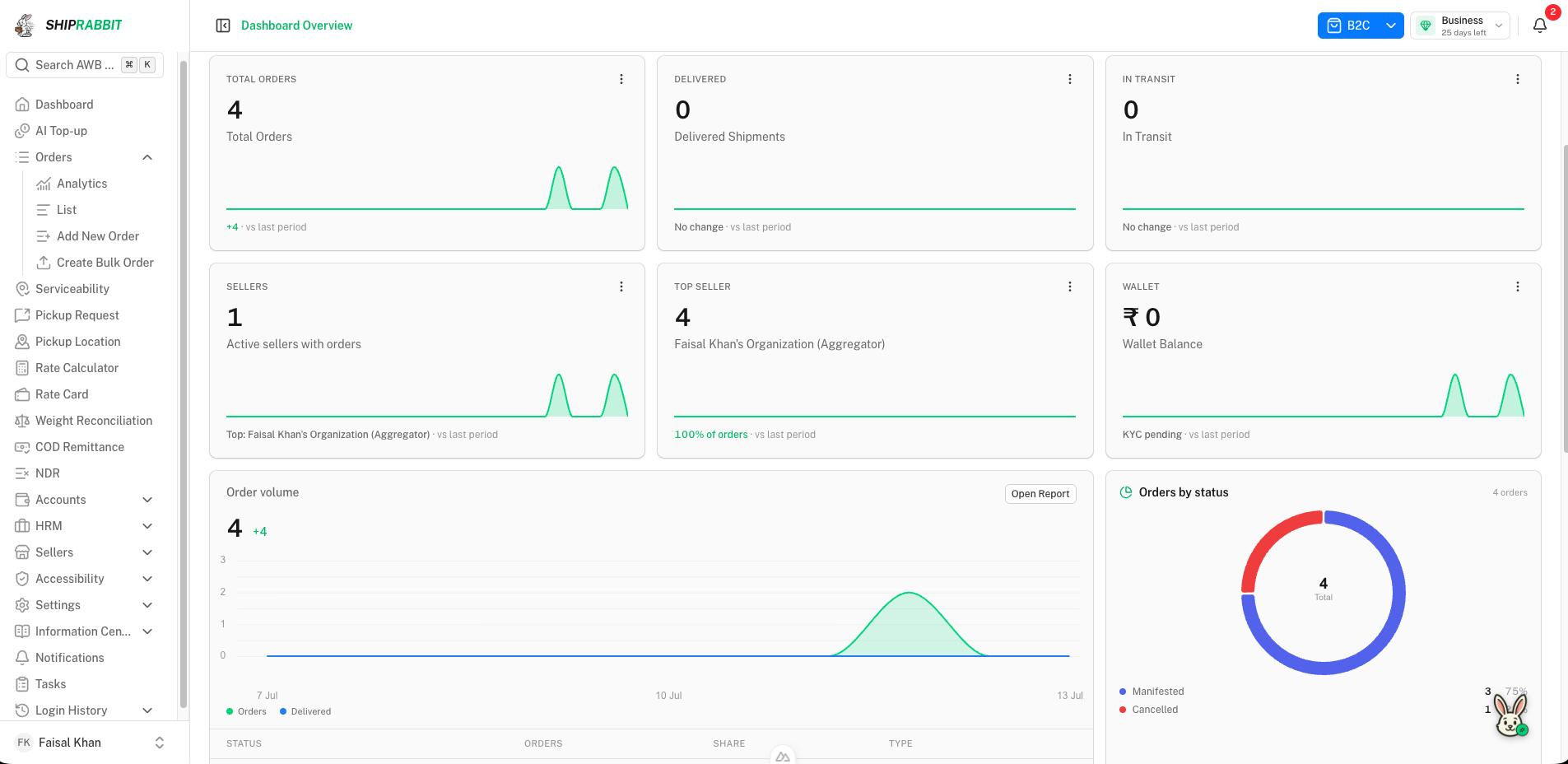
How Multi-Courier Shipping Works
Learn how multi-courier shipping works — order routing rules, rate comparison, serviceability checks, and unified tracking across carrier partners.
Read article →Shipping Aggregator Software: The Complete Guide
The complete guide to shipping aggregator software — definitions, features, use cases, and how it helps eCommerce and logistics businesses ship smarter.
Read article →How Courier Aggregator Software Works
Understand how courier aggregator software routes orders to carriers, compares rates, generates labels, and syncs tracking through a single unified platform.
Read article →
What Is Courier Aggregator Software?
Learn what courier aggregator software is, how it differs from single-carrier tools, and why eCommerce businesses use it to manage multi-courier shipping.
Read article →Stay ahead in eCommerce logistics
Get practical shipping guides, courier insights, and automation tips delivered to your inbox.