
What Is a Shipping API?
Learn what a shipping API is, how it connects your store or OMS to courier partners, and the core endpoints for booking, tracking, and rate calculation.
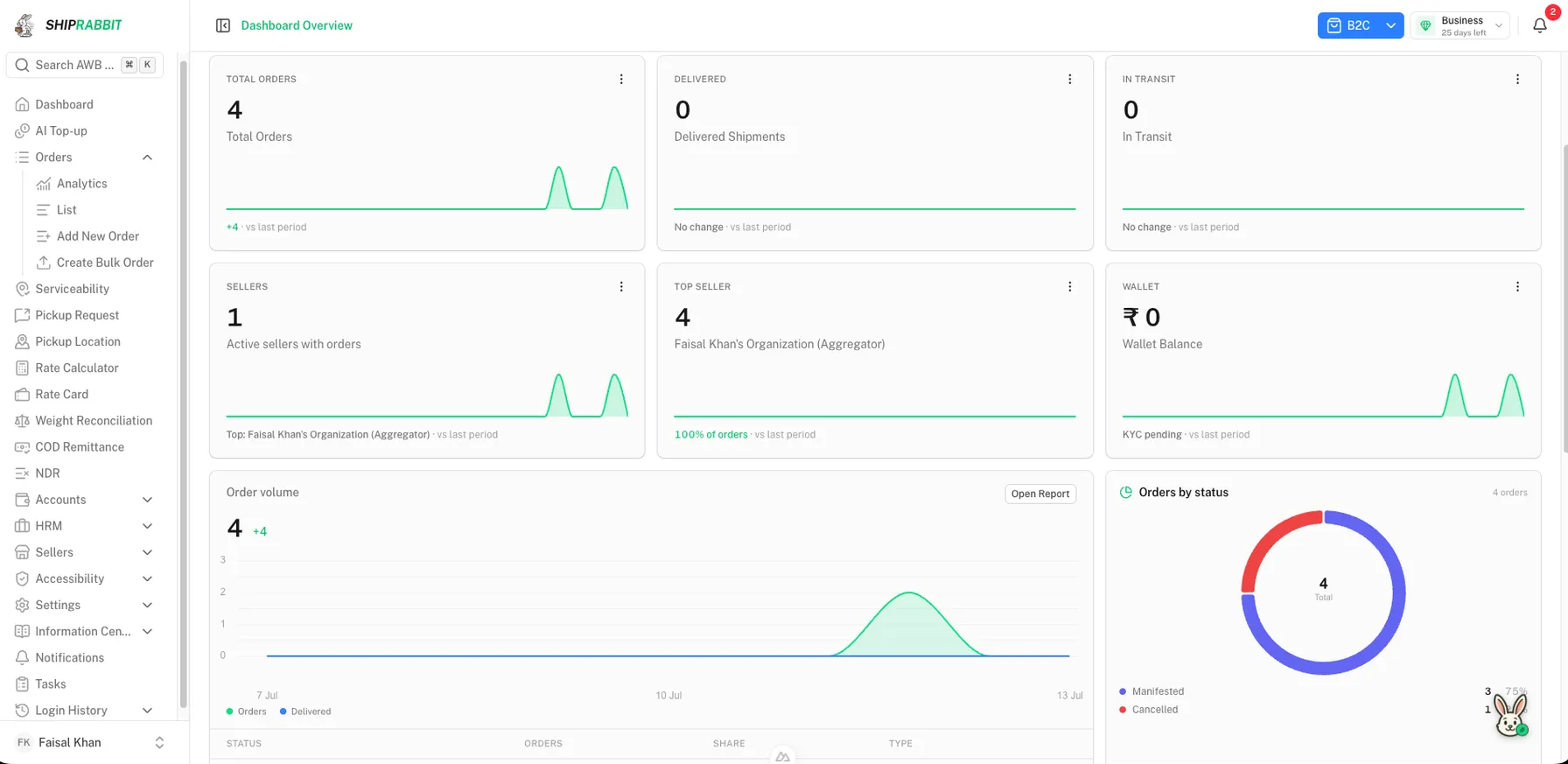
The Short Definition
A shipping API is a programmatic interface that lets your software create shipments, generate labels, track packages, calculate rates, and manage cancellations with courier or logistics platforms — without manual dashboard entry.
Instead of a human copying order details into a courier portal, your OMS, WMS, or eCommerce backend sends structured HTTP requests and receives structured responses. Events like delivery updates arrive via webhooks your system consumes automatically.
Shipping APIs power the automation layer behind courier aggregator software and multi-courier shipping platforms.
Shipping API vs Courier API vs Aggregator API
A courier API connects directly to one carrier — Delhivery, Blue Dart, or similar. A shipping aggregator API connects to the aggregator platform, which routes requests to the appropriate underlying courier.
Functionally, aggregator APIs expose similar operations — create shipment, track, cancel — but normalize differences across carriers. You integrate once; the platform handles carrier-specific payloads.
What a courier API is focuses on single-carrier interfaces. Aggregator vs direct integration compares approaches.
Common Shipping API Operations
Most shipping and aggregator APIs support a core set of endpoints.
| Operation | Purpose | Typical trigger |
|---|---|---|
| Create shipment | Book AWB and generate label | Order ready to ship |
| Rate estimate | Calculate cost before booking | Checkout or fulfillment rule |
| Serviceability | Check pincode eligibility | Order validation |
| Track shipment | Fetch status events | Customer query or cron job |
| Cancel shipment | Void AWB before pickup | Order cancelled by buyer |
| Webhook events | Push async status updates | Carrier status change |
How Shipping APIs Fit in eCommerce Architecture
Typical flow: customer places order on storefront → OMS marks order paid → OMS calls shipping API to create shipment → label stored and printed at warehouse → webhooks update OMS and customer notification system until delivery.
Marketplace sellers sync AWB back to channel APIs separately. Custom stacks may use middleware or iPaaS tools between storefront and shipping API.
How aggregator software works shows where API calls sit in the full lifecycle.
Authentication and Security Basics
Shipping APIs use API keys, OAuth tokens, or JWT-based auth. Credentials must live in secure server-side configuration — never in browser-exposed frontend code.
Use HTTPS for all requests. Validate webhook signatures where carriers provide them to prevent spoofed tracking events. Rotate credentials on schedule and after staff changes.
Idempotency and error handling
Network timeouts during create-shipment calls can cause duplicate AWBs if your code retries blindly. Use idempotency keys where supported and check for existing bookings before retry.
How courier APIs work covers technical patterns for reliable integrations.
Webhooks vs Polling for Tracking
Webhooks push events to your endpoint when status changes — efficient for high volume. Polling periodically requests status — simpler to implement but slower and heavier on API limits.
Production systems often use webhooks primary with polling fallback when courier feeds lag. Aggregator APIs normalize events from multiple carriers into consistent webhook payloads.
Evaluating API Quality When Choosing Platforms
Review documentation completeness, sandbox availability, example payloads, rate limits, and webhook event catalogs before selecting aggregator software for eCommerce.
Platform selection checklist includes API evaluation steps for non-developers coordinating with engineering.
White-label operators exposing APIs to their sellers should evaluate ShipRabbit for normalized multi-courier endpoints and operator-level admin APIs.
When You Need a Shipping API vs Dashboard Only
Below roughly 20–30 daily shipments, manual or CSV dashboard workflows may suffice. Above that — or with multiple order sources — API automation reduces errors and labor.
Custom checkout showing live shipping rates requires rate estimate API integration at cart or checkout stage. Plan engineering time accordingly.
Related Topics to Explore
Continue with how courier APIs work, shipping automation, and the courier aggregator software hub for platform options with robust API layers.
Glossary of Common API Terms
AWB (airway bill number) identifies a shipment with the carrier. Webhook is an HTTP callback pushing events to your server. Serviceability confirms whether a pincode accepts a given payment mode and weight. Rate estimate returns cost before booking. Idempotency prevents duplicate bookings when network retries occur.
Familiarity with these terms speeds conversations between engineering, operations, and vendor support during integration and troubleshooting.
REST Conventions Most Shipping APIs Follow
Create shipment endpoints accept POST with JSON body containing origin, destination, weight, dimensions, payment mode, and line items. Responses return AWB, label URL or base64, and status codes. Track endpoints accept GET with AWB parameter. Webhooks POST event JSON to your registered HTTPS endpoint on status changes.
Error responses should include machine-readable codes — retry on 5xx, fix payload on 4xx validation errors. Log full request/response pairs during integration testing for debugging.
Sandbox vs Production Environments
Sandboxes simulate booking without real pickup — use for development and automated tests. Production credentials activate real AWBs and charges. Never mix credentials across environments in configuration files.
Some carriers lack full sandbox parity — staging tests may still miss edge cases until controlled production pilots with low volume.
Building vs Buying API Integration
Direct courier APIs require one integration per carrier. Aggregator APIs like those exposed by ShipRabbit normalize multi-carrier access — one integration pattern, multiple underlying partners.
Compare approaches before committing engineering quarters to adapter maintenance.
Documentation Quality Checklist for Developers
Complete endpoint reference with request/response examples. Webhook event catalog with sample payloads. Authentication guide with token refresh flows. Rate limits and idempotency guidance. Changelog for breaking API versions.
Poor documentation predicts integration delays — evaluate docs before contract, not after.
Continue with how courier APIs work for deeper technical workflow coverage.
Real-World Integration Patterns
Pattern one: OMS calls create-shipment on pack completion and stores AWB on order record. Pattern two: scheduled job batches overnight orders at cutoff time. Pattern three: checkout calls rate-estimate API for dynamic shipping fee display — requires lowest latency and caching.
Choose patterns matching warehouse rhythm and customer promise. High-volume sellers rarely book synchronously at click — they batch for efficiency.
Operators on white-label platforms expose downstream seller APIs abstracted from underlying multi-carrier complexity — see ShipRabbit for operator-grade API architecture.
Testing Strategy Before Production
Write automated tests for happy-path booking, validation error handling, webhook signature verification, and duplicate retry scenarios. Use sandbox AWBs for CI pipelines; reserve production tests for controlled pilot orders with real pickup.
Load-test rate-estimate endpoints if checkout depends on them — latency under peak traffic directly affects conversion on custom storefronts.
From Definition to Implementation
Understanding what a shipping API is marks the start, not finish, of automation. Successful integrations pair API connectivity with warehouse process design, error monitoring, and finance reconciliation workflows consuming shipment and remittance data programmatically.
Merchants integrate with aggregator APIs for multi-carrier access; operators on ShipRabbit expose APIs to downstream sellers while the platform maintains carrier adapters. Continue learning with how courier APIs work and shipping automation guide.
Key Takeaways
A shipping API connects your OMS, WMS, or storefront to courier or aggregator platforms for programmatic booking, labels, tracking, and rate calculation.
Aggregator APIs normalize multi-carrier access behind one integration; direct courier APIs require separate implementation per carrier.
Evaluate documentation, sandbox access, and webhook reliability during platform selection — API quality determines automation success at scale.
Start with sandbox integration, progress to controlled production pilots, then scale automation once error handling and monitoring are proven.
Assign engineering or operations ownership for API health monitoring before peak season — silent webhook failures stall customer notifications and marketplace tracking sync.
Key Takeaways
- A shipping API is a programmatic interface for creating and managing shipments
- Core endpoints cover rate calculation, shipment booking, label retrieval, and tracking
- APIs replace manual data entry in courier portals for high-volume operations
- Aggregator APIs unify multiple carriers behind one integration surface
- Webhooks push tracking updates to your system in real time
Frequently Asked Questions
What does a shipping API do?
It lets your software create shipments, fetch shipping rates, download labels, and receive tracking updates without manual portal interaction.
Do I need a developer to use a shipping API?
Initial integration requires engineering effort. Once connected, shipment operations run automatically from your OMS or eCommerce platform.
Is a shipping API different from a courier API?
Courier APIs connect to one carrier. Shipping APIs often refer to aggregator endpoints that abstract multiple carriers behind unified calls.
What systems typically integrate with shipping APIs?
Order management systems, warehouse management tools, eCommerce platforms, ERPs, and custom fulfillment applications.
ShipRabbit
Learn how ShipRabbit helps businesses automate shipping
Discover how a unified courier aggregation platform simplifies multi-carrier shipping for eCommerce teams.
Related Articles
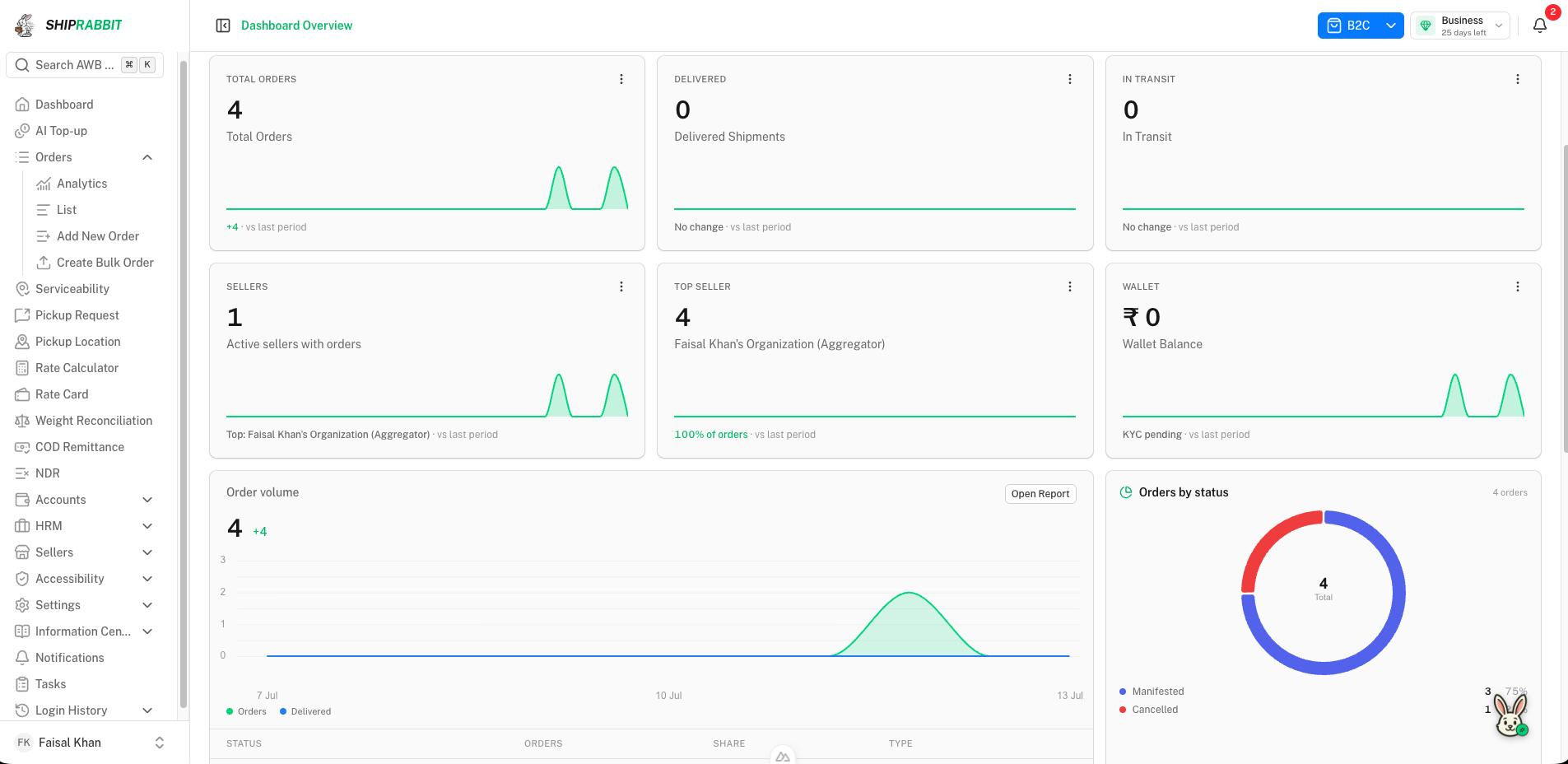
What Is a Courier API?
Understand what a courier API is and how it enables automated shipment creation, label generation, tracking webhooks, and serviceability checks.
Read article →How Courier APIs Work
A technical overview of how courier APIs work — authentication, endpoints, webhooks, rate requests, label generation, and integration best practices.
Read article →Shipping Automation for eCommerce Businesses
How shipping automation helps eCommerce businesses scale — auto label generation, tracking sync, NDR workflows, courier rules, and API integrations.
Read article →How Courier Aggregator Software Works
Understand how courier aggregator software routes orders to carriers, compares rates, generates labels, and syncs tracking through a single unified platform.
Read article →Stay ahead in eCommerce logistics
Get practical shipping guides, courier insights, and automation tips delivered to your inbox.