
Build vs Buy Courier Aggregator Software
Compare building your own courier aggregator software versus buying a white-label platform — development cost, time to market, and total ownership.
The Decision Every Logistics Tech Leader Faces
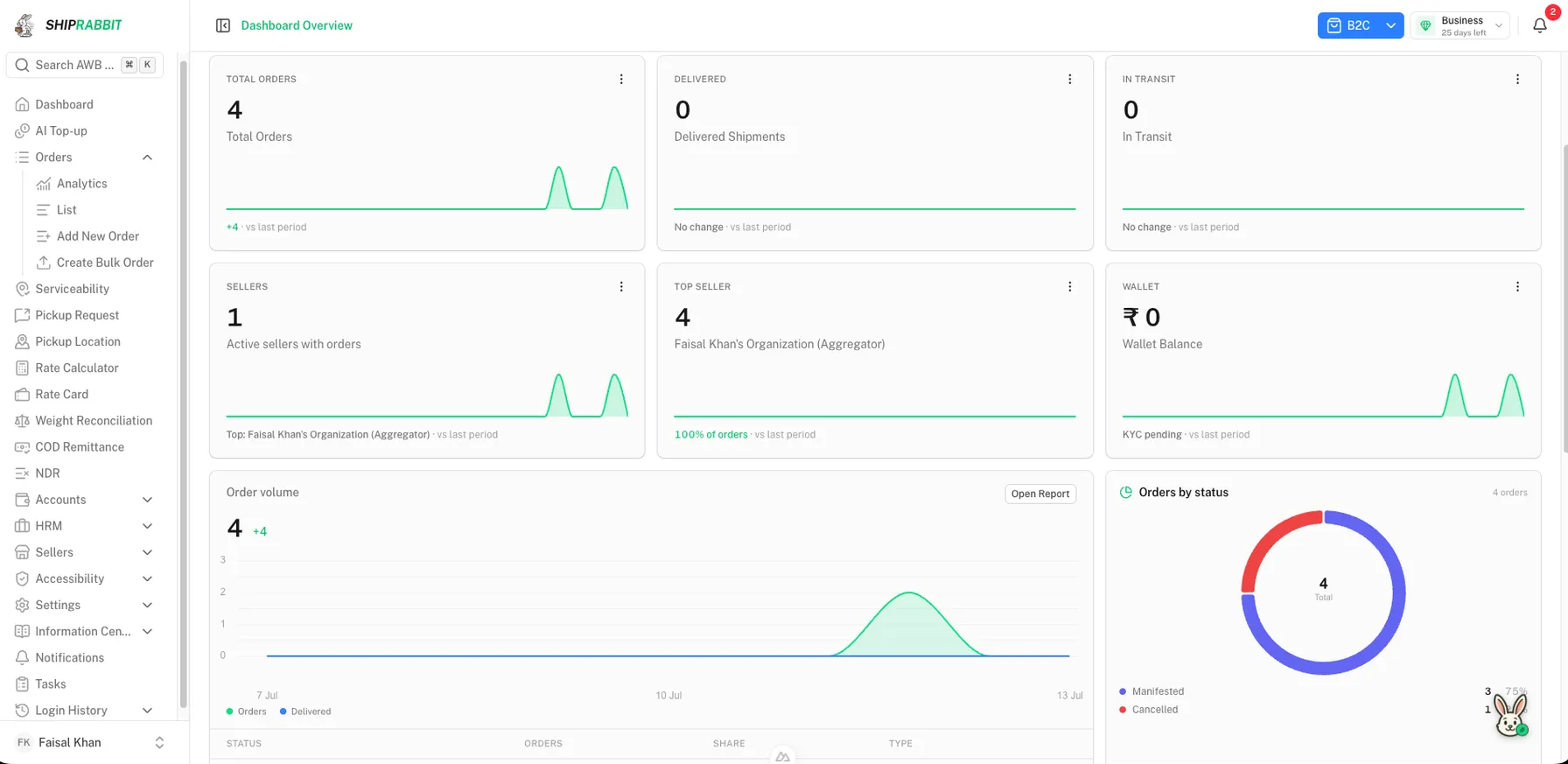
Logistics companies, eCommerce platforms, and aggregators reaching multi-courier scale eventually ask: should we build courier aggregation software in-house or buy a platform like ShipRabbit? Building means developing your own integrations, routing engine, seller portals, billing, and tracking normalization. Buying means licensing a white-label or merchant platform and configuring it to your business model.
Neither choice is universally correct. The right answer depends on your shipment volume, engineering capacity, differentiation strategy, time-to-market requirements, and whether shipping software is core to your competitive advantage or supporting infrastructure.
This comparison framework helps logistics founders and CTOs structure the decision. For platform capabilities reference, see the complete courier aggregator guide, ShipRabbit's platform, and start a logistics business without building the technology.
What Building In-House Requires
A production courier aggregator is not a single API integration — it is a system of systems. Minimum components include: authentication and user management for sellers; integrations with multiple courier APIs each with distinct payloads and webhooks; serviceability and rate lookup normalization; shipment booking and label generation; unified tracking status mapping; NDR ingestion and action APIs; COD remittance tracking; wallet and billing; reporting dashboards; and seller-facing portals.
Each courier integration requires ongoing maintenance. Carriers update APIs, change authentication, add mandatory fields, and deprecate endpoints without aligned timelines. Five carrier integrations means five maintenance streams indefinitely.
Engineering cost extends beyond initial build: on-call for booking failures during sale events, webhook reliability, security patches, and feature requests from seller networks. How courier APIs work illustrates integration complexity per carrier.
- Multi-carrier API integrations with normalization layer
- Seller portal, wallet billing, and rate card management
- Unified tracking, NDR, and COD remittance modules
- DevOps: uptime, monitoring, webhook infrastructure
- Ongoing carrier API maintenance and compliance updates
- Support tooling for seller onboarding and dispute resolution
What Buying a Platform Provides
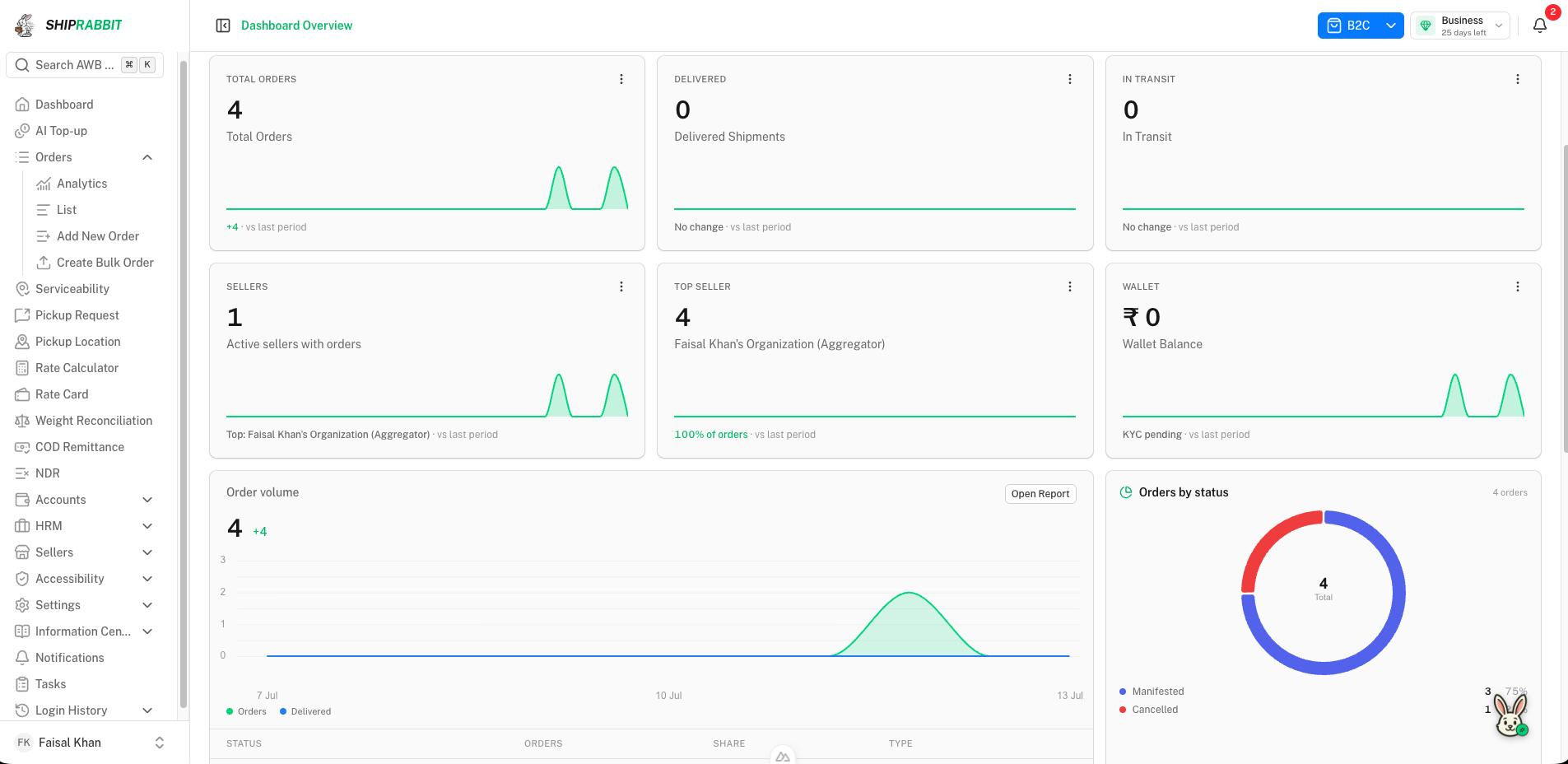
Buying — specifically white-label courier aggregator software — delivers pre-built components you configure and brand rather than develop from scratch. ShipRabbit provides multi-courier booking, AI-assisted courier selection, an NDR desk for recorded re-attempt and RTO requests, COD remittance tracking, seller portals, branded tracking pages, and REST APIs.
Time-to-market compresses from 12 to 24 months of engineering for a minimal viable aggregator to weeks of configuration, carrier credential setup, and seller onboarding. Your team focuses on sales, operations, and seller success rather than webhook schema migrations.
Platform fees — subscription, per-shipment, or hybrid — replace engineering salaries and infrastructure costs but do not eliminate them entirely. You still need operations staff, seller support, and carrier relationship management.
| Factor | Build in-house | Buy platform (e.g. ShipRabbit) |
|---|---|---|
| Time to launch | 12–24+ months | Weeks to few months |
| Upfront engineering cost | High | Low to moderate |
| Ongoing carrier maintenance | Your engineering team | Platform vendor |
| Customization depth | Unlimited within budget | Platform capabilities + config |
| White-label branding | Full control | Supported on white-label tiers |
| Risk of project failure | Engineering scope creep | Vendor dependency |
When Building Makes Sense
Build when shipping software is your core product differentiation and you have sustained engineering investment — not a one-time project team. Large marketplaces with unique routing logic, proprietary carrier relationships, or compliance requirements no vendor supports may justify custom development.
Build when you have already validated the aggregation business model with borrowed or manual tooling and need deep customization that no platform offers — and the revenue justifies multi-year engineering spend.
Build when you require complete control over data residency, source code, and feature roadmap without vendor roadmap dependencies — and leadership accepts the ongoing cost as permanent operational expense, not a one-time project.
Even then, many teams build custom layers on top of purchased aggregator APIs for differentiation while buying commodity carrier connectivity — a hybrid approach reducing build scope to unique value-add only.
Hidden build costs
Teams underestimate NDR workflow complexity, COD reconciliation edge cases, wallet ledger accuracy, and seller dispute tooling. These features are not glamorous but determine whether sellers trust your platform. Building MVP booking without robust exception handling produces churn regardless of clean label generation on happy paths.
When Buying Makes Sense
Buy when speed to market determines competitive survival — logistics startups launching seller networks cannot spend 18 months in development while competitors onboard merchants. Buy when engineering headcount is limited and better deployed on your unique value proposition than courier API plumbing.
Buy when you need white-label seller portals, wallet billing, and multi-carrier connectivity on day one. White-label courier aggregator software and starting a courier aggregation business describe the launch path on a purchased platform.
Buy when total cost of ownership analysis — platform fees over three years versus engineering salaries, infrastructure, and opportunity cost of delayed launch — favors vendor economics. Aggregator pricing models help model vendor costs.
ShipRabbit is purpose-built for logistics companies and aggregators launching white-label shipping platforms — not a generic merchant shipping tool retrofitted for aggregation businesses.
Hybrid and Migration Paths
Many successful aggregators start on a purchased platform, validate product-market fit, grow seller volume, then selectively build custom modules where differentiation demands it — proprietary analytics, vertical-specific checkout integrations, or custom carrier contracts requiring unique booking logic.
Migration from build to buy happens when engineering maintenance overwhelms feature development — carrier API changes consume sprints planned for seller-facing improvements. Migration from buy to build is rare and usually driven by scale economics or acquisition; most operators stay on platforms and negotiate enterprise terms as volume grows.
Aggregator vs direct integration is a related but distinct decision — whether to integrate carriers directly vs through an aggregator API — often preceding the build-vs-buy platform question.
Decision Framework
Answer these questions with leadership: Is shipping software core IP or supporting infrastructure? What is the cost of launching six months late? Do we have engineers who will maintain carrier integrations for years, not just ship v1? Does any platform cover 80% of requirements with configuration? What is our three-year TCO for build vs buy including maintenance?
If supporting infrastructure and speed matter, buy. If core IP with unique requirements and sustained engineering capacity, build — or hybrid. Document the decision and revisit annually as volume and team capacity evolve.
Evaluate ShipRabbit's courier aggregator software alongside your build estimate. Request demos against your seller workflow requirements, not generic feature checklists. Read how to choose courier aggregator software for vendor evaluation criteria that apply whether you buy now or build later and need carrier connectivity partners.
Total Cost of Ownership Comparison
Build TCO includes engineering salaries for initial development and ongoing maintenance, cloud infrastructure, monitoring tools, security audits, and opportunity cost of features not built while maintaining courier integrations. Model three-year horizon minimum — carrier API maintenance never ends.
Buy TCO includes platform subscription or per-shipment fees, implementation and configuration services, seller onboarding support, and any custom integration work for your unique sales channels. Negotiate volume tiers upfront if seller growth projections are aggressive.
Hybrid TCO splits carrier connectivity — bought through aggregator APIs — from custom seller-facing features you build. This reduces build scope while preserving differentiation on user experience layers buyers actually see.
Courier aggregator pricing helps structure vendor cost assumptions for buy-side TCO models compared against internal engineering rate cards.
Risk Assessment: Build vs Buy
Build risks include project delays, key engineer departure mid-integration, carrier API breaking changes during launch window, and underestimating NDR/COD module complexity. Buy risks include vendor roadmap misalignment, platform downtime dependency, and pricing changes as your volume grows.
Mitigate build risk with phased delivery: one carrier integration live before adding three more; NDR module before seller wallet; never big-bang launch. Mitigate buy risk with contract clarity on uptime SLAs, data export rights, and pricing caps at volume tiers.
ShipRabbit reduces buy-side risk for aggregation businesses by focusing specifically on white-label multi-courier operations — seller portals, wallet billing, NDR, COD remittance — rather than generic merchant tools that require heavy customization to serve aggregator business models.
Document your decision rationale and scheduled review date. Teams that chose build three years ago with two engineers may now have different economics than teams evaluating today with zero dedicated logistics engineering headcount.
Key Takeaways
- Building in-house requires 12-18 months and a dedicated engineering team for courier APIs alone
- Buying white-label software like ShipRabbit launches your platform in weeks, not months
- Ongoing maintenance — carrier API changes, credential rotation — is the hidden cost of building
- Buy when speed to market and seller acquisition matter more than fully custom workflows
- Build only if you have unique requirements no existing platform can configure or extend
Frequently Asked Questions
How much does it cost to build courier aggregator software?
Engineering costs for multi-carrier integrations, seller portals, billing, and NDR systems typically exceed several crore over 18-24 months including ongoing maintenance.
When should a logistics startup buy instead of build?
When your competitive advantage is seller relationships and operations, not software engineering. White label lets you focus on growth.
Can I customize a white-label platform enough to differentiate?
Yes. White label platforms offer configurable rate cards, branding, workflows, and API extensions without rebuilding core courier integrations.
What is the break-even point for building vs buying?
Unless you process millions of shipments monthly or need highly specialized workflows, buying white label delivers faster ROI than custom development.
ShipRabbit
Automate your shipping with ShipRabbit
Multi-courier booking, AI-powered selection, NDR management, and COD remittance — all from one dashboard.
Related Articles
White Label Courier Aggregator Software
Launch your own branded logistics platform with white label courier aggregator software — seller portals, wallet billing, tracking pages, and multi-courier APIs.
Read article →How to Start a Courier Aggregation Business
A step-by-step guide to starting a courier aggregation business — market research, courier partnerships, platform selection, pricing, and seller onboarding.
Read article →Courier Aggregator Software vs Direct Courier Integration
Compare courier aggregator software against direct courier integration — cost, speed to launch, maintenance, control, and which approach fits your business.
Read article →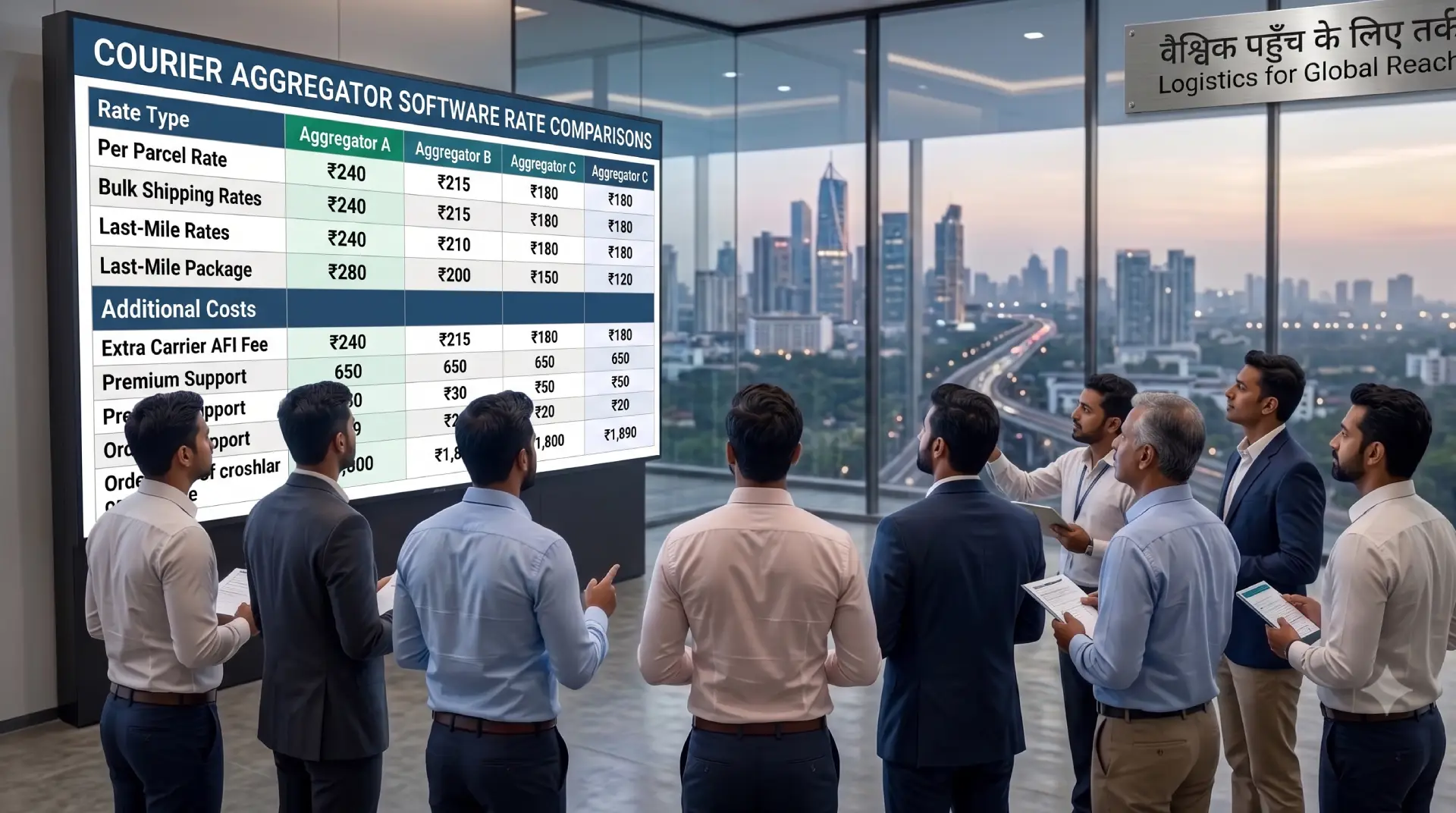
Courier Aggregator Software Pricing Explained
Understand courier aggregator software pricing models — per-shipment fees, subscriptions, wallet systems, and how to calculate total cost of ownership.
Read article →Stay ahead in eCommerce logistics
Get practical shipping guides, courier insights, and automation tips delivered to your inbox.