
Courier Aggregator Software: The Complete Guide for 2025
Everything you need to know about courier aggregator software — features, benefits, use cases, and how to choose the right platform for eCommerce and logistics businesses.
What Courier Aggregator Software Does
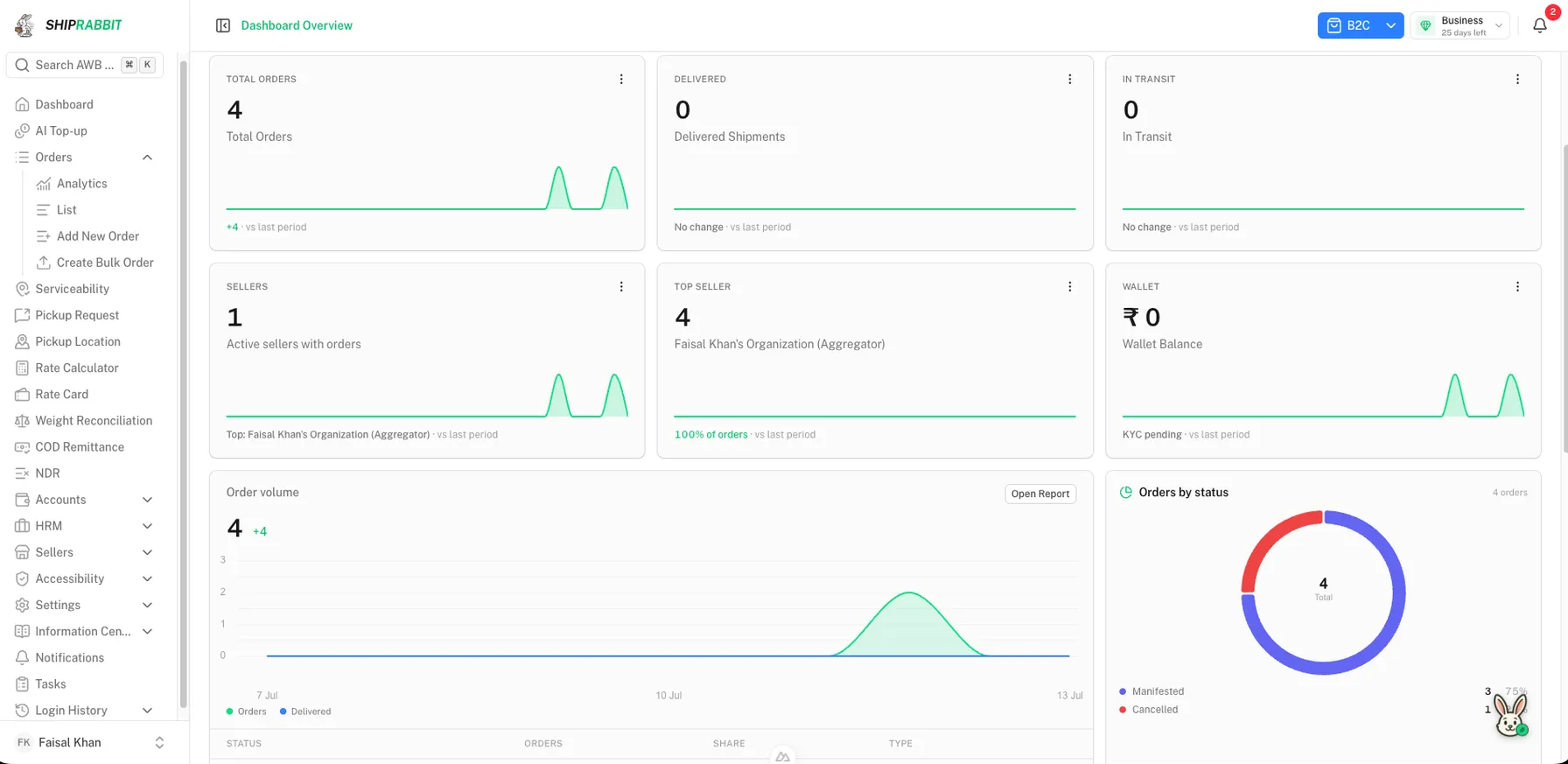
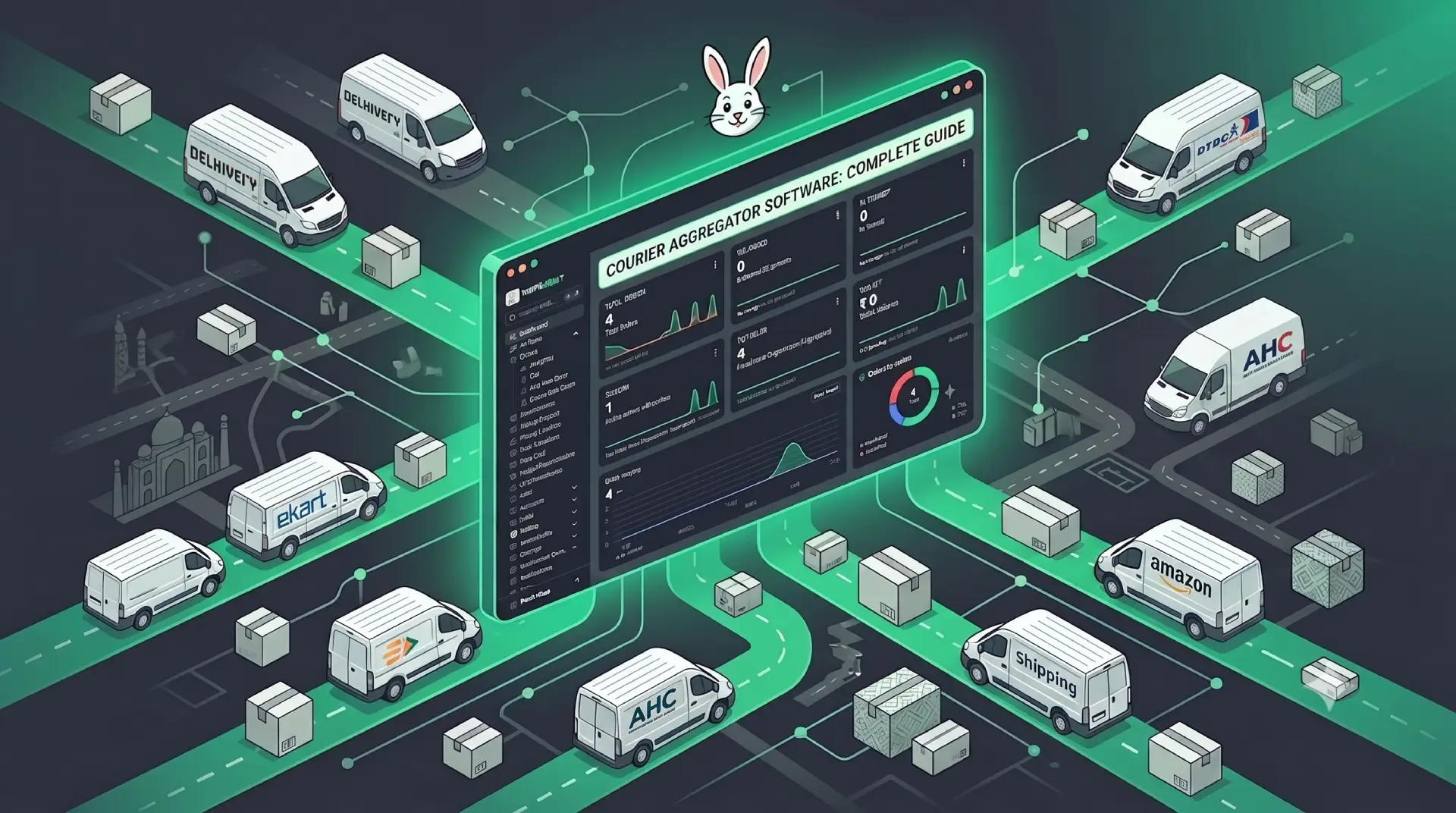
Courier aggregator software is the operational backbone for businesses that ship through multiple courier partners. Instead of logging into separate portals for Delhivery, Blue Dart, DTDC, XpressBees, and others, you manage booking, labels, tracking, NDR follow-ups, and COD remittance from one unified platform.
For eCommerce sellers scaling beyond a single carrier, aggregation removes the friction of duplicate workflows. You compare rates by zone and weight, verify pincode serviceability before confirming orders, and route each shipment to the courier that balances cost and delivery reliability for that specific lane.
Platforms like ShipRabbit's courier aggregator software go further by offering white-label capabilities — so logistics companies can launch branded shipping platforms for their seller networks rather than acting only as end users of someone else's product.
Core Capabilities Every Aggregator Should Offer
Not every platform marketed as a shipping tool delivers true aggregation. A genuine courier aggregator connects to multiple carrier APIs, normalizes their different data formats, and exposes unified workflows on top. Before signing a contract, verify each capability below exists in the product — not merely on a sales deck.
The best platforms also expose these capabilities via API so your warehouse, OMS, and customer notification systems stay in sync without manual CSV exports or copy-paste tracking numbers.
- Multi-courier shipment booking and label generation from one dashboard
- Rate comparison across partners by zone, weight slab, and payment mode
- Unified tracking with standardized status mapping across carriers
- Serviceability checks before order confirmation
- NDR management with automated buyer outreach
- COD remittance tracking and seller wallet visibility
- REST APIs for OMS, WMS, and eCommerce platform integration
- Reporting on delivery performance, RTO rates, and shipping spend
Who Benefits Most from Aggregation
Online sellers shipping 50 or more orders daily quickly outgrow single-courier arrangements. Pincode coverage gaps, rate changes, and carrier-specific downtime become expensive when you lack alternatives. An aggregator lets you switch couriers per order without re-engineering your checkout or warehouse workflow.
D2C brands with regional demand patterns often find that no single courier dominates every zone. Aggregation lets you assign metro orders to one partner and tier-2 or tier-3 pincodes to specialists with stronger last-mile networks in those areas.
Logistics startups and 3PL operators use white-label aggregator software to offer multi-courier shipping as a service. They monetize through seller subscriptions, per-shipment margins, or value-added services like NDR recovery and branded tracking pages.
eCommerce merchants
Merchants on Shopify, WooCommerce, or custom storefronts integrate via API or channel connectors. Orders flow in automatically; labels print in bulk; tracking updates sync back to marketplaces and customer notification systems.
Logistics aggregators and 3PLs
Operators launching under their own brand need seller portals, wallet billing, and configurable rate cards — not just a merchant dashboard. White-label platforms like ShipRabbit provide these building blocks so you focus on sales and operations rather than courier API maintenance.
How Aggregation Compares to Direct Courier Integration
Direct integration with each courier gives maximum control but multiplies engineering effort. Every carrier has different authentication, payload formats, webhook schemas, and rate structures. Maintaining five integrations means five sets of breaking changes, credential rotations, and compliance updates.
An aggregator abstracts that complexity behind a single API and UI. You integrate once; the platform handles carrier-specific quirks. The trade-off is dependency on the aggregator's carrier relationships and uptime — which is why evaluating platform reliability, partner breadth, and API documentation quality matters during selection.
Read our detailed comparison in courier aggregator software vs direct courier integration for a framework on when each approach makes sense.
| Factor | Aggregator | Direct integration |
|---|---|---|
| Time to launch | Days to weeks | Months per carrier |
| Maintenance burden | Platform vendor | Your engineering team |
| Rate negotiation | Often via aggregator contracts | Direct with each carrier |
| Flexibility | Standardized workflows | Fully custom per carrier |
| Best for | Most sellers and startups | Large enterprises with dedicated logistics engineering |
Choosing the Right Platform
Start by mapping your shipping volume, primary zones, COD percentage, and integration requirements. A seller doing 200 prepaid metro shipments weekly has different needs than a COD-heavy fashion brand shipping nationally.
Evaluate courier partner coverage for your top pincodes, not just partner count on a marketing page. Request serviceability checks on real destination samples. Test label formats against your warehouse scanners and marketplace requirements.
Pricing models vary: per-shipment fees, monthly subscriptions, wallet top-ups, or hybrid structures. Understanding courier aggregator pricing breaks down what to expect and how to compare total cost of ownership.
For a structured evaluation checklist, see how to choose courier aggregator software.
Implementation Timeline and Rollout
Most sellers can go live on an aggregator within one to two weeks if integrations are straightforward. The typical rollout starts with account setup and KYC, then courier partner activation, rate card configuration, and a test shipment to validate label format and tracking sync.
API integrations with Shopify, WooCommerce, or a custom OMS add one to three weeks depending on your engineering capacity. Plan a parallel pilot: run ten to twenty real orders through the aggregator while keeping your existing courier portal active as backup until label quality and tracking reliability are confirmed.
For logistics operators launching white-label platforms, rollout includes seller portal branding, wallet and billing configuration, and training support staff on NDR and remittance workflows. Starting a courier aggregation business outlines the operator-specific launch sequence.
Week-by-week seller rollout
Week one focuses on platform setup and test bookings. Week two connects your sales channel and runs parallel shipments. Week three shifts majority volume to the aggregator and monitors delivery performance by courier and zone. Week four optimizes routing rules based on initial data.
Avoid switching all volume on day one. Gradual migration surfaces integration edge cases — international pincodes, oversized SKUs, marketplace-specific label requirements — without disrupting live orders.
Metrics That Matter After Go-Live
Courier aggregator software should give you visibility into shipping economics and delivery quality, not just label printing. Track cost per shipment by zone and weight slab, delivery success rate by courier, RTO percentage, NDR resolution rate, and average remittance cycle time for COD orders.
Compare courier performance monthly and adjust routing rules. A carrier that is cheapest for metro prepaid orders may underperform on tier-3 COD lanes. Aggregation only saves money when you act on the data the platform surfaces.
Improving delivery success rates and reducing shipping costs provide tactical frameworks for acting on these metrics.
| Metric | Why it matters | Action trigger |
|---|---|---|
| Cost per AWB by zone | Identifies overspend vs optimal courier | Reroute when cheaper partner matches SLA |
| RTO rate by courier | Highlights weak last-mile partners | Reduce allocation to underperformers |
| NDR resolution rate | Recovers revenue before RTO | Tune outreach channels and timing |
| COD remittance lag | Affects seller cash flow | Escalate with courier or adjust terms |
ShipRabbit vs Generic Industry Platforms
ShipRabbit is built specifically for logistics companies and aggregators who want to launch white-label shipping platforms — not only for merchants who need a dashboard. That distinction matters: generic shipping tools solve merchant workflows; ShipRabbit solves the business of running a logistics aggregation operation.
ShipRabbit includes multi-courier booking, AI-assisted courier selection, an NDR desk for recorded re-attempt and RTO requests, COD remittance tracking, seller portals, branded tracking pages, and REST APIs. If you are evaluating whether to build your own stack or buy a platform, our build vs buy guide walks through the decision framework.
Whether you ship as a seller or operate as an aggregator, the goal is the same: fewer manual steps, better delivery outcomes, and clear visibility into shipping economics. Courier aggregator software is how modern eCommerce logistics teams achieve that at scale.
Next Steps
New to the topic? Begin with what courier aggregator software is and how it works behind the scenes.
Ready to evaluate vendors? Review the best courier aggregator options for eCommerce and explore the complete ShipRabbit platform.
Key Takeaways
- Courier aggregator software unifies multi-carrier shipping in one dashboard
- Ideal for sellers, D2C brands, 3PLs, and logistics startups scaling shipment volume
- Core features include rate comparison, unified tracking, NDR, COD, and APIs
- White-label platforms like ShipRabbit let aggregators launch under their own brand
- Evaluate partner coverage, pricing model, and API quality before committing
Frequently Asked Questions
What is courier aggregator software?
It is a platform connecting shippers to multiple courier partners through one dashboard for booking, tracking, NDR, and COD management.
Who should use courier aggregator software?
Online sellers, D2C brands, marketplace merchants, 3PLs, and logistics aggregators shipping through multiple carriers.
How is it different from a single courier portal?
A single portal handles one carrier. Aggregators unify many couriers with shared workflows, rate comparison, and consolidated reporting.
Can I white-label courier aggregator software?
Yes. Platforms like ShipRabbit offer white-label options with custom domains, seller portals, and branded tracking for logistics businesses.
ShipRabbit
Automate your shipping with ShipRabbit
Multi-courier booking, AI-powered selection, NDR management, and COD remittance — all from one dashboard.
Related Articles
What Is Courier Aggregator Software?
Learn what courier aggregator software is, how it differs from single-carrier tools, and why eCommerce businesses use it to manage multi-courier shipping.
Read article →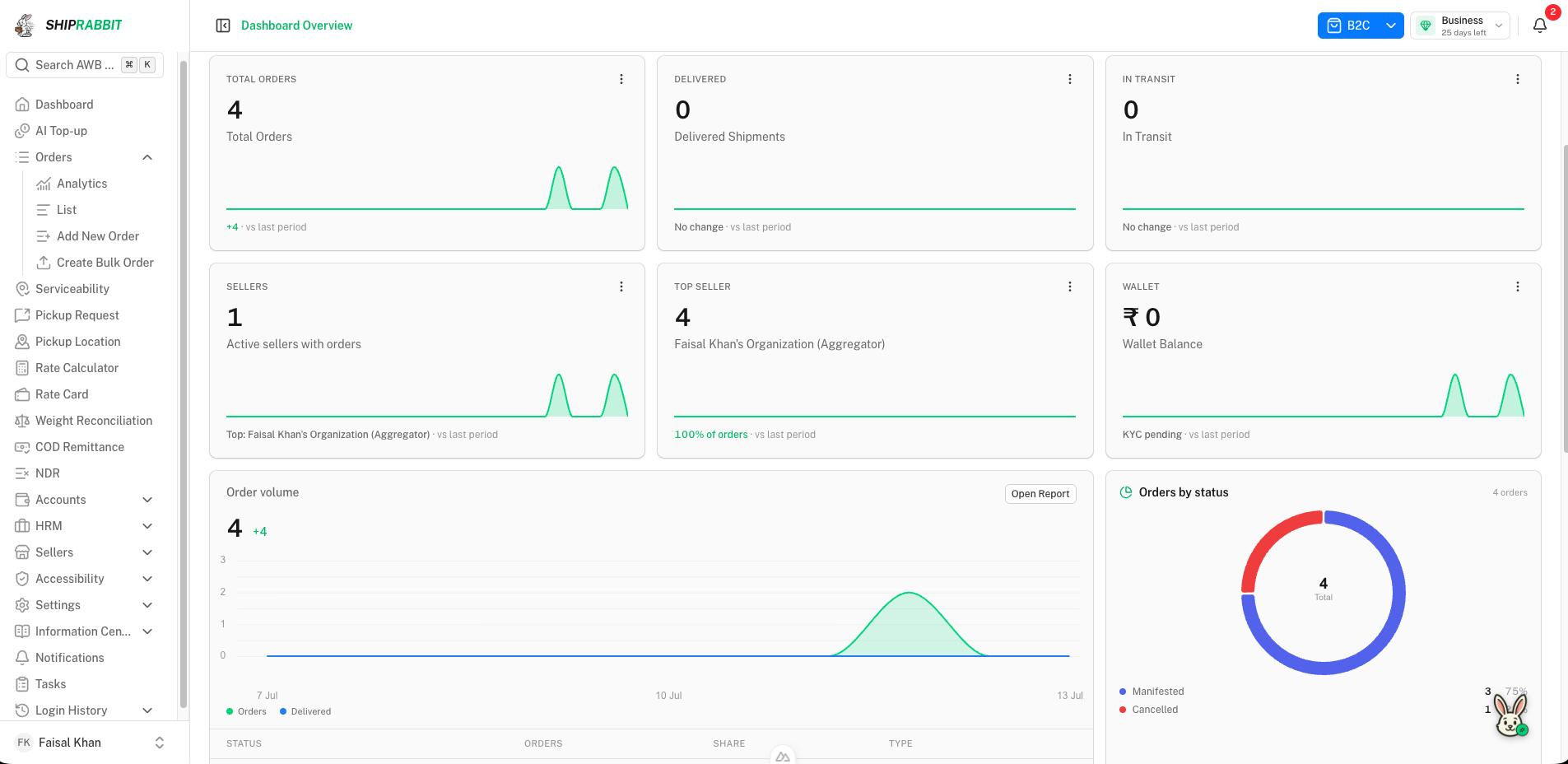
How Courier Aggregator Software Works
Understand how courier aggregator software routes orders to carriers, compares rates, generates labels, and syncs tracking through a single unified platform.
Read article →Benefits of Courier Aggregator Software
Explore the top benefits of courier aggregator software for eCommerce — lower shipping costs, faster fulfillment, unified tracking, and better delivery outcomes.
Read article →How to Choose Courier Aggregator Software
A structured checklist for choosing courier aggregator software — coverage, integrations, NDR tools, pricing, support, and white-label options.
Read article →Stay ahead in eCommerce logistics
Get practical shipping guides, courier insights, and automation tips delivered to your inbox.