
How to Choose Courier Aggregator Software
A structured checklist for choosing courier aggregator software — coverage, integrations, NDR tools, pricing, support, and white-label options.
Start With Your Shipping Profile
Choosing courier aggregator software begins with an honest shipping profile: daily order volume, average weight, prepaid vs COD split, top origin and destination zones, sales channels, and current courier partners. Platforms optimized for 30 daily metro prepaid orders differ from those serving 800 national COD shipments.
Document pain points in your current workflow — manual portal switching, RTO rate, delayed COD remittance, marketplace tracking gaps. Your selection criteria should map directly to solving these problems.
If you need foundational context, read what courier aggregator software is and how it works before comparing vendors.
Step 1: Define Must-Have vs Nice-to-Have Features
Must-haves are non-negotiable for go-live: required courier partners, COD or prepaid support, label format compatibility, and integration with your store or OMS. Nice-to-haves — AI routing, branded tracking, advanced analytics — matter after core workflows are stable.
- Must-have: serviceability for your top 100 destination pincodes
- Must-have: payment modes your checkout supports
- Must-have: label size and barcode format for your warehouse
- Nice-to-have: automated NDR via WhatsApp
- Nice-to-have: custom courier rules by product category
- Nice-to-have: white-label seller portals (for logistics operators)
Step 2: Validate Courier and Pincode Coverage
Run a batch serviceability test: export 200 recent orders with destination pincodes and payment modes. Compare results across shortlisted platforms. Gaps here cause cancellations and support tickets — not something you discover after migration.
Ask about coverage update frequency and how the platform handles temporary pincode suspensions. Some couriers halt COD or prepaid to specific areas during festivals or disruptions.
Choosing the right courier per order depends on this coverage data being accurate at booking time.
Step 3: Evaluate Integration and API Quality
Review API documentation for create shipment, track, cancel, rate estimate, and webhook events. Request sandbox credentials and run a test integration before signing. Poor API docs often predict poor production support for technical issues.
What a shipping API is and how courier APIs work help non-developers ask the right questions during technical review.
If you lack engineering resources, prioritize platforms with native Shopify, WooCommerce, or marketplace connectors over API-only solutions.
Webhook reliability
Tracking and NDR automation depend on webhooks arriving promptly. Ask about retry policies, event ordering, and fallback polling when courier feeds lag.
Step 4: Compare Pricing Transparently
Build a spreadsheet: monthly platform fee, per-shipment charges, wallet minimums, SMS or NDR communication costs, and shipping rates for representative orders across zones. Project at current volume and at 2x growth.
Pricing models explained covers common structures and questions to ask finance teams before contract signing.
| Cost component | What to verify | Why it matters |
|---|---|---|
| Platform subscription | Included shipments or unlimited? | Fixed cost baseline |
| Per-AWB fee | Applies to cancelled shipments? | Affects experimentation cost |
| Shipping rates | Your contracts or platform rates? | Largest variable cost |
| Remittance cycle | COD settlement timeline | Cash flow impact |
Step 5: Test Operations Workflows in Demo
During trial, execute a realistic day: import orders, compare rates, print 20 labels, simulate an NDR, check tracking sync, and review reports. Involve warehouse staff — they catch label and scanner issues product managers miss.
Test edge cases: oversized dimensions, high-value orders, remote pincodes, and partial cancellations. Error message quality indicates how daily exceptions will feel in production.
Step 6: Assess Vendor Stability and Support
Ask about uptime history, incident communication, and support channels. High-volume sellers need responsive help when booking APIs fail during peak sale events.
For white-label buyers building a business on the platform, evaluate build vs buy considerations and vendor roadmap for seller portal features.
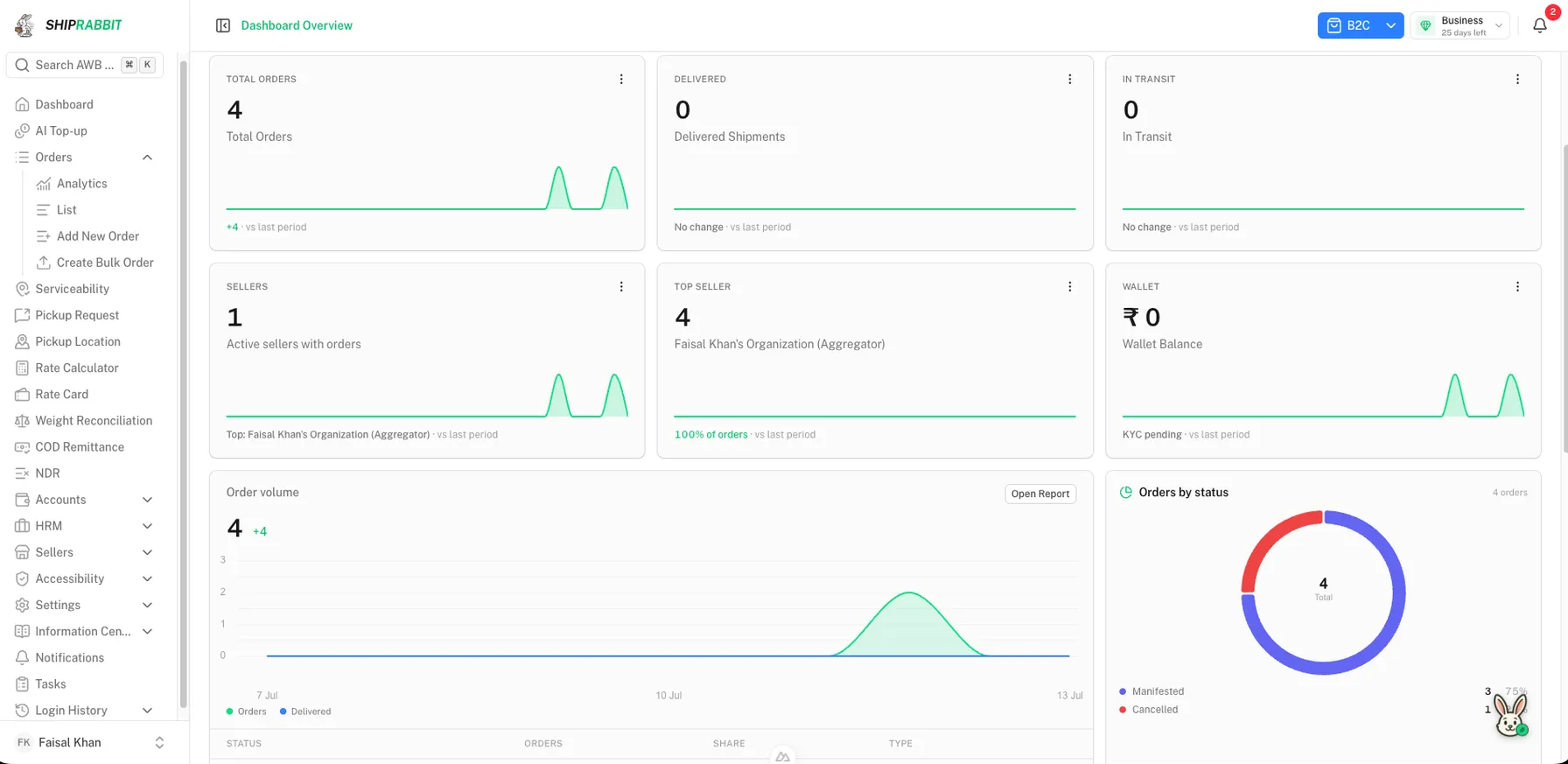
ShipRabbit serves logistics operators needing white-label infrastructure; merchant sellers should confirm whether a merchant dashboard or operator platform matches their role.
Decision Framework Summary
Score each shortlisted vendor on coverage, integration, pricing, operations UX, and support. Weight categories by your profile — COD-heavy businesses weight remittance and NDR higher; multi-channel sellers weight connectors higher.
Avoid choosing on shipping rate alone. A slightly higher per-order rate with better delivery success and lower RTO often yields better unit economics.
See best options for eCommerce and aggregator vs direct integration for related decisions.
Stakeholder Alignment Before Vendor Calls
Operations cares about label speed and NDR tools. Finance cares about remittance cycles and invoice clarity. Engineering cares about API docs and webhooks. Leadership cares about cost and scalability. Gather requirements from each group before demos or vendors will pitch features only one stakeholder values.
Document current state metrics: average shipping cost, RTO rate, daily booking time, support tickets related to shipping, and COD reconciliation hours weekly. These baselines let you measure improvement after implementation objectively.
Set a decision deadline aligned with business events — before festive season, before marketplace sale registration, or before warehouse move. Open-ended evaluations often stall; a timeline forces trade-off decisions.
Scorecard Template You Can Reuse
Rate each vendor 1–5 on weighted categories. Suggested weights for typical sellers: pincode coverage (25%), integration fit (20%), operations UX (20%), pricing clarity (20%), support quality (15%). Adjust weights for your profile.
| Category | Weight | Score vendor A | Score vendor B |
|---|---|---|---|
| Pincode coverage | 25% | — | — |
| Integration / API | 20% | — | — |
| Operations UX | 20% | — | — |
| Pricing transparency | 20% | — | — |
| Support and reliability | 15% | — | — |
Reference Checks That Actually Help
Ask vendors for references at similar volume and category — not only flagship enterprise clients. Speak with operations managers, not only founders, about daily friction points. Ask specifically about billing surprises, API downtime during sales, and NDR tool effectiveness.
Search for public reviews cautiously — verify whether reviewers match your use case. A marketplace seller review may not apply to D2C branded tracking needs.
If evaluating white-label for a logistics business, reference-check other operators on ShipRabbit or competing platforms about seller onboarding experience and carrier adapter stability.
Contract and Exit Planning
Understand minimum commitment period, data export on termination, and whether in-flight shipments remain accessible after contract end. Clarify intellectual property on custom integrations you build atop the API.
Negotiate pilot terms when possible — 90 days at reduced commitment before annual contract. Document SLA credits for extended outages if applicable.
Pair your decision with integration approach and eCommerce feature research so choice is holistic, not reactive to one demo.
Post-Demo Internal Debrief Process
After each demo, operations, finance, and engineering score the vendor independently before group discussion — prevents loudest voice from dominating. Capture specific quotes on coverage gaps, pricing clarity, and API concerns while memory is fresh.
Eliminate vendors failing must-haves immediately rather than keeping them for price negotiation — missing COD in key states or lacking required marketplace connectors are disqualifiers, not negotiation points.
Finalists should receive the same 20-order test dataset for fair comparison. Document results in a shared scorecard attached to the purchase recommendation.
Final Recommendation Format
Summarize your choice in a one-page memo: selected vendor, rationale by weighted score, known gaps and mitigation plans, implementation timeline, and success metrics at 30 and 90 days. Shared documentation aligns teams during migration and prevents second-guessing mid-rollout.
Key Takeaways
- Map your top 50 destination pincodes and verify serviceability before signing
- Request API documentation and test sandbox endpoints during evaluation
- Compare total cost including wallet fees, COD charges, and NDR add-ons
- Check NDR automation depth — buyer SMS, IVR, and reattempt scheduling
- Confirm marketplace and OMS connectors match your current tech stack
Frequently Asked Questions
What should I ask during a courier aggregator demo?
Ask about pincode coverage for your lanes, COD remittance timelines, NDR workflow, API rate limits, and how pricing changes at higher volumes.
How long does aggregator onboarding take?
Most sellers go live within a few days. API integrations and custom rate cards may add one to two weeks.
Should I prioritize cost or courier coverage?
Coverage first — the cheapest platform is useless if it cannot service your buyer pincodes reliably with acceptable RTO rates.
When does white-label capability matter in selection?
If you are a logistics company reselling shipping to sellers, white-label portals and branded tracking are non-negotiable requirements.
ShipRabbit
See how ShipRabbit manages multiple courier partners from one dashboard
Reduce shipping costs, improve delivery success, and scale operations without switching between courier portals.
Part of our Courier Aggregator Software guide series — explore the complete resource for multi-courier shipping and aggregation.
Related Articles

Best Courier Aggregator Software for eCommerce
A buyers guide to the best courier aggregator software for eCommerce — key features, courier coverage, pricing, and what to look for when evaluating platforms.
Read article →
Courier Aggregator Software Pricing Explained
Understand courier aggregator software pricing models — per-shipment fees, subscriptions, wallet systems, and how to calculate total cost of ownership.
Read article →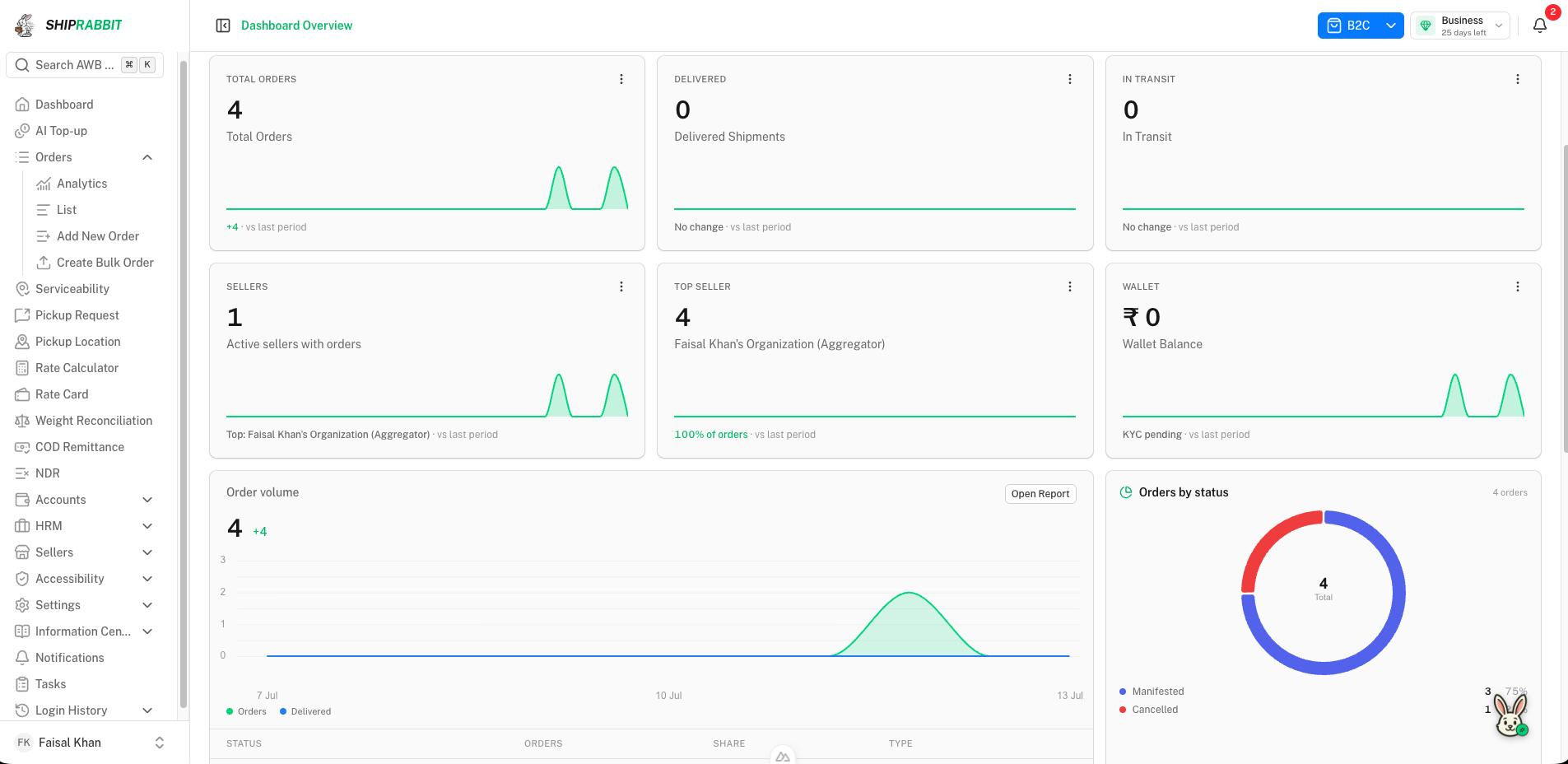
Courier Aggregator Software vs Direct Courier Integration
Compare courier aggregator software against direct courier integration — cost, speed to launch, maintenance, control, and which approach fits your business.
Read article →Build vs Buy Courier Aggregator Software
Compare building your own courier aggregator software versus buying a white-label platform — development cost, time to market, and total ownership.
Read article →Stay ahead in eCommerce logistics
Get practical shipping guides, courier insights, and automation tips delivered to your inbox.