
How to Start a Courier Aggregation Business
A step-by-step guide to starting a courier aggregation business — market research, courier partnerships, platform selection, pricing, and seller onboarding.
What a Courier Aggregation Business Does
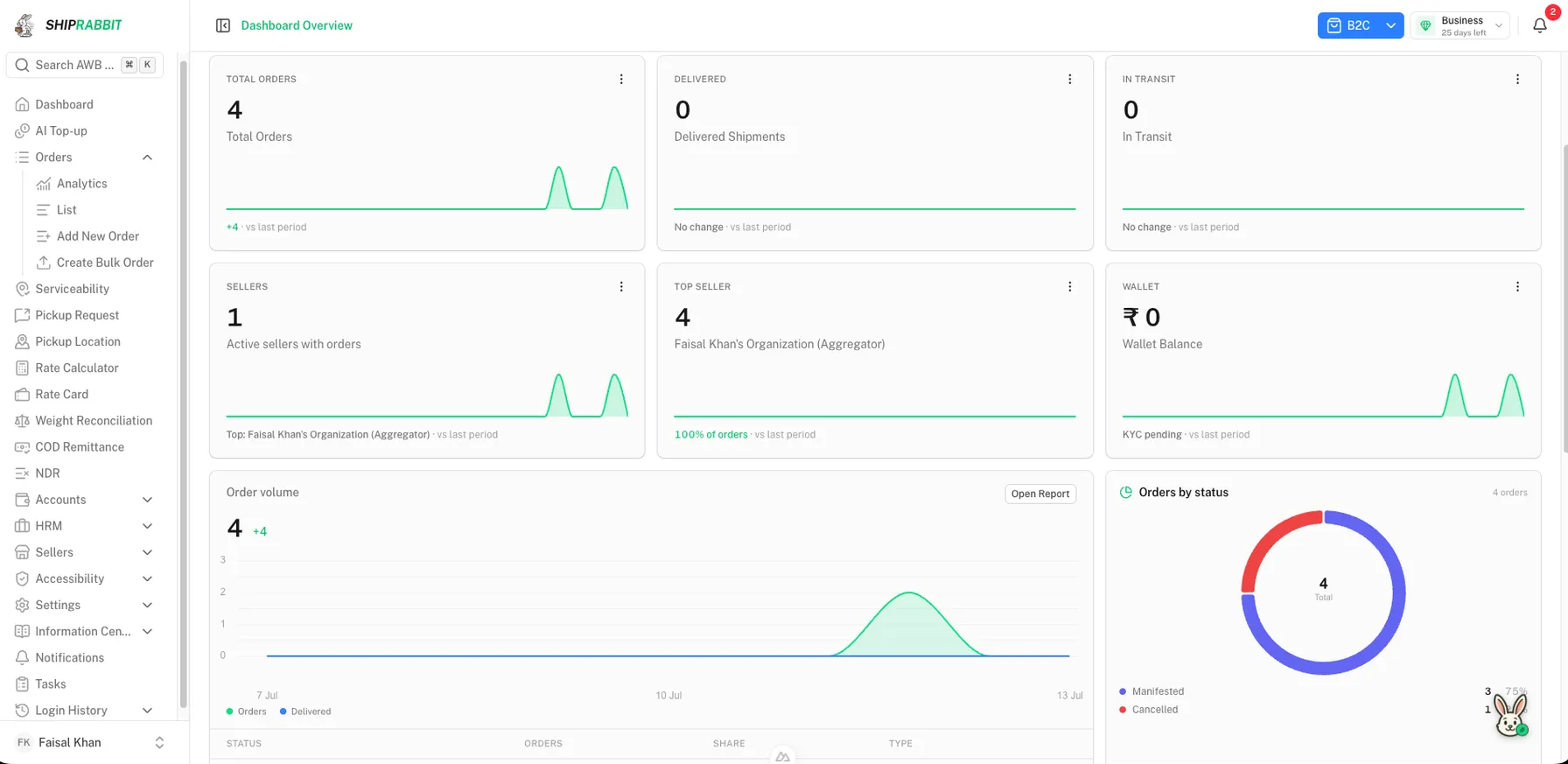
A courier aggregation business connects online sellers to multiple shipping partners through a branded platform — earning margin on shipments, subscriptions, or value-added services. You are the software and service layer between merchants and carriers, not the truck operator.
Success requires commercial relationships with sellers, reliable courier partnerships, and technology that scales booking and support. White-label platforms like ShipRabbit provide the technology foundation so founders skip years of API integration work.
Understand the product category via what courier aggregator software is and white-label software options. The business decision — build, franchise, or use a platform — is laid out on start a logistics business.
Market Research and Positioning
Identify your target seller segment: local marketplace merchants, D2C startups, social commerce sellers, or enterprise brands. Each segment has different volume, COD mix, support expectations, and price sensitivity.
Analyze regional courier strength — your value proposition may be superior coverage in specific states or categories underserved by national aggregators.
Define positioning: lowest cost, best support, niche category expertise, or regional focus. Competing solely on rate against well-funded players is difficult without a clear wedge.
Courier Partnership Strategy
Establish commercial agreements with courier partners or operate through a white-label platform's master accounts initially. Direct contracts offer margin control but require volume commitments and integration maintenance if you build in-house.
Verify prepaid and COD serviceability for pincodes your target sellers use. Coverage gaps become churn drivers within weeks of onboarding.
How aggregation works technically clarifies what the platform layer handles versus what you negotiate with carriers.
| Partnership approach | Pros | Cons |
|---|---|---|
| White-label master accounts | Fast launch, vendor maintains APIs | Less rate control initially |
| Direct courier contracts | Higher margin potential | Volume commitments, integration cost |
| Hybrid | Control on key lanes | Operational complexity |
Choosing Your Technology Platform
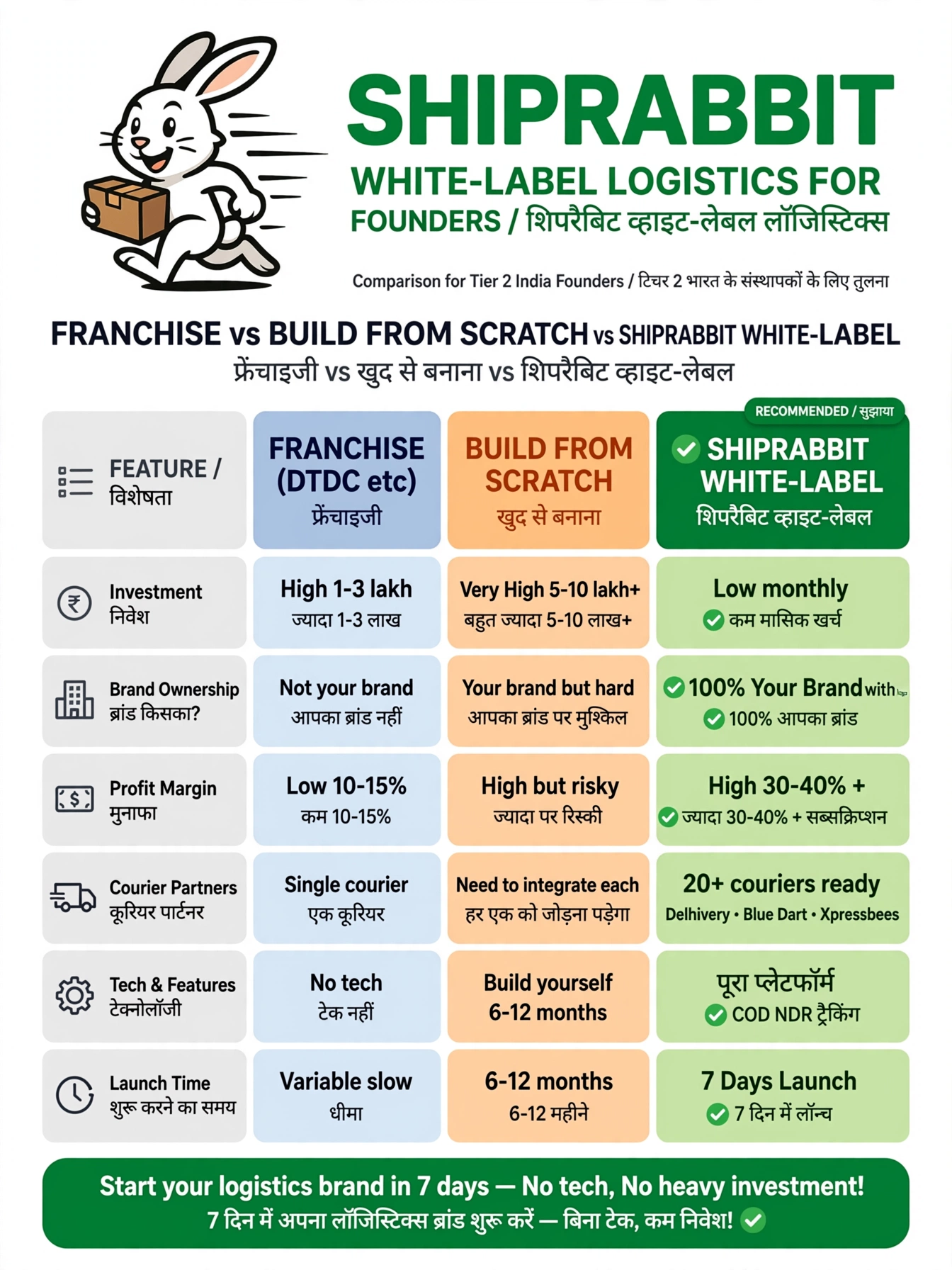
Building courier integrations internally consumes 12–24 months for a minimal multi-carrier stack. White-label software compresses launch to weeks.
Evaluate white-label courier aggregator software for seller portals, wallet billing, branded tracking, and admin tools. Compare build vs buy with honest engineering cost estimates.
ShipRabbit is a platform for operators running a logistics business under their own identity, including seller management and an NDR desk for recorded re-attempt and RTO requests.
Pricing and Revenue Model Design
Common models: per-shipment markup above courier cost, monthly seller subscription plus lower per-AWB fee, or tiered plans by volume. Model unit economics before acquisition spending — know margin per shipment at realistic volumes.
Aggregator pricing structures help you understand platform costs you pass through or absorb.
- Per-shipment margin — transparent or bundled in shipping rate
- SaaS subscription — predictable revenue, lower seller entry friction
- Wallet float — understand regulatory and trust implications
- Premium services — NDR recovery, dedicated support, insurance
Seller Acquisition and Onboarding
Start with a focused cohort — one city, one category, or one sales channel. Perfect onboarding and support before scaling marketing spend.
Provide clear rate cards, remittance timelines, and tracking quality. Sellers switch aggregators quickly when AWB failures or COD delays hurt their operations.
Online seller needs and D2C brand needs inform pitch and feature emphasis.
Operations, Support, and Compliance
Plan support coverage for booking failures, NDR escalations, and remittance disputes. Document SLAs sellers can expect. Hire or train staff who understand courier operations, not only software.
KYC for sellers, GST invoicing, and payment gateway compliance for wallet top-ups require legal setup appropriate to your jurisdiction — consult professionals before launch.
Growth and Differentiation
Differentiate on seller experience: faster support, superior NDR recovery, regional coverage, or integrations with niche OMS tools. AI capabilities and branded tracking improve retention when rates are competitive.
Monitor courier performance by zone and renegotiate or reroute when partners underperform. Your platform data is a strategic asset.
Launch Checklist Summary
Validate segment demand, secure courier access, select white-label platform, configure rate cards, pilot with 10–20 sellers, then scale acquisition.
Deep-dive resources: shipping aggregator guide, platform selection, and the ShipRabbit operator platform.
Legal and Regulatory Foundations
Consult qualified professionals for business registration, GST treatment of shipping services, payment aggregator compliance for wallet top-ups, and seller agreement templates covering liability for lost shipments and remittance delays.
Seller contracts should clarify who bears RTO cost, how disputes are escalated to couriers, and data privacy responsibilities for buyer PII flowing through your platform.
Regulatory requirements vary — this guide is not legal advice; budget professional counsel before accepting seller funds.
Technology Launch Sequence
Week 1–2: platform selection and contract. Week 3–4: rate card configuration and courier enablement. Week 5–6: pilot sellers and label testing. Week 7–8: wallet and remittance validation with finance. Week 9+: controlled marketing ramp.
Parallel path: build sales collateral and support docs while technical setup proceeds — not after go-live.
Use ShipRabbit or comparable white-label to compress weeks 1–6 versus custom development.
Metrics Operators Track From Day One
Active sellers, shipments per seller per week, gross margin per AWB, support tickets per 100 shipments, NDR resolution rate, remittance cycle time, and seller churn monthly. Dashboard these before scaling ad spend.
Carrier performance by zone informs commercial promises — do not sell coverage or speed your data cannot support.
Common Startup Mistakes to Avoid
Underpricing to win first sellers then unable to cover support costs. Overpromising pincode coverage before serviceability validation. Neglecting seller portal UX while over-investing in admin features sellers never see.
Building custom courier integrations before proving seller demand — validate commercially on white-label first per build vs buy analysis.
Funding and Runway Planning
Aggregation businesses need working capital for COD float if you advance remittance to sellers before couriers settle, marketing budget for seller acquisition, and platform fees during low-volume ramp months. Model 12–18 month runway to profitability at conservative seller growth assumptions.
Avoid discounting shipping rates below sustainable margin to hit volume targets — unprofitable volume exhausts runway without building defensible retention.
Revisit platform pricing as seller count scales — negotiate tier upgrades proactively.
Document your standard operating procedures for seller onboarding, remittance reconciliation, and NDR escalation before scaling past your first fifty active merchants — operational consistency protects reputation as volume grows.
Partnership and Channel Strategy
Acquire sellers through marketplace seller communities, Shopify partner networks, regional trade associations, and referrals from early satisfied clients. Partnerships with OMS vendors or accounting tools can embed your shipping offering in existing workflows.
Track acquisition channel CAC separately — community-led growth often yields lower churn than paid ads targeting generic "cheap shipping" keywords with wrong-fit sellers.
Sustainable Growth Principles
Profitable aggregation businesses grow seller count and shipment density per seller simultaneously. Churn from poor delivery outcomes or billing disputes destroys unit economics faster than slow signup rates. Invest in operational excellence and transparent seller communication alongside sales.
Technology from white-label partners accelerates launch; your competitive moat is service quality, commercial relationships, and segment focus — not proprietary courier APIs on day one.
Key Takeaways
Courier aggregation businesses connect sellers to multiple carriers through a branded platform — earning margin on shipments, subscriptions, or value-added services.
White-label technology like ShipRabbit compresses launch timeline versus building courier integrations internally; focus early effort on seller acquisition and operational excellence.
Sustainable growth pairs seller retention with shipment density — underpricing and overpromising coverage destroy runway faster than slow initial signup rates.
Track unit economics per active seller monthly from day one — gross margin per AWB, support tickets per 100 shipments, and remittance cycle time.
Key Takeaways
- Courier aggregation businesses monetize through per-shipment margins or seller subscriptions
- Start by identifying an underserved seller segment in a specific region or category
- Courier partnerships and platform technology are your two critical infrastructure pillars
- White label software like ShipRabbit accelerates launch versus building integrations in-house
- Seller onboarding, support quality, and delivery reliability determine retention
Frequently Asked Questions
How much capital is needed to start a courier aggregation business?
With white label software, initial costs are primarily sales, marketing, and working capital for courier wallet balances — not large engineering investments.
Do I need direct contracts with courier companies?
White label platforms typically provide carrier access. As you scale, direct contracts can improve margins on high-volume lanes.
What is the revenue model for courier aggregators?
Common models include per-shipment markup, monthly seller subscriptions, and value-added services like NDR management and branded tracking.
How do I acquire the first 100 sellers?
Target marketplace clusters, D2C communities, and local merchant associations. Offer competitive rates and hands-on onboarding support.
ShipRabbit
Learn how ShipRabbit helps businesses automate shipping
Discover how a unified courier aggregation platform simplifies multi-carrier shipping for eCommerce teams.
Related Articles
Start a Courier Aggregator Business in India — Read This Before You Invest
Thinking of starting a courier aggregator business in India? Avoid the two costly mistakes most founders make — franchise lock-in and building tech from scratch — and see why white-label is the smarter path.
Read article →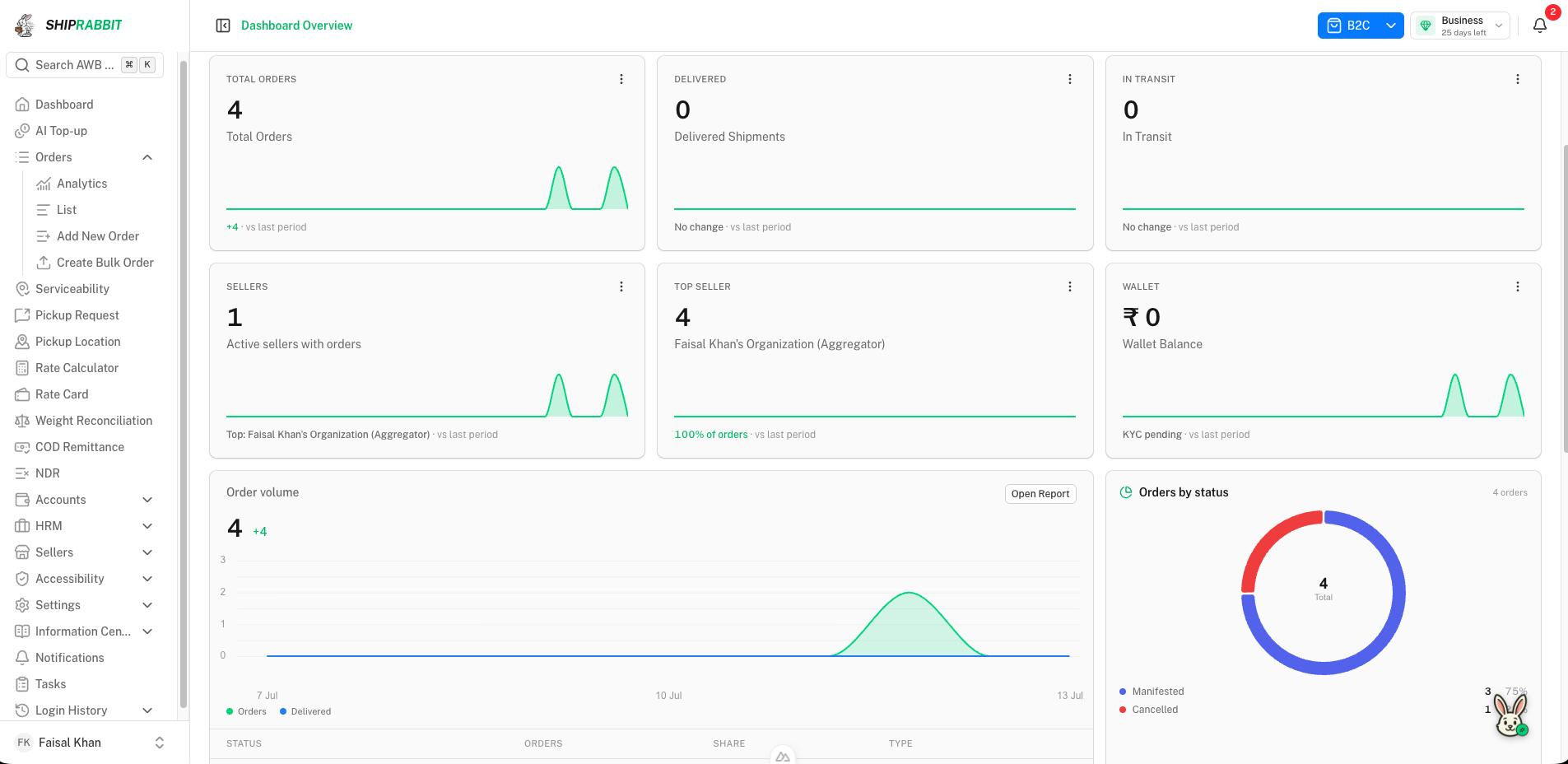
White Label Courier Aggregator Software
Launch your own branded logistics platform with white label courier aggregator software — seller portals, wallet billing, tracking pages, and multi-courier APIs.
Read article →Build vs Buy Courier Aggregator Software
Compare building your own courier aggregator software versus buying a white-label platform — development cost, time to market, and total ownership.
Read article →
Courier Aggregator Software Pricing Explained
Understand courier aggregator software pricing models — per-shipment fees, subscriptions, wallet systems, and how to calculate total cost of ownership.
Read article →Stay ahead in eCommerce logistics
Get practical shipping guides, courier insights, and automation tips delivered to your inbox.