
Shipping Aggregator Software: The Complete Guide
The complete guide to shipping aggregator software — definitions, features, use cases, and how it helps eCommerce and logistics businesses ship smarter.
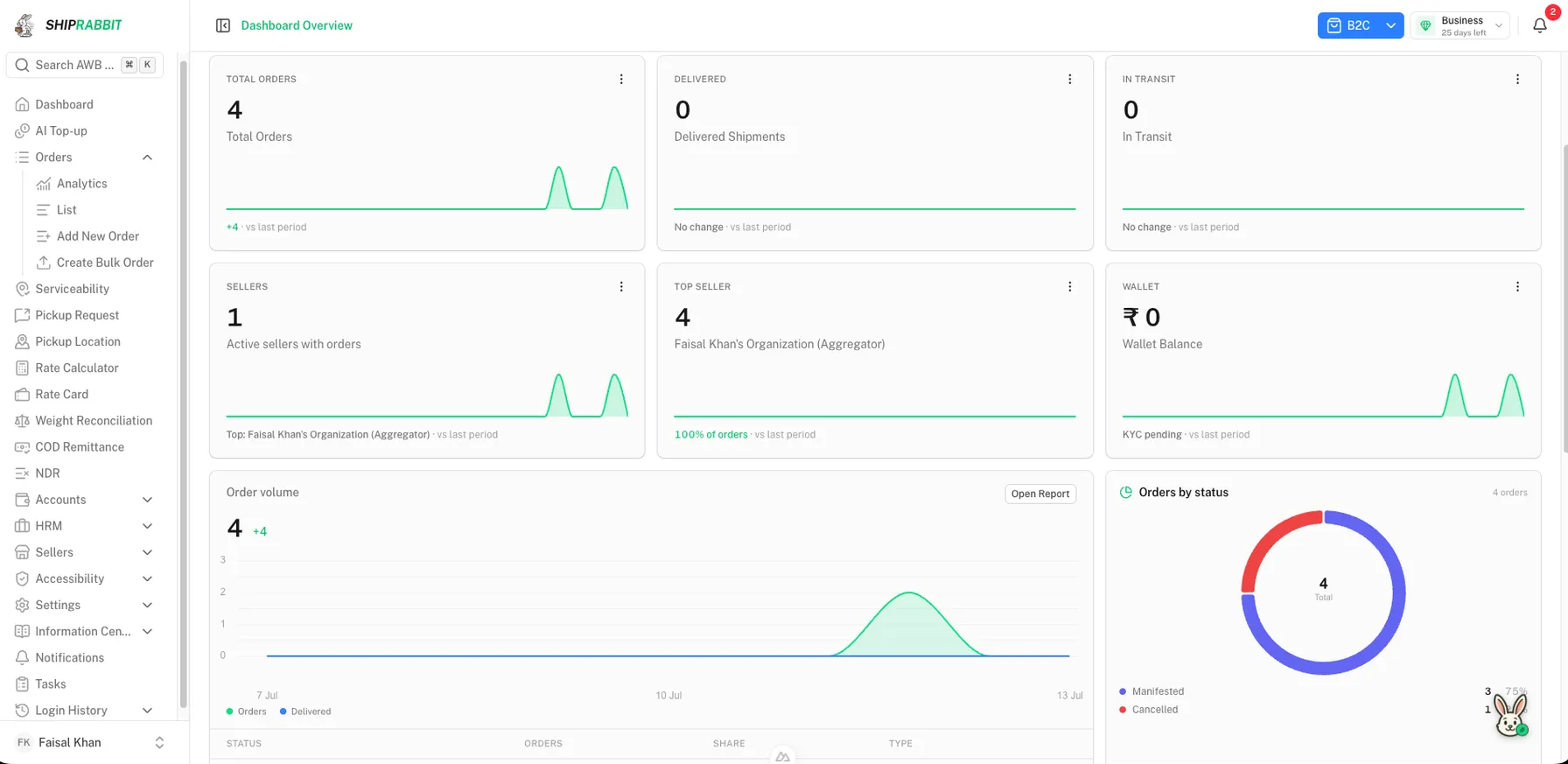
What Is Shipping Aggregator Software?
Shipping aggregator software connects shippers to multiple logistics and courier partners through a unified platform. It aggregates carrier capabilities — booking, labels, tracking, NDR, COD remittance — so users manage national shipping without separate accounts and integrations for each partner.
The term emphasizes the aggregation model: one software layer, many carriers. "Courier aggregator" and "shipping aggregator" describe the same category with slightly different marketing emphasis.
New to the space? Start with what courier aggregator software is and multi-courier shipping software explained.
Who Uses Shipping Aggregators
Online sellers, D2C brands, marketplace merchants, 3PLs, and logistics startups all use shipping aggregation — but with different feature priorities.
| User type | Primary goal | Key platform features |
|---|---|---|
| Marketplace seller | Fast cheap fulfillment | Bulk labels, rate compare |
| D2C brand | Brand experience + reliability | Branded tracking, NDR automation |
| 3PL operator | Serve client shippers | Multi-client billing, APIs |
| Logistics startup | Launch branded shipping SaaS | White-label portals, seller wallets |
Core Platform Capabilities
Production-grade shipping aggregators share a common feature set. Variation appears in depth — NDR automation quality, API completeness, white-label flexibility — not in basic presence.
- Multi-carrier shipment creation and cancellation
- Dynamic rate calculation and comparison
- Pincode serviceability verification
- Label generation in warehouse-ready formats
- Unified tracking with webhook ingestion
- NDR management and buyer communication
- COD remittance and wallet accounting
- Analytics on spend, RTO, and carrier performance
Shipping Aggregator vs Freight Forwarding vs 3PL
Shipping aggregator software is technology — it does not physically handle goods unless the same company also operates warehouses. Freight forwarders and 3PLs may use aggregator software internally, but the software itself is the digital orchestration layer.
Do not confuse aggregation with fulfillment center services. You can use aggregator software while self-fulfilling from your warehouse or while a 3PL ships on your behalf.
How aggregator software works details the technical workflow.
Evaluating Shipping Aggregator Vendors
Assess partner coverage for your lanes, integration fit, pricing transparency, and operational UX. Run parallel demos with real order samples.
How to choose courier aggregator software provides a structured checklist. Pricing models help compare total cost.
Distinguish merchant platforms from white-label infrastructure. ShipRabbit serves logistics companies building aggregation businesses — see white-label guide if that is your model.
Integration Architecture Overview
Orders enter via dashboard, CSV, or API. The platform validates data, checks serviceability, calculates rates, books with selected courier, returns AWB and label, then ingests tracking webhooks until delivery or RTO closure.
Marketplace and storefront sync depends on shipping APIs or pre-built connectors. Webhook reliability for tracking and NDR events is a critical technical evaluation point.
Build vs buy for logistics SaaS
Entrepreneurs launching shipping platforms face build vs buy decisions. White-label aggregators accelerate go-to-market by providing carrier connections and seller portals immediately.
Common Implementation Mistakes
Choosing on rate alone without testing delivery success by pincode. Skipping warehouse label tests until go-live day. Migrating all volume at once instead of phased rollout. Ignoring COD remittance reconciliation setup.
Avoid these by piloting with a subset of orders, involving warehouse staff in demos, and validating finance workflows before full cutover.
Industry Trends Shaping Aggregators
AI-assisted routing, automated NDR via messaging channels, and deeper marketplace integrations are becoming standard expectations. AI in eCommerce shipping covers emerging capabilities.
Operators differentiating on service quality — not just rates — use branded tracking, proactive delivery communication, and seller support tools bundled with aggregation.
Next Steps in Your Research
Continue with benefits of courier aggregator software, best options for eCommerce, and the ShipRabbit platform hub.
Entrepreneurs should read how to start a courier aggregation business.
Terminology Map for Researchers
Vendors use courier aggregator, shipping aggregator, logistics aggregation platform, and multi-courier software interchangeably in marketing. In RFPs, define required capabilities — carrier count matters less than pincode performance for your lanes.
Some marketplaces offer captive shipping programs — distinct from independent aggregators you choose freely. This guide covers independent aggregation software you integrate voluntarily.
Core definitions anchor the terminology before vendor conversations.
Lifecycle Stages From Trial to Optimization
Stage one — trial booking with historical orders to validate rates, labels, and tracking accuracy. Stage two — partial live volume with warehouse training. Stage three — full migration with routing rules enabled. Stage four — optimization using performance reports to refine courier assignment monthly.
Skipping stage one causes production surprises. Skipping stage four leaves money on the table as carrier networks and your order mix evolve.
Budget time for finance onboarding on wallet and remittance workflows — not only warehouse training.
Aggregator Software in the Broader Logistics Stack
Aggregation sits alongside OMS, inventory, warehouse, and customer support tools — not replacing them. APIs connect the stack; data quality upstream (accurate weights, addresses) determines aggregation effectiveness downstream.
WMS systems may trigger shipment creation via API when pick completes. Support tools may embed tracking lookup via aggregator API. Plan integration points in architecture diagrams before vendor selection.
Shipping API primer helps technical teams map endpoints to stack components.
Future-Proofing Your Selection
Choose vendors investing in AI routing, messaging-channel NDR, and expanded carrier networks — capabilities becoming table stakes. Evaluate API versioning policy so your integrations survive platform upgrades.
Operators should confirm white-label roadmap alignment with ShipRabbit or alternatives before building seller acquisition on stagnant technology.
Continue with starting an aggregation business if entrepreneurship is your path.
Regional and Category Nuances in India
National aggregators market broad coverage; ground truth varies by state, urban vs rural pincode, and COD vs prepaid. Sellers in specific categories — pharmaceuticals, liquids, high-value electronics — face carrier restrictions beyond standard pincode tables.
Validate category compliance during trials, not after account suspension. Aggregator support teams should clarify which partners accept your product class before bulk migration.
Combine this guide with online seller and D2C brand playbooks for segment-specific execution.
Support and Success Resources to Expect
Quality vendors provide onboarding documentation, warehouse training sessions, API sandbox access, and responsive support during first 30 days live. Clarify support hours, escalation paths for booking failures, and whether dedicated account management requires extra fees.
Community forums, changelog notifications, and carrier outage communication channels indicate mature platform operations — especially important during festive peaks when shipment volume spikes nationwide.
Synthesis: From Research to Action
Shipping aggregator software is the operational layer connecting eCommerce businesses to fragmented last-mile networks. Successful adoption pairs platform selection with routing governance, finance reconciliation, and warehouse training — not dashboard access alone.
Your next steps depend on role: merchants evaluate eCommerce platforms; operators explore white-label options on ShipRabbit; technical teams read shipping API fundamentals.
Key Takeaways
Shipping aggregator software unifies multi-carrier logistics for sellers, D2C brands, and logistics operators — centralizing booking, tracking, NDR, and COD workflows.
Evaluate vendors on pincode coverage for your lanes, integration quality, pricing transparency, and operational UX — not marketing terminology alone.
Operators launching branded shipping businesses should prioritize white-label capabilities; merchants shipping own inventory should prioritize channel connectors and bulk fulfillment tools.
Visit the courier aggregator software hub for ShipRabbit operator capabilities and related guides linked throughout this article series.
Key Takeaways
- Shipping aggregator software unifies booking, tracking, and billing across carriers
- Terms like shipping aggregator, courier aggregator, and multi-courier software overlap
- Core features include rate comparison, labels, NDR, COD, and REST APIs
- Used by online sellers, D2C brands, 3PLs, and logistics startups alike
- White-label aggregators let operators launch branded shipping platforms
Frequently Asked Questions
What is shipping aggregator software?
Software that connects shippers to multiple courier and logistics partners through one platform for booking, tracking, and exception management.
How is it different from a freight forwarder?
Aggregators provide software infrastructure. Freight forwarders physically move goods. Many forwarders use aggregator software internally.
Can shipping aggregators handle international shipments?
Some platforms support cross-border carriers, but most Indian aggregators focus on domestic last-mile courier networks.
What integrations do shipping aggregators typically offer?
REST APIs, Shopify and WooCommerce connectors, webhook-based tracking updates, and OMS or WMS integrations via standard endpoints.
ShipRabbit
Learn how ShipRabbit helps businesses automate shipping
Discover how a unified courier aggregation platform simplifies multi-carrier shipping for eCommerce teams.
Related Articles
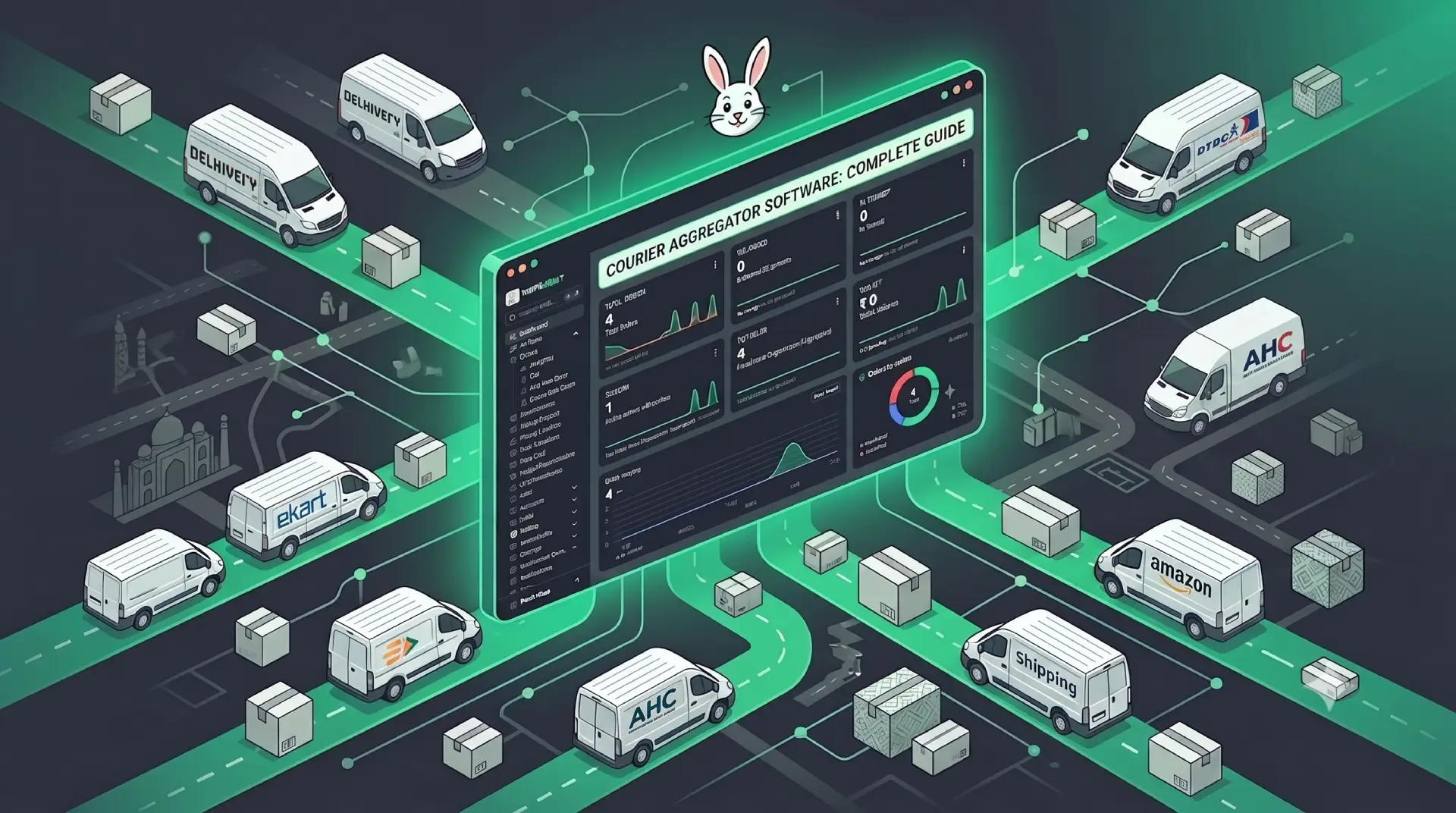
What Is Courier Aggregator Software?
Learn what courier aggregator software is, how it differs from single-carrier tools, and why eCommerce businesses use it to manage multi-courier shipping.
Read article →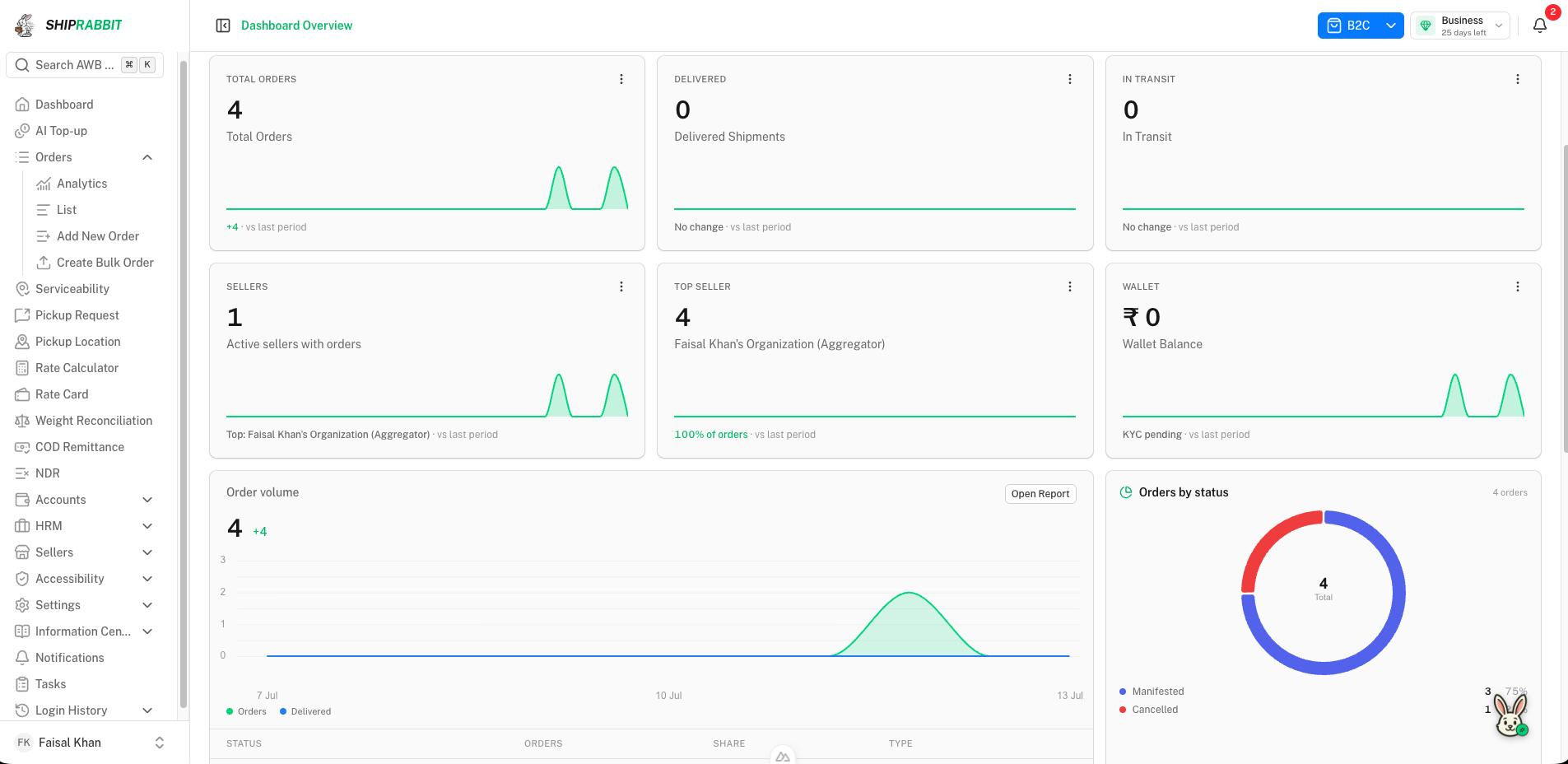
Multi-Courier Shipping Software Explained
Learn what multi-courier shipping software is, how it routes orders across carriers, and why eCommerce businesses rely on it for scalable fulfillment.
Read article →How Multi-Courier Shipping Works
Learn how multi-courier shipping works — order routing rules, rate comparison, serviceability checks, and unified tracking across carrier partners.
Read article →Courier Aggregator Software: The Complete Guide for 2025
Everything you need to know about courier aggregator software — features, benefits, use cases, and how to choose the right platform for eCommerce and logistics businesses.
Read article →Stay ahead in eCommerce logistics
Get practical shipping guides, courier insights, and automation tips delivered to your inbox.